

Saving money for your vacation is often the first step to taking an epic trip or vacation. In this process, you’ll attempt to save as much as you can, maybe sell some things, and hunt for the best hotel and flight deals as you’re taught to.
We always focus on how you can best save money before your travels, with a lot less discussion around saving money while traveling.
So let’s focus on that today. What about when your travels actually begin–are you doing what you can to stretch your dollar to the max?
In this post, I’ll reveal many of my favorite tried-and-true ways to save money while traveling. Some of them are very simple “no duhh” rules, while others are more extreme (but if executed, are guaranteed to save you a ton of money).
So, if you’re ready to save boatloads of money while traveling, then read on!
This post may contain affiliate links. You won’t be paying a cent more, but in the event of a sale, the small affiliate commission I receive will help keep this blog running/pumping out useful and free content. Thanks a lot!
Table of Contents
How To Save Money While Traveling: Things To Do
1. Look for free walking tours.

One of my favorite ways to get my bearings in a new city is by joining a walking tour! Free walking tours used to just come in one flavor: a snoozy two-hour history lesson. These days, though? Now you can pick one based on what you’re actually interested in.
Love street art? Look for a street art or graffiti tour. Traveling after dark? Try a nighttime or ghost tour. Foodie? A food walking tour can introduce you to local dishes while letting you sample your way through a neighborhood. And if you’re into the darker, weirder side of a city, look for tours focused on its crime, scandals, or other underbelly stuff.
London is particularly fun for this (think Jack the Ripper tours, Camden Market tours and other quirky neighborhood themes). Paris and Tokyo has plenty of unusual themed walks, too.
Many cities have “free” walking tours, where you don’t pay upfront but are expected to tip your guide at the end. This can be a fantastic way to get a feel for a neighborhood without spending much, especially early in your trip.
And don’t forget to pick your guide’s brain while you’re there! Ask where they actually eat, what attractions are worth the money, where to find cheap drinks or coffee, and what tourist traps they would skip. They’re locals after all, and their best money-saving tip might be worth far more than the cost of the tour itself.
2. Look for other free activities.
If you do a little research (Google search, Facebook events), you’ll often find lots of free activities in the area you’re visiting. Look at community calendars to see what is going on in town while you are there. Do a self-guided walking tour to familiarize yourself with your destination.
Also, if you’re staying in a hostel, they’ll often advertise free tours/events throughout the week. They know that the people staying there are usually on a budget, so the events are pretty affordable.
3. Research museum pricing policies and free nights.

Many museums around the world — especially in Europe — offer free or discounted student pricing, as well as cheaper tickets for young adults, usually up to 25 years old (to encourage interest in the arts).
Museums also often have a ‘pay what you can’ day once a week and sometimes have discounted admission after a certain time of day. Many museums also offer a free night once a month, so it’s a smart idea to research if your visit dates overlap with these days.
4. Consider city tourism cards with one set price.
With city passes, you can expect a mix of the following: admission to a city’s top attractions, discounts at restaurants and shops, food tours, immersive experiences, skip-the-line options at busy attractions, free public transportation, and even free guidebooks.
If your itinerary is packed with a city’s most notable landmarks, museums, and highlights, it might be worth the money to get the city pass instead of buying all your admission tickets separately.
On trips where I want to play tourist a bit more, my go-to options are either GoCity (tried and loved in Cancun, London, and Chicago) or CityPASS (used in San Francisco and San Diego, California).
5. Catch public transportation everywhere you go.
Skip taxis and rideshares when you can—these fees add up fast, especially if you plan to hit multiple places in one day for several days. Buses, metro, trains, and rail cars are all great ways to save money, with each ride costing about $1-2 USD one-way.
You can save even more if you know you’ll be hitting up lots of spots in a day. Day passes or even multi-day passes can save you a good chunk of change (especially in cities where the population relies heavily on public transportation like Hong Kong, Tokyo, Paris, New York, etc.).
6. Walk or bike.
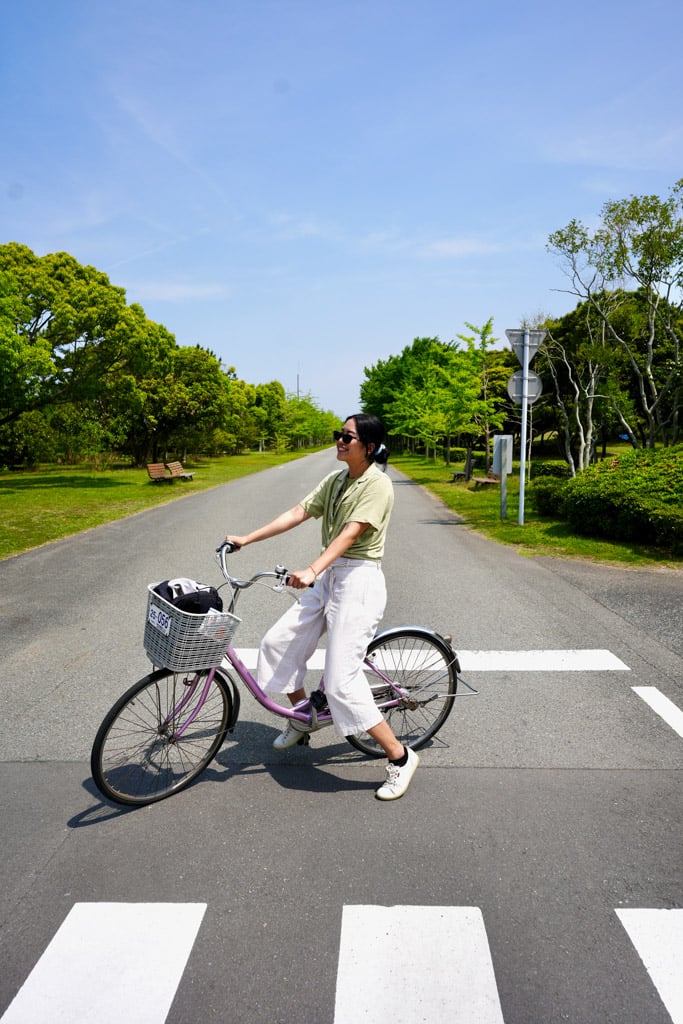
Walking is my main method of getting around in cities! It’s free, good for your health, and gives you a more immersive view of the city and its people.
Biking is also great, and now more than ever, many cities have bike-sharing systems where you can pay on demand to use them for a set number of hours.
The costs here sure beat hailing a taxi or Uber, plus you get a chance to familiarize yourself with the local streets more, which is a total win.
7. Travel slower.

Slow travel may be trendy right now, but travelers have been saving money this way forever. The fewer times you move from one place to another, the less you spend on trains, flights, rental cars, taxis and all the other transportation costs that add up surprisingly quickly.
Instead of cramming 3-4 cities into a week, I love staying put for a few extra nights and really getting to know one place. You’ll have more time to wander through local neighborhoods, discover new restaurants, read a book or watch the world go by at a cafe, shop at neighborhood markets, and experience the city beyond the tourist checklist.
And there’s another bonus: you’ll actually have time to enjoy where you are. You aren’t constantly packing, checking out, getting to the station and figuring out where you’re sleeping next.
You can slow down, rub elbows with locals, and experience a destination in a way that rushed travelers simply don’t have time for.
8. Get off the beaten track.
Have you ever heard the phrase “off the beaten track” or “off the beaten path”? This approach can save you a LOT of money (and you don’t necessarily have to give up the big cities you came to see).
One of my favorite tricks is to base yourself in a smaller, less-visited destination and use it as your home base for exploring a major city.
Another tip is that instead of flying from one major city to another, take the train to explore lesser-visited destinations nearby for a day trip or overnight visit. You’ll often find that hotels and restaurants cost considerably less outside the big-name cities, while the train gets you where you want to go without the expense or hassle of another flight.
Here are some examples of what I’m talking about:
- stay in Yokohama ($) and take the train into Tokyo ($$$)
- stay in Lille ($) and day trip to Paris ($$$)
- base yourself along the border of New Jersey ($) and take the train into NYC ($$$)
- split your time between Shanghai ($$$) and Hangzhou ($)
And there are plenty of other benefits to getting off the beaten track! Lesser-visited destinations tend to have more local restaurants, neighborhood cafes, and independent shops rather than places catering exclusively to tourists (with jacked-up prices).
That can mean better food for less money, cheaper accommodations, and a more interesting travel experience overall.
9. Pick just two experiences to spend more on.

I like to decide before a trip which two experiences are worth splurging on, then keep a stricter budget for pretty much everything else.
Maybe it’s a unique experience, a design hotel you’ve been dying to stay at, a once-in-a-lifetime meal, or an activity you’ve been dreaming about for years. Having that agreement with yourself from the get-go makes it much easier to say no to random expenses along the way because you’ll already know where you want your money to go.
On my most recent trip to Shanghai, those splurges were Shanghai Disneyland and an ultra-luxe 24-hour spa with a famed premium buffet (caviar and crab included). Sounds pricey, huh? But the rest of the trip wasn’t fancy at all! We spent our days eating, shopping, wandering through local neighborhoods, and generally just living life.
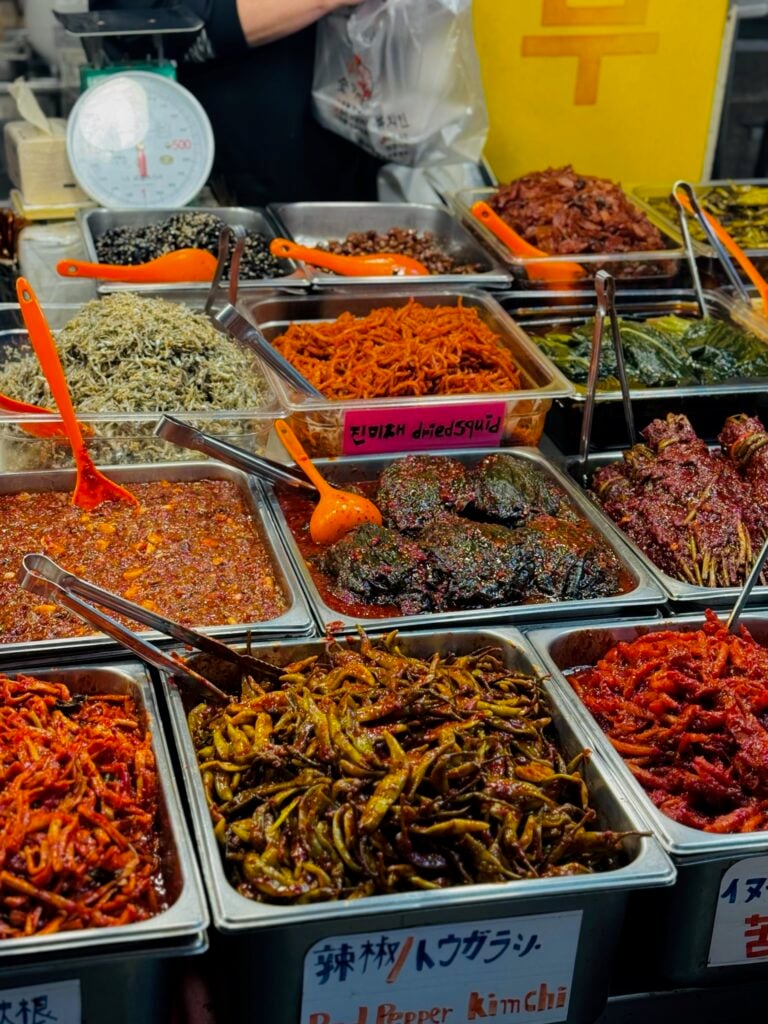
In Seoul last year, our two splurges were a food tour through Gwangjang Market and a day trip to the Garden of Morning Calm for the autumn colors. Everything else was a mix of exploring neighborhoods, eating whatever food looked good, and enjoying the cafe culture.
Read More: 20 Brilliant Travel Hacks That Will Make You An Expert Traveler
How To Save Money While Traveling: Save On Food
10. Shop at farmer’s markets and local stores.

Shopping for local ingredients and cooking for yourself is another easy way to taste the local cuisine without paying restaurant prices. Fresh produce, bread, cheese, meats and other local ingredients can be surprisingly affordable, especially when you’re shopping where locals actually shop.
And I’m not talking about the big food halls and famous markets that have now turned into tourist hotspots. Places like Tokyo’s Toyosu Market or La Boqueria in Barcelona can be fun to visit, but they’re not necessarily where I’d go looking for a bargain.
Instead, look for farmers markets and neighborhood markets that the locals actually frequent. You’ll find better prices on seasonal produce and ingredients you can turn into an inexpensive breakfast, picnic lunch or dinner back at your hotel.
Another little money-saving trick: farmers markets sometimes lower prices toward the end of the day rather than pack unsold produce back up! If you’re not looking for anything specific and don’t mind picking through what’s left, swing by closer to closing time. You may be able to score some great deals (that slightly bruised-but-perfectly-good basket of fruit can make a pretty fantastic travel snack).
11. Then have a picnic in the park.

Not only is this fun, but it’s also affordable and offers great people-watching! Just pick up a variety of fresh fruits, veggies, meats, and cheeses (or other local specialties from a farmers market in the city you’re visiting) and pick a nice spot in the grass.
Picnicking is so much cheaper than eating at a restaurant, and you’ll likely be left over with extra food for one of your future meals.
12. Carry snacks/water during outings.
Kids (and adults too!) will need snacks on a long day of exploration, so rather than buying them on an as-needed basis when they start complaining, kicking and screaming, stock up early and carry them with you.
The same goes for water. I hate spending money on one bottle of water when I know how much an entire case retails for (pretty much the same amount stores try to sell you just one for).
Make sure you have easy access to water— to make sure you’ll always be covered, keep a leak-proof collapsible water bottle in your travel bag at all times. You’ll be shocked by how often you can find a refill these days.
13. Bring your own airport snacks.
This takes a little prep work beforehand, but packing your own meal and snacks for the airport can save a surprising amount of money, especially if you’re traveling with a family.
Airport food has gotten absolutely ridiculous. At LAX, for example, a turkey sandwich with bottled water can run $18.50 USD, while a pizza with a drink can set you back $25 USD. Even a Carl’s Jr. combo can cost nearly $18! And those aren’t even sit-down restaurant prices… we’re just talking airport grab-and-go or fast food.
The markup can be even more obvious when you compare the same chain inside and outside the airport. A recent comparison found Starbucks sandwiches costing 55% more at some airports than at nearby city locations.
So instead of dropping $20 on a mediocre sandwich because you’re hungry and about to board, pack something before you leave home. Make a sandwich, throw in some fruit, nuts, granola bars, chips or whatever travels well, and you’ve got a meal ready to go.
GAME-CHANGING GADGETS FOR SMARTER AIRPORT TRAVEL
These are some of my favorite airport/airplane travel products that free my hands up and make traveling so much more convenient. Say goodbye to the days of fumbling around or not having enough hands for things.
- Clipa2 – The Instant Bag Hanger Collection | Hang your bag or purse literally anywhere (on your luggage, on restaurant tables, hotel rooms, etc).
- Flight Flap Phone & Tablet Holder | Attaches to airline seat backs so you can watch movies hands-free. Also great for standing your phone up on tables too!
- Add-a-Bag Hook and Hanger Strap | Have a purse, briefcase, tote bag, or bag of souvenirs that’s causing you inconvenience by needing to be carried? Get this bag hook and attach it to your luggage so you only need one hand to tow everything with you.
- riemot Luggage Travel Cup Holder | This foldable drink caddy holds 2 cups, perfect for your pre-flight coffees and fountain drinks. There’s also room to hold books, iPads, phones, tickets and documents.
- Traveling Hat Clip | Have you ever brought a wide-brimmed hat on vacation and found it to be the most annoying thing to travel with? A hat clip for your bag or backpack completely removes the struggle of needing to carry your hat in hand!
14. Have a super casual breakfast.
Not every meal needs to be a formal sit-down experience, especially breakfast! Breakfast can get expensive FAST when you’re traveling with two, three or four people, and in places like the U.S., you may also be adding a tip on top of that menu price.
Instead, grab something quick from a local bakery or coffee shop. A fresh croissant, pastry, breakfast sandwich and coffee can be considerably cheaper than sitting down for a full restaurant breakfast, and honestly, sometimes that’s all you need before heading out to explore (you’ll likely be nibbling on local eats all day anyway).
Even better, buy breakfast ingredients at a nearby grocery store and make it yourself. Yogurt and fruit, fresh cheeses, oatmeal, eggs and toast, bagels, and coffee can easily come in at under $5 per person/serving.
If your hotel has a kitchenette, mini fridge or even just a microwave, breakfast becomes one of the easiest meals to save money on! Save the sit-down restaurant meals for the food experiences you actually care about. Personally, I’d much rather spend that $20 on a really good local lunch or dinner than blow it on eggs and toast.
15. Make lunch your biggest meal of the day.
If you opt for restaurant food, lunchtime is the ideal time to go. Restaurants often offer lunch specials at lower prices than dinner.
It’s cheaper, yes, but there’s another benefit too: if you eat more at lunch, you might not need to eat a full-sized meal for dinner (which is almost always the most expensive meal of the day).
Got fridge access? You could also buy extra food at the lunch price and save it for dinner later.
16. Don’t eat super close to major tourist destinations.

In some cities, walking just a few blocks away from the main tourist streets can save you a surprising amount of money.
Restaurants directly around major attractions, plazas, and famous squares know they have a captive audience, and you’re often paying a premium for the location rather than getting a better meal. Higher rents in these prime locations can also get passed along to customers.
We learned this lesson the hard way in Paris recently. We hadn’t made any lunch plans and eventually found ourselves ABSOLUTELY STARVING near the Eiffel Tower.
We started looking at restaurant menus nearby, expecting the prices we’d been seeing throughout the rest of Paris, and got some serious sticker shock. Suddenly, €25+ lunch plates became the norm??? We’d been finding much more reasonable prices elsewhere in the city, so seeing those high numbers right around the Eiffel Tower was wild.
Unfortunately, we were way too hungry to keep wandering around looking for a better deal, so we bit the bullet and paid the tourist-area prices. Oh yeah, that’s how they get you.
If you know you’ll be visiting a major attraction around lunchtime, look up a few restaurants before you arrive or eat a few blocks away from the action.
17. Check out local food pods and market halls.
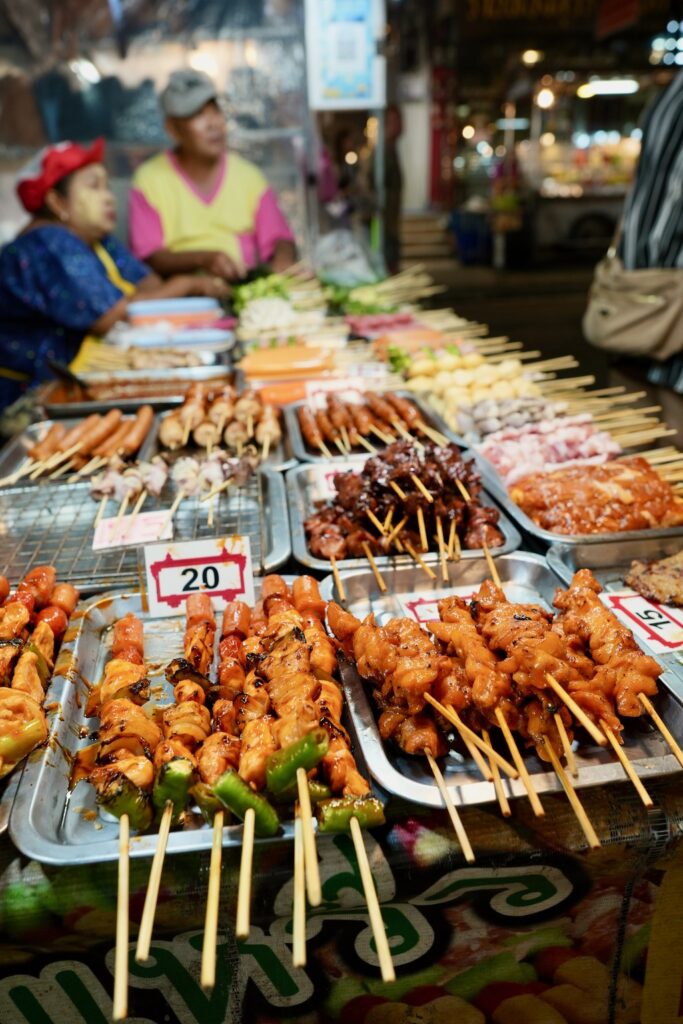
If you’re looking for some of the cheapest and most fun meals while traveling, skip the sit-down restaurant and eat like a local instead. Food stalls, night markets, food trucks and casual street-food vendors are usually inexpensive to begin with, and you won’t have to worry about a service charge, table charge or tip in many destinations.
Night-market culture is especially easy in places like Taiwan and Thailand.
In Taiwan, you can spend an entire evening wandering through a night market, picking up everything from pepper buns and scallion pancakes to fried chicken and bubble tea. Thailand is another obvious example, where evening markets and street-food stalls make it incredibly easy to build dinner one inexpensive dish at a time.
Back in the western world, Portland is packed with food trucks, and cities throughout Europe have their own versions. You’ll find food markets and street-food vendors in places like London, Lisbon, Barcelona and Berlin, while seasonal Christmas markets throughout Europe are another fun way to graze your way through a meal without sitting down at a restaurant.
The other thing I love about this style of eating? You get to try a LOT more things. Instead of spending big on one entrée, you can grab a few small bites from different vendors and turn dinner into your own little food tour.
18. Not a foodie? Prepare food yourself.
If you’re not a foodie, don’t particularly enjoy eating out while traveling, or just want to stick to your usual diet and fitness routine, look for accommodations with a kitchen or kitchenette.
The room itself may cost a little more than a basic hotel room, but if you cook most of your meals, you can often make up the difference through food savings.
This can be especially useful for longer trips. Instead of paying restaurant prices for three meals a day, stop at a local grocery store and stock up on the foods you actually like to eat. Breakfast, lunch, snacks and even some dinners can be made for a fraction of what you’d spend eating out.
This isn’t just a money-saving tactic. Some people don’t want to spend their vacation sitting in restaurants for EVERY single meal. If you’re perfectly happy making oatmeal and coffee in the morning, packing a sandwich for lunch and cooking a simple dinner at the end of the day, why pay restaurant prices just because you’re on vacation?
19. Skip the bar and buy drinks from the market.
Buying drinks at the bar is expensive at home, and it’s no different when you’re traveling (unless you’re going to central Europe where beer is cheaper than water!). No matter where you are, it’s almost always way cheaper to just grab a bottle of wine or a case of beer from the market.
Why not reserve some nights to perch up somewhere low-key with your friends/family and watch the sunset? Or grab some take-out and a bottle of wine and have a movie night in your hotel room. You can hit up the bars and the clubs on another night.
How To Save Money While Traveling: Lodging/Accommodations
20. Book as early as possible.
I have always been an early bird when it comes to travel. The second I know I’m probably going on a trip, I’ll start booking things, even if I haven’t fully committed yet.
My strategy is simple: lock in the price while I can, preferably with free cancellation and no prepayment. This is one reason I love Booking.com: I can reserve a hotel months ahead, lock in today’s rate, and still have the flexibility to change my mind.
In my experience, 99% of the time, prices only go up from there, especially once you get closer to the travel dates. Earlybird gets the worm!
In that rare 1% of cases when I find a lower price or a better-value hotel, I cancel the original reservation and swap it out. There’s very little downside to locking in a good, refundable rate early, but plenty of upside if prices climb later.
Just make sure you’re actually choosing a flexible cancellation policy; not every hotel gives you the same freedom.
21. Book a room with a refrigerator and microwave.
Although some people don’t care about cooking while they’re on vacation, I will absolutely choose a hotel room with a usable fridge and microwave whenever I can.
Las Vegas is a perfect example: at many hotels, the mini fridge is less a place to store your leftovers and more of a mini bar on steroids, packed with drinks and snacks and attached to sensors that can charge you the moment you lift something.
And finding a microwave in a standard hotel room? Good freakin’ luck. You likely won’t even have a coffee machine. It’s all intentionally designed to get you to SPEND SPEND SPEND!
I don’t necessarily want to cook on vacation either. What I do want is the option to bring dinner back to my room, stash the leftovers, and reheat them for breakfast the next morning instead of buying another $20 meal. A fridge is also useful for keeping drinks, fruit, cheeses, and anything else you pick up along the way.
22. Stay at a hotel with complimentary breakfast.

One of the first things I look for when I’m researching where to stay is whether the hotel offers free breakfast. My unofficial checklist is pretty simple:
- Is the hotel rated 8.5+?
- Does it offer free breakfast?
- How do reviewers rate the breakfast (good, excellent, exceptional)?
- And is it within about a five-minute walk of a train station?
If it checks all those boxes and it’s within my budget, oh heck yeah. I’m booking.
Free breakfast is one of my favorite hotel perks because it can save you a surprising amount of money over the course of a trip. And I’m not talking about a sad continental breakfast with a sugar-laden muffins, fake jello-looking eggs, and a stale pot of coffee.
When I’m browsing through hotels on Booking.com, I specifically look for hotels where reviewers rate the breakfast “excellent” or “exceptional.”
A genuinely good hotel breakfast brings me an unreasonable amount of joy when I’m traveling! Give me a buffet where I can load up on eggs, fruit, soup, cooked veggies, coffee, and whatever local specialties they’ve got, and I’m a happy traveler.
It also means you can start your sightseeing without immediately having to spend money on food. Eat a big breakfast, grab a piece of fruit or packaged snack for later, and you’ve already knocked one meal off your daily travel budget.
23. Don’t book the most luxurious room.
If you’re looking at more expensive hotel options, assess your travel style and planned activities before booking.
If you’re debating between the regular 249 sq ft. room vs the deluxe 380 sq ft. room, ask yourself some questions first: How much time will you actually spend in your room? Will you just be sleeping there and using it to shower?
Do you really need that extra space and that city view upgrade? If you don’t plan on using the pool or the fitness center, is it worth paying that extra resort fee?
If you’re doing a mini staycation, okay, I get it: splurge a little because the room is where you’ll be spending most of your time. But realistically, if you’re out and about most of the day and just need a place to shower/sleep for the night, you can save a ton of money by skipping expensive hotels filled with amenities you have no plans to use.
24. Traveling with a group? Book an apartment instead of multiple hotel rooms.

If you’re taking a trip with 3+ people, you can save quite a bit by renting an apartment instead of booking two separate hotel rooms.
An apartment, house, or condo rental is often much cheaper. Plus, you’ll have much more space than in those dinky hotel rooms.
If I’m traveling with my parents or extended family, I’ll typically scour VRBO for vacation rental listings first.
25. Use points or miles.
Chain hotels such as Hyatt, IHG, Hilton, and Marriott offer points/rewards for booking directly and staying on their properties. These points can then be redeemed for free overnight stays.
If you’re loyal to a hotel chain, keep staying exclusively at those hotels to build points for free rooms in the future.
If you’re in the market for a new credit card, consider a branded hotel card that comes with crazy good welcome bonuses! One example is the IHG Rewards Premier Credit Card, which I absolutely love. Their biggest perk? Book 3 reward nights, get the 4th night free. It’s such a money saver, and it promotes slow travel, which I’m a huge fan of!
26. Book hotels for the weekdays.
Hotels are generally cheaper on weekdays, so try to avoid weekends (Friday or Saturday nights). Booking.com is my ultimate one-stop shop for hotel bookings due to their generous no-prepayment and free cancellation policies on many of their offerings. They also have awesome filters
Pro Tip: Too many hotel choices? Here’s what I do. Filter by your minimum rating and then order by price to make sure you’re finding the best “bang for your buck” options. I will usually start at a score of 9+ and work my way down until I find the perfect hotel for the best value!
27. Consider hostels (even if you’re older).
Thanks to the trend of upscale/boutique hostels, these co-sleeping options now rival luxury hotels in terms of style and aesthetics—at a fraction of the cost!
Now before you say ‘gross!’ and skip to the next tip, hear me out! Many of the modern hostels these days have rooftop terraces with BBQ grills, swimming pools, swanky lounges with ample workspace stations, as well as bars, and free breakfast buffets.
Depending on the hostel quality and destination country, you can expect to spend about $5-50 per night for 1 traveler.
And if you’re not comfortable with sleeping in the same room with others, many hostels offer private rooms. Even private rooms in hostels are usually cheaper than hotels.
There are lots of apps and websites to help you navigate the world of hostels. I use Agoda, which is really great for Asia travel, and Booking.com for everywhere else.
When choosing a hostel, I usually look for 4 things – free Wifi (a must), free breakfast (really convenient and saves you more money), an overall rating between 8-10 (on Booking.com), and air conditioning (when traveling during the summer). In any case, it’ll be significantly cheaper than staying at hotels.
28. Outdoor lover? Set up camp.

On my most recent backpacking vacation on Kauai (Hawaii), my friends and I camped half the time we were there, as the majority of hotels on Kauai cost over $350/night which we were really not interested in paying for every night.
From not spending much on half of our nights there, we were able to “splurge” a little more on the nights we did stay at an Airbnb!
If you and your group are down to convert your vacation into an outdoor adventure as well, go camping some nights, because it’s extremely cheap and often even free.
29. Sleep at the airport. (LOL!)
This might be crazy, and it’s definitely not for everyone, but I figured I’d mention it for those of you hardcore savers.
If you find a flight with a long overnight layover that comes in at a whopping $300+ cheaper than the nonstop flight, one night of suffered sleep at the airport just might be worth it.
Just think about what else you could be doing with that $300 once you get to your destination!
30. Consider overnight transportation to save on hotel costs.
If you’re on the move and your next destination takes 7+ hours to reach, consider an overnight sleeper train or overnight bus. In these situations, I typically look into the option of overnight transportation, which conveniently saves a night of accommodation.
Upgrading to first class on buses (if available) makes a big difference, is much nicer than the economy option, and is usually not too much more expensive.
And when taking overnight trains, the bottom bunk is the better option if you’re sensitive to motion!
31. Avoid taxis.
Avoid taxis unless you absolutely have to and there are no other options! Taxis are expensive in most parts of the world–you’ll save a lot of money by opting for public transportation or simply by walking.
We like using Rome2rio, a trip planner that maps out all available transportation options between destinations in major cities and countries.
Another good resource is RideGuru, an online tool that helps compare taxi and rideshare services so you can find the most economical choice for you.
How To Save Money While Traveling: Shopping
32. Don’t overspend on non-essential items on your transit days.
If you’re the type to spend $6-10 on something like a bottle of water, a bottle of soda, or bag of chips, you’ll understand this mistake.
When you travel, travel smart. You don’t need to overspend at the airport. I mean, the trip hasn’t even really started at that point. Wouldn’t you rather spend your money on what matters once you arrive (on things like museums, theme parks, excursions, tours, food experiences, etc.)?
To save money, fill your reusable water bottle and pack snacks and other essentials like sunscreen and a hat so you don’t end up paying exorbitant prices for things you already have at home.
As you get ready to travel by plane, train, or car, don’t get tricked into buying non-essentials — just be prepared and bring what you need!
33. Don’t buy useless items just to “bring something back”.
Put down that ugly, overpriced T-shirt, magnet, keychain, or shot glass! Instead of buying each person a unique souvenir that they may or may not like (let’s face it, one day it’ll be forgotten and just get tossed in another donation box), consider bringing home more shared, practical souvenirs.
Candies, gourmet food products, and fine wine come to mind first. Of course, your destination country may specialize in other practical things, such as stationery, beauty supplies, etc.
These items are often much more affordable (and useful) than whatever useless junk you were initially thinking of buying.
34. Familiarize yourself with the local currency.
Memorize the value of the local currency as well as how to convert it to your home currency to prevent getting screwed over on exchanges. Also, make sure you know what each bill/coin looks like, so you don’t accidentally hand over a coin/bill of 100 when you meant to hand over one for 10.
35. Buy your souvenirs at superstores.
I love buying foreign snacks to bring home to my friends, family, and coworkers. I’ve found that the best places to buy these are at the local superstores or grocery stores. The prices are just better than at stores geared towards tourists.
Whatever you decide, steer clear of buying them last minute at airports, unless you’re willing to pay that premium marked-up price.
Read More: 16 Extremely Simple Ways To Grow Your Travel Fund
How To Save Money While Traveling: Travel Planning
36. Get yourself a good travel credit card for travel insurance benefits.
The ideal travel credit card doesn’t charge foreign transaction fees, has a killer welcome bonus, rewards you with 3x-5x points on travel purchases, and provides complimentary travel insurance so you don’t have to buy it separately.
Ideally, it’ll also come with airport lounge access, which will help feed you / keep you full when you’re in transit on your travels! But, I digress.
Read the terms and conditions to see where and when travel insurance kicks in, so if something bad happens (lost/stolen luggage, canceled flights, medical accidents, etc.), you can file a claim through the credit card to get refunds/replacements.
I didn’t really value travel insurance until my luggage was lost on my way from San Francisco to Lisbon, Portugal. United had left my luggage at the connecting airport, so I got to shop for all new gear (clothing, makeup, toiletries) and got everything reimbursed until my luggage arrived.
Seriously, this is such an often-overlooked advantage of premium credit cards and most people don’t even know it exists!
37. Get yourself a good travel credit card for the welcome bonuses.
Whenever I decide to open a new credit card, 90% of the time I do it to get the points associated with the welcome bonus. There’s not much that can beat travel hacking with credit card points. You can literally fly, stay in hotels, and book excursions/tours for free using credit card points.
Because of all my travel cards, I almost never spend cash on plane tickets since I can “pay” for them with the points I accrue through credit card usage.
If you have a significant other, you can take advantage of flexible point systems like those of Chase, American Express, and Citi, and combine them with sign-up bonuses from you and your significant other. In the end, you’ll have a whole pool of hundreds of thousands of points that you can exchange for free flights and hotels.
A few years ago, I was able to travel all across Europe on a 4-month solo backpacking trip using points to help subsidize the overall cost of the trip. It saved me hundreds of dollars, and my credit card points still save me money today.
38. Play the game of “give and take” with your budget.
If you don’t want to be a complete cheap-o, know when to save and when to splurge. I tend to save drastically on one component of my travels so I can splurge on another.
For example, I’ll often book my flights or hotels with credit card points. Having spent $0 of my budget on getting to the destination, I’ll then splurge a little more on a night’s meal at a fancier restaurant or spend it on a guided food tour, day trip, etc.
Having a budget where you can reallocate money across categories is a great way to treat yourself while staying on track. The goal? Spend on what you actually care about!
39. Go light (or use a credit card that waives bag fees).
The easiest way to avoid a checked-bag fee? Don’t check one.
Pack light enough to fit everything into a carry-on and you’ll save the fee ($35-75 USD these days, sheesh) while also skipping the baggage-claim wait and the possibility of your luggage getting lost along the way.
If you’re open to a travel credit card, another option is to use one that includes free checked bags as a cardholder benefit. Alaska, American, Delta, United and Southwest all have current card options with checked-bag perks, although the rules vary by airline, card and itinerary.
This can be particularly valuable if you’re traveling with a family! Some cards extend the free-bag benefit to other passengers traveling on the same reservation, so a single card can potentially save a family a decent chunk of money.
Obviously, don’t open a credit card just for a free bag if the annual fee doesn’t make sense for how you travel. But if you already fly an airline regularly, it’s worth doing the math.
👉 Pro Tip: Here’s my favorite lightweight-packing trick… stay somewhere with a washer and dryer. Being able to throw your clothes in the wash halfway through a trip means you can pack significantly less, especially for longer vacations. One small load of laundry can save you from hauling an entire extra suitcase around for two weeks!
40. Don’t “wait to buy it there.”
I always try to avoid needing to stop by a drugstore for simple things like toiletries and sunscreen. This is a result of poor planning and will make you spend more than you originally would.
Why? Because these things are usually cheaper when you take the time to shop for them earlier at an affordable store, rather than buying them from the first convenience store you encounter while traveling.
Sunscreen is a prime example. In Italy, I’ve seen basic sunscreen go for well above $20 USD. At an all-inclusive resort I’ve stayed at in Mexico, a basic bottle of sunscreen was being sold for $31 USD!
Eye-gouging prices, no thank you! I’d rather just bring small bottles I already have from home.
41. Use an eSIM (and never pay full price!)

If your phone supports eSIMs, set one up before your trip instead of paying your regular carrier’s international rates.
An eSIM lets you buy a local or regional data plan and use your phone abroad without swapping out your physical SIM card. It’s incredibly convenient, and in many cases, much cheaper than adding an international package through your home carrier (I think T-Mobile charges like $10 USD/day for international data).
But here’s my even bigger tip: never buy an eSIM package without looking for a coupon first! Some companies run promotions and offer discount codes all the time, so there’s really no reason to pay full price when you can knock a few bucks off with a quick search.
I personally use Airalo, and I use a trusty 10% off coupon every time I buy a new package. And since you’ve made it this far into this post, I’m sharing it with you here: AIRALOESIM10
You’re welcome!!!
Pro Tip: Don’t wait until you’re standing at the airport trying to figure this out. Set up your eSIM before you leave while you still have reliable Wi-Fi, and make sure you understand when the plan activates so you don’t accidentally burn through your data before you even arrive.
42. Be strategic when pulling money out of the ATM.
When I’m traveling, I always bring my Charles Schwab debit card.
Why this is an absolute must for travelers: it refunds your account with any money that foreign ATMs charge you. You can literally pull money out whenever you want, wherever you want, and it won’t cost you a penny more to do so!
43. Restrict yourself a bit right before your trip.
One of my favorite ways to save money for a trip actually happens before I ever leave home. Instead of trying to just spend less once I’m traveling, I try to spend less in the weeks leading up to the trip and put that money toward my travel budget instead.
For me, that usually means clearing out the fridge and getting resourceful with what I already have. Why go grocery shopping for a bunch of new meals when I’m about to leave town anyway?
I’ll challenge myself to use up the random ingredients, leftovers and pantry staples that have been hanging around. And when it gets down to T-minus one or two days before a trip, you can usually find me eating some very glamorous combination of rice, canned sardines, eggs and kimchi.
Is it the most exciting meal I’ve ever made? No. But it’s cheap, filling, clears out my fridge and means I’m not throwing away food before I leave.
You can take this even further with a no-spend week before a big trip: skip the DoorDash, don’t buy random Amazon things, make coffee at home and shop your pantry and freezer first!
44. Download messaging and calling apps.
Rather than buying international calling/texting add-ons through your carrier, just download messaging and calling apps. Skype and Google Hangouts allow you to talk and video chat anyone else with the app at a reduced rate (Google Hangouts even lets you dial most U.S. and Canadian numbers for free).
To send text messages, get Line, WhatsApp, or Viber, and message for free.
45. Always withdraw money and never exchange.
One of my biggest travel money rules: don’t exchange a bunch of cash before you leave home, and definitely don’t make the airport currency exchange counter your first stop.
Those exchange services often build their profit into the exchange rate and/or charge fees, meaning you can end up getting significantly less foreign currency for your dollars.
Instead, I generally withdraw local currency from an ATM once I arrive. Your bank or card network will typically use a much more competitive exchange rate than a tourist-focused currency exchange counter. ATMs for the win!
There is one important catch, though: when the ATM asks whether you want it to convert the transaction into your home currency, say NO. Choose to be charged in the local currency.
This lets your bank or card network handle the conversion rather than allowing the ATM operator to set its own exchange rate, a practice known as dynamic currency conversion that can cost you more.
46. Don’t have specific dates (or even a destination) in mind.
If you’re up for some spontaneity, use Google Flights periodically to explore potential flight destinations that come cheapest. About once a week, head to their homepage, click on the map instead of entering destination/dates.
It should default to “one week trip in the next six months.” From there, browse the map for places you wish to visit. What Google Flights will do will show the cheapest flights in that 6 month period.
With this method and flexibility in your travel dates, you can snag some really good flight deals. In general, travelers who don’t have specific dates they absolutely need to travel on will save a lot of money.
Flying on a Thursday, for example, instead of a Friday could save you several hundreds of dollars, as well as staying at hotels mid-week versus the weekend.
Surprisingly, travel deals sites such as Travelzoo can offer good deals on flight tickets and vacation packages, too.
47. Follow airline mistake fare deals.
Sites like Going will track and announce any error fares travelers can take advantage of.
When the deals are really good, you can find some really discounted flights, including the US to Mexico for under $200 and the US to Europe for under $400 round trip.
I love browsing these sites on a daily basis whenever I start getting the travel bug!
48. Invest in a good pair of walking shoes.

A comfortable pair of travel shoes is a crucial investment because you will have to walk a lot when you travel. Your feet deserve better than to be howling every night from being beaten up in stiff shoes.
Worst case, a bad pair of shoes could force you to buy a new pair of emergency shoes! Let me explain.
On one of my more recent trips to Tokyo, I brought the wrong pair of shoes and ended up with feet that hurt so badly I finally broke down and bought a new pair of sneakers while I was there.
They were full-price, they weren’t even particularly cute, but in that moment, I didn’t care because at that point I would have paid almost anything to make my feet stop hurting.
They felt like absolute HEAVEN on my feet at the time, but it was one of the worst travel purchases I’ve ever made for my wallet. A desperate full-price shoe purchase in Tokyo because you can barely walk? Not smart, haha.
Go to your destination prepared! My all-time favorite travel shoes these days are the tried-and-true Ecco Soft 7 (they’re stylish, comfortable, and have been raved about for decades since they were first created)! The best part is that they have them for both men and women.
Want to find out more about what travel resources I actually use consistently in my own travels? Check out my top money-saving resources and my complete list of travel resources.
I hope some of the travel tips and money-saving hacks described above will prove to be useful during your own travels! Saving money while traveling is really not too impossible, as long as you’re familiar with the tactics to reduce costs.
What are your tips for saving money while traveling?
Read More:
16 Extremely Simple Ways To Grow Your Travel Fund
Where I Find The Best Travel Deals And Discounts
20 Brilliant Travel Hacks That Will Make You An Expert Traveler
25 Top Travel Gadgets That Will Make Your Next Trip So Much Better
