
If you’ve followed me for any length of time, you know Papu and I love a good food tour — that’s what comes with the territory when you’re dating a food-loving maniac with a fast-AF metabolism.
Eating while traveling is ALWAYS on the table.
It doesn’t even matter where we go. We could be totally familiar with the destination and the local cuisine. We’ll book a food tour just to deepen our knowledge of the local culture and try lesser-known foods that would never have made it on our radar.
On our weeklong trip to Seoul, we booked tickets to Secret Food Tours’ Seoul walking food tour as a gift for Papu’s parents so they could taste the country through its classics, comfort foods, and dishes you only really appreciate after someone explains the story behind them.
It ended up being the main highlight of the week for all of us!
This tour covers a bunch of stops across Jongno and Euljiro, 7+ food tastings (though we had way more than that on our tour), lasts about 3–3.5 hours, and gives you a crash course in Seoul’s market culture, traditional snacks, home-style bites, and teahouse rituals.
Here’s everything we ate on our food tour in Seoul.
This post may contain affiliate links. You won’t be paying a cent more, but in the event of a sale, the small affiliate commission I receive will help keep this blog running/pumping out useful and free content. Thanks a lot!
Table of Contents
Where Does This Food Tour Take Place?
This tour covers a compact but incredibly rich stretch of central Seoul, starting in Gwangjang Market and weaving through the narrow alleys of Ikseon-dong before ending near the cultural hub of Insadong.
Each neighborhood gives you a different angle on Korean food culture—traditional, everyday, and artsy—all in one walkable route.
Gwangjang Market: Seoul’s Oldest Traditional Market

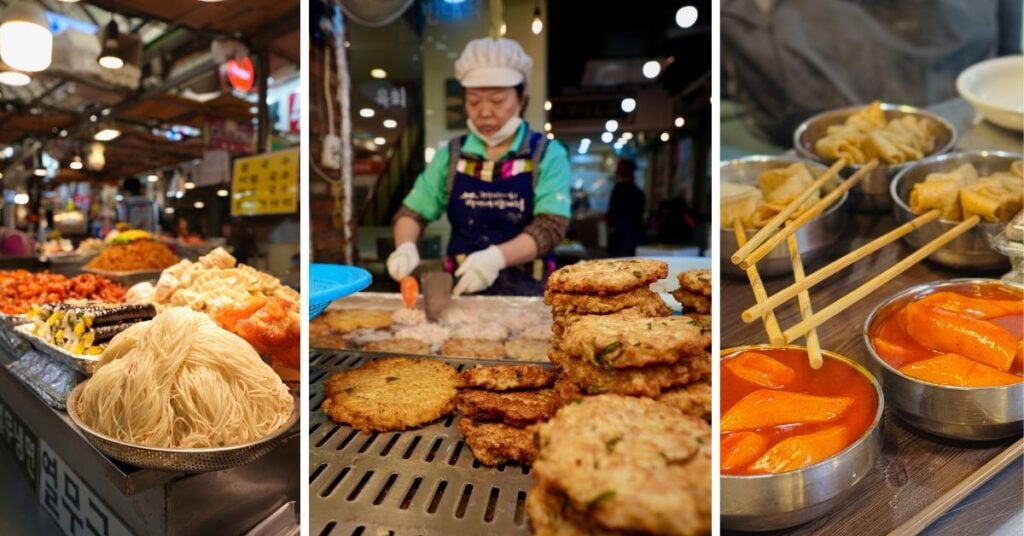
Your tour starts inside Gwangjang Market, one of the oldest and most iconic traditional markets in South Korea. Established in 1905, this was originally a place where locals came to shop for fabrics, hanbok, and household necessities.
Over time, it evolved into a food destination, packed with tiny stalls serving quick, hearty meals to workers who needed something warm and filling before heading back to their shifts.
Today, it still has that “locals first” energy (though some stalls have made it more foreigner-friendly by dialing back the spice). You’ll see grandmas flipping mung bean pancakes with decades of muscle memory and vendors hand-cutting noodles at lightning speed.
But it’s also become popular among visitors thanks to Netflix (features Cho Yoonsun’s Gohyang Kalguksu knife-cut noodle stall).
What You’ll Find Here includes knife-cut noodle soups (kalguksu), tteokbokki and fish cakes, all kinds of Korean pancakes (bindae-tteok), gimbap and mayak gimbap, freshly made dumplings, raw beef dishes (yukhoe), old-school snacks and sweet treats.
STILL NEED AN E-SIM FOR YOUR TRIP? Our go-to eSIM provider is Airalo! For a limited-time, you can use promo code AIRALOESIM10 for 10% off your booking. Explore all their affordable plans here.
Ikseon-dong: Narrow Alleys, Hanok Cafes, and Nostalgic Charm

From the market, you’ll walk through Ikseon-dong, a restored hanok village that blends old architecture with newer, creative businesses.
The alleyways are tight and winding, lined with salt bread bakeries, tiny cafés, traditional tea shops, boutique stores, and dessert spots that you wouldn’t stumble onto unless you were intentionally looking for them.
It’s also where you’ll stop for a break at a traditional teahouse on this tour, a peaceful reset after the bustle of Gwangjang.
👉 A FIRST-TIMER MUST: These areas are the perfect intro to Seoul for first-time visitors because they offer a concentrated view of Korean culture: market food, artisan shops, hidden tea houses, and everyday eateries all in one walkable loop!
Everything We Ate On Our Walking Food Tour
Stop 1: Yukhoe + Bindae-tteok
Our tour kicked off inside the lively maze of Gwangjang Market, where we sat down at an actual restaurant near the entrance to try two Korean staples:
Yukhoe – Think of it as Korea’s version of beef tartare: raw, hand-cut beef mixed with sesame oil and served with thin slices of Korean pear.

I’m not usually drawn to raw beef dishes at the morning hours of 10am, but the freshness of this dish was calling to me relentlessly. It was so freakin good! The sesame oil adds a nutty smoothness that makes this surprisingly easy to enjoy any time of day.
Mung Bean Pancake (Bindae-tteok) – You’ll see literal mountains of this the moment you step into Gwangjang Market. Even if you tried to ignore it, you couldn’t—the stacks are everywhere, and the smell finds you before you find the stall.
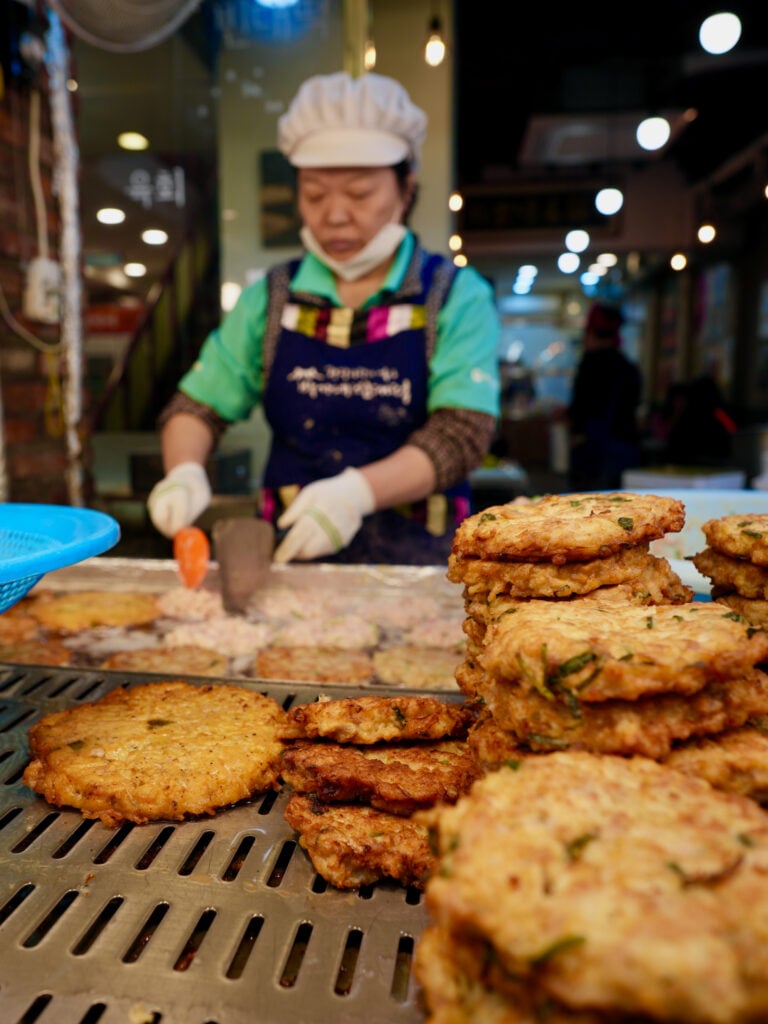
The pancake itself has crispy edges, a soft, hearty center, and a savory flavor that pairs perfectly with the tangy dipping sauce and a small pile of pickled onions.
All in all, this was a great start! The dishes were super approachable and a perfect warm-up for the heavier dishes coming next.
Stop 2: Classic Korean Street Bites
After leaving the first restaurant, we moved through the market a handful of steps before entering another small restaurant inside the market, where the tables were filling up fast for lunch.
Our guide was able to secure us a private table upstairs, which was great because we ended up spending quite a bit of time grilling him about all sorts of aspects of Korean culture—high school testing, nightlife for young people, working culture, and more.
We definitely lost track of time, and he was happy to answer every question so we could understand the local culture a little better.
Amidst out fascinating conversations, here’s what we ate:
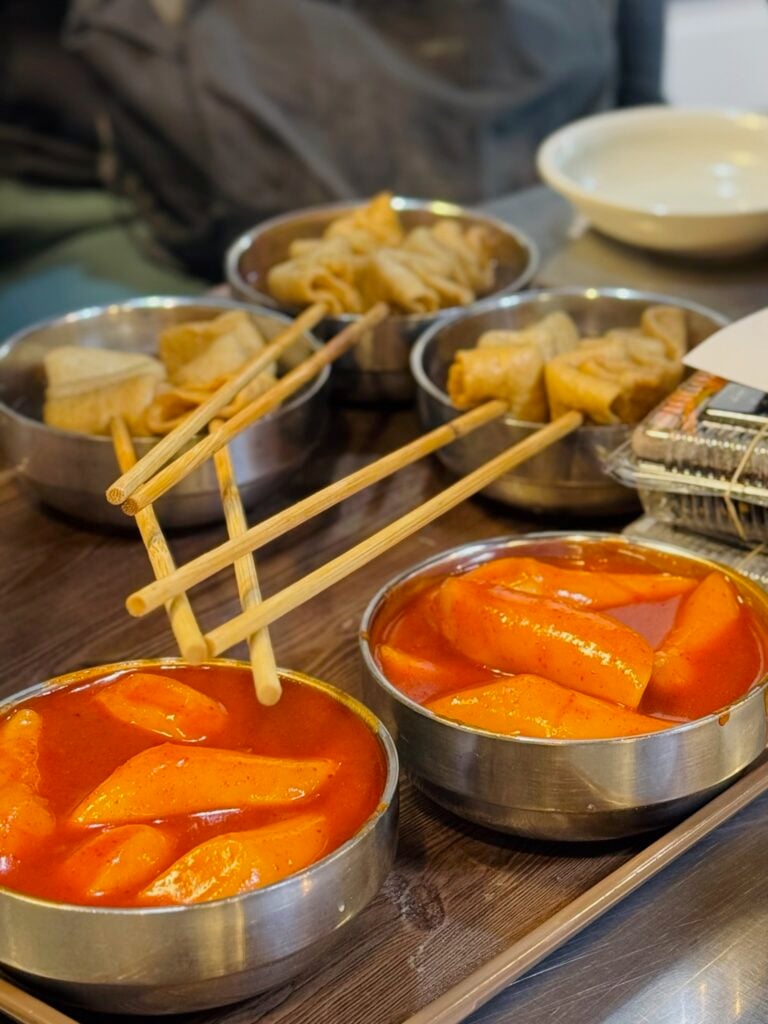
Fish Cake Skewers (Odeng) – Served in a hot, peppery broth; a staple on cold days when you’re itching for a quick snack in the streets of Seoul.
Tteokbokki – Chewy rice cakes in a spicy-sweet red sauce. Classic, dependable, and a forever-favorite. These were by far the largest rice cakes we’ve ever seen in a tteokbokki dish. If you’re obsessed with chewy textures like I am, you will be in heaven!
👉 Can’t handle spice? Typical tteokbokki is SPICY. But since this is a foreigner-friendly market, the tteokbokki here isn’t too spicy. Have at it!
Gimbap – Mini seaweed rice rolls, simple and addictive.

Pork Cheek With Kimchi & Fermented Shrimp Paste – Surprisingly tender and packed with flavor. The fermented shrimp paste was a punch, but in a good way.
Bibim-guksu – Cold spicy noodles. Fresh, tangy, and a good palate reset after all the savory bites.
This stop felt like a full lunch in itself. In fact, I’d go as far as to say that it was a feast. That’s how much food there was.
Even with a sizeable group of 8, we had a bunch of leftovers that no one could fit in their bellies. If you come hungry, you’re in good hands!
Stop 3: Hotteok (Korean Sweet Pancakes)
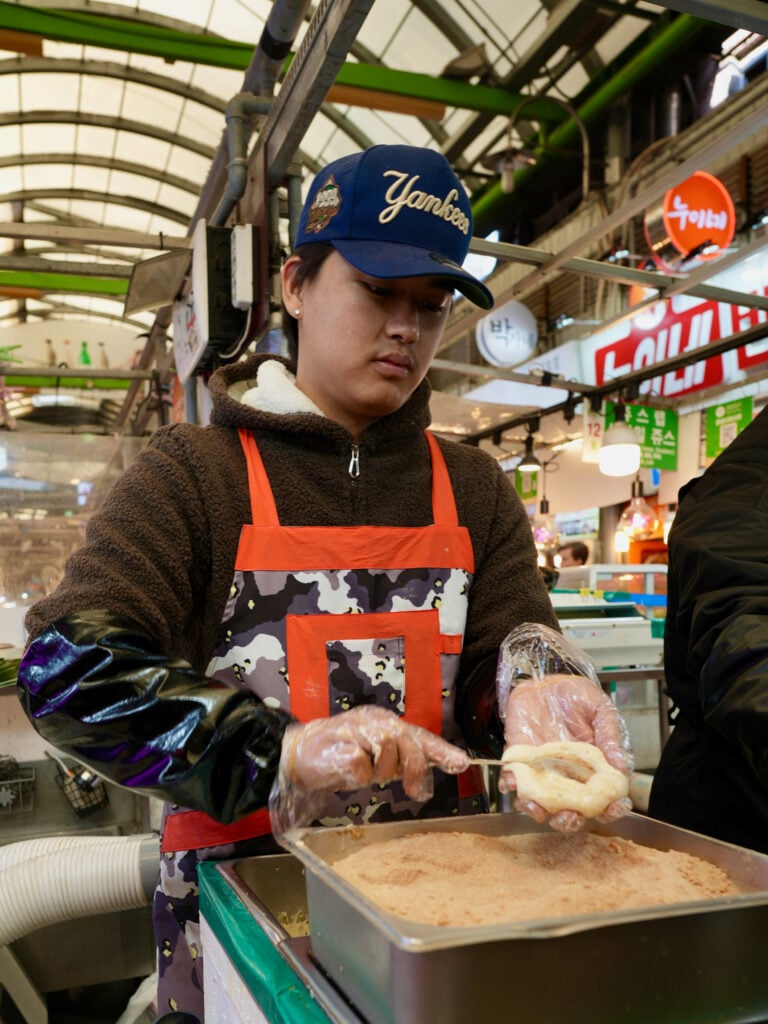
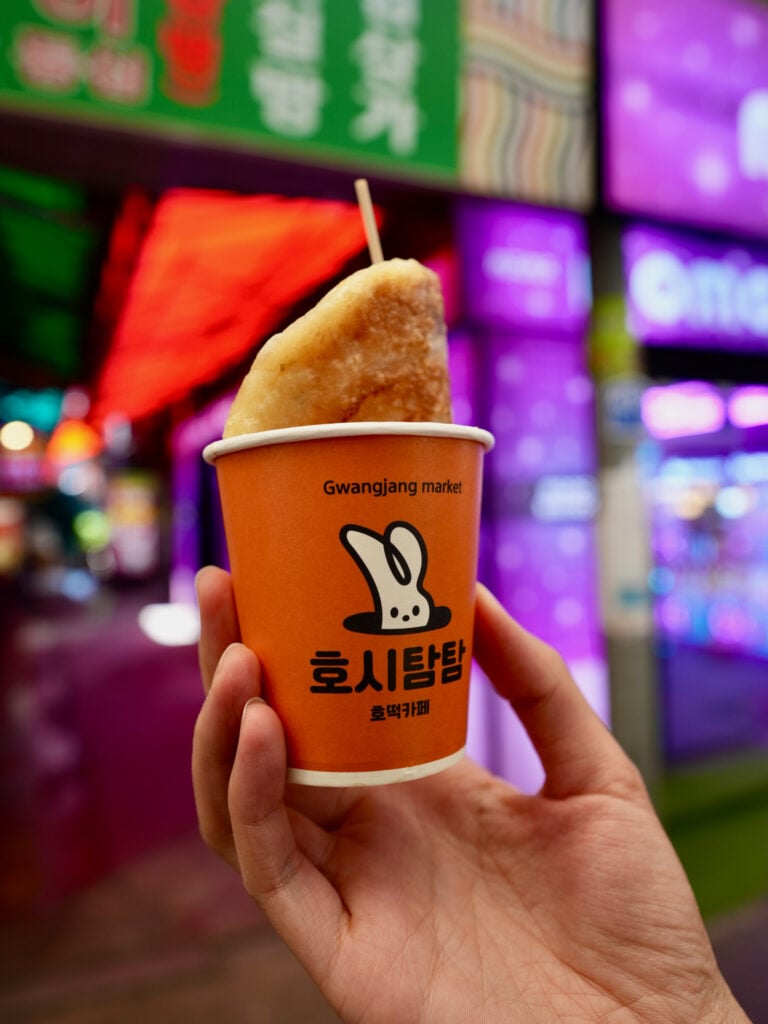
No food tour in Gwangjang is complete without hotteok!
We tried the traditional peanut-cinnamon-brown sugar version, prepped in front of us, hot off the griddle!
I was actually shocked that I had never come across this sweet treat before (where can you find this in California??), because it’s all the rage here in Seoul.
It was by far one of my favorite discoveries in South Korea! It’s sticky, nutty, crunchy, and the perfect dessert following all the savory foods we’d just eaten.
After we finished our hotteok, we veered left and walked straight into the thick of the market. This stretch is where Gwangjang really hits you with the full sensory overload!


You’ll find vats of fresh seafood, trays of marinated crab stacked like armor, every type of kimchi you can imagine, ginseng shops with roots arranged like trophies, and even more food stalls pulling in hungry locals.
This is also where we ran into a line of people waiting for garlic bread. It looked like garlic bread. What was the hype? We didn’t understand until we tried it for ourselves.
Stop 4: Garlic Boy

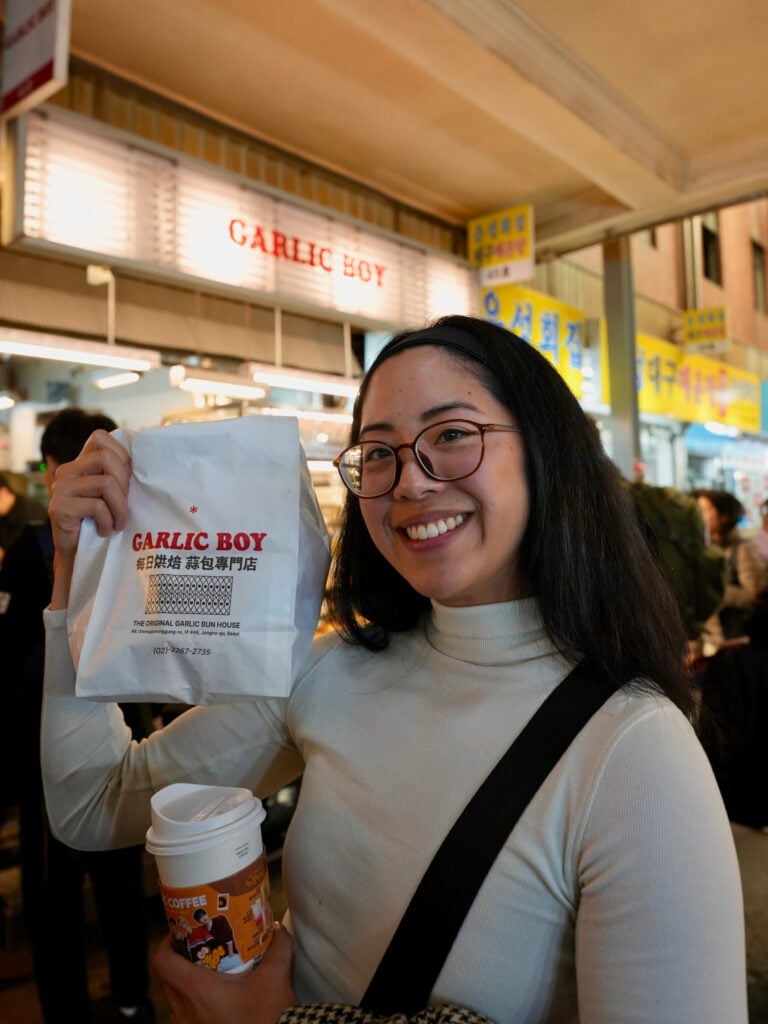
If you’ve seen “Garlic Boy” on social media, then you already know. If not, he’s the guy behind the truffle garlic bread that basically broke Korean food TikTok. It’s loaded with cream cheese and condensed milk—because yes, Korean street food has a soft spot for sweet—and somehow it’s a magical combination.
One bite is all it took for us to understand the hype! Crisp edges, a warm and sweet middle, and a garlic punch that doesn’t apologize for anything.
At this point in the tour, we’d already eaten more than enough, and with everyone getting passed their own bun, we had to stash two of them away for later.
I saved mine for the next morning, and even cold, the garlic flavor alone had me drooling. Honestly? So worth saving for later.
Stop 5: Tteuran Teahouse

After the market frenzy, we walked through Ikseon-dong’s narrow alleyways and into Tteuran, a traditional teahouse that feels like a time-out from modern Seoul.
Everyone got to pick out their own tea to try. Some of the braver folks in our group chose the traditional tea (aka super medicinal); I chose the pear tea, which tasted like a warm, soothing pear compote.
We also shared hobak-tteok (sweet pumpkin rice cake)—my favorite thing on the entire tour. Soft, mildly sweet, and smooth in texture, which can only be achieved by steaming rice flour.
I asked if it’s something you can easily find in sweet shops or supermarkets (you already know I wanted more to bring home to the hotel), but our guide confirmed it’s mostly a teahouse specialty. I loved it so much, I went home looking for recipes!
Traditional Teas We Tried
- Pear Tea
- Jujube Tea
- Ginger Tea
- Black Herbal Tea
- Magnolia Berry Tea
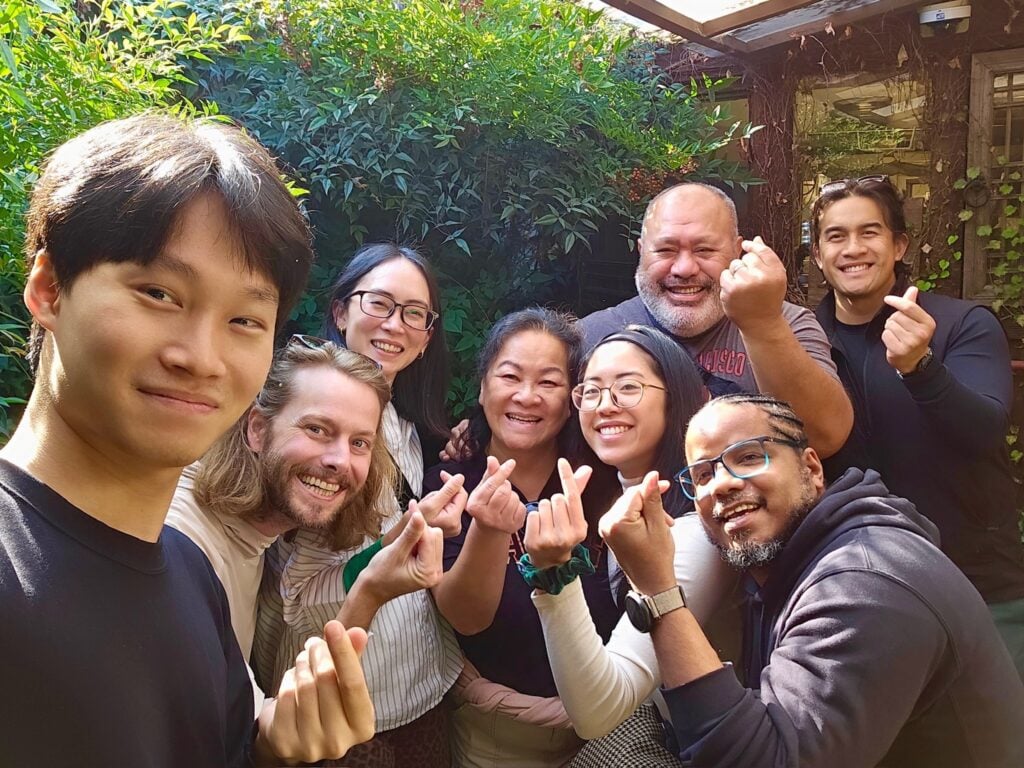
And finally, we ended the tour with a group selfie. A huge thank you to Taeseong for being the best Seoul food tour guide ever!
Who This Walking Food Tour Is Perfect For
- First-time visitors who want to sample a wide range of classic Korean dishes
- Travelers who prefer guidance in markets (Gwangjang can get overwhelming fast)
- People curious about Korea’s traditions and local culture
- Families or multi-generational groups (easy walking, no hills)
- Anyone who wants an “all done for you” experience (no decision fatigue, no ordering stress, no need to struggle with translating/pronunciation)
If you’re picky, vegetarian, or have heavy dietary restrictions, this tour might be trickier since many dishes include pork, seafood, or broth bases. But they do offer veggie-friendly options on request.
Seoul Food Tour: Frequently Asked Questions
Is this tour suitable for vegetarians or dietary restrictions?
Vegetarian options are available, but many dishes traditionally use seafood or pork. Some diets may be hard to accommodate due to the nature of the cuisine.
Should I eat beforehand? Will I be full?
No, do NOT eat beforehand. Papu’s dad ate a breakfast sandwich before the food tour. Big mistake–he was too full to stomach anything after our 3rd stop!
Yes. OMG yes, you will be full after the tour. Between the pancakes, noodles, street bites, breads, and teahouse treats, you’re not eating again for hours.
Is there a lot of walking on the food tour?
About 45 min to an hour total, all flat, no hills, at a very comfortable pace. Wear comfortable walking shoes.
Other Posts You’ll Love:
Seoul For First Timers: 15 Must Do’s On Your Very First Trip!
Seoul is a sensory overload of a city. I mean that in a VERY good…

Seoul: T-Money or Climate Card? My Vote Goes 100% To Climate Card
When it comes to getting around Seoul efficiently, you’ll see two names pop up over…
15 Cool Things To Do In Gangnam – Seoul Neighborhood Guide
Gangnam was my home base for most of my Seoul trip, which means I woke…
What To Bring Back From Seoul: 25 Ideas For Souvenir Shopping
Seoul has a way of making you fall in love downright obsessed with all the…

8 Cool Day Trips From Seoul To Escape The Big City Bustle
Once you decide to step outside Seoul, it quickly becomes clear that day trips here…
Myeongdong Neighborhood Guide: 17 Cool Things To Do In Seoul’s Livelist District
Myeongdong is the Seoul neighborhood that absolutely smacks the jetlag out of you the second…
