
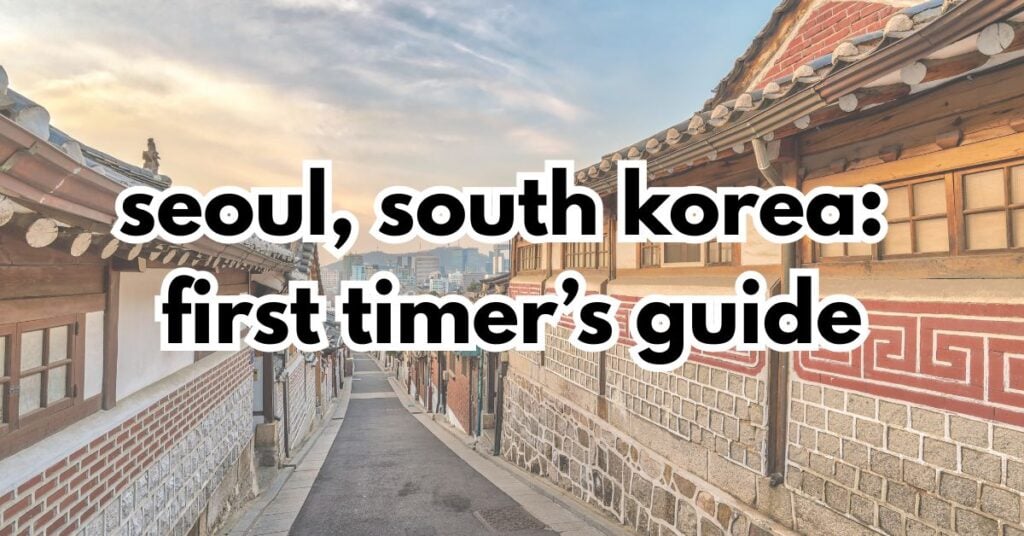
Seoul is a sensory overload of a city. I mean that in a VERY good way.
One minute you’re sipping an iced Americano in a minimalist café that looks like it belongs in a design magazine, the next you’re grilling KBBQ outdoors with a table full of banchan, and five minutes later you’re walking past a centuries-old hanok with glass skyscrapers towering right behind it.
The stark contrast in experiences is what makes Seoul so fun.
On your first trip, expect cute coffee shops on nearly every block (yes, Koreans really do drink iced Americanos year-round), an intense café culture that borders on a hobby, French-style bakeries that rival Paris, and Korean specialties like salt bread and cream-filled pastries you’ll think about long after you leave.
Add in K-beauty shopping, skin clinics that people travel all over the world for, late-night eats, and eclectic neighborhoods that feel totally different from one subway stop to the next, and it’s easy to see why Seoul is so addictive.
We’ve traveled all over Asia, and at this point, we don’t usually build trips around museums or historic landmarks unless we’re with a guide who can bring history to life through storytelling. (If you’re looking for a list of historical landmarks/museums, you’ve got TripAdvisor for that–you don’t need me.)
In Seoul, our days tend to look a lot more local: roaming neighborhoods, popping into random shops, lingering in cafés, eating constantly, and letting the city show off at its own pace.
And yes… you can always find us partaking in a food tour. We love getting to know a place through its cuisine, and Seoul is one of the best cities in the world for that!
This guide is for first-timers who want to experience what Seoul actually feels like, not just check off famous sights. These are the top must-do experiences that we think will give you a real sense of the city.
This post may contain affiliate links. You won’t be paying a cent more, but in the event of a sale, the small affiliate commission I receive will help keep this blog running/pumping out useful and free content. Thanks a lot!
Table of Contents
1. Go On A Food Tour

A food tour is one of the easiest ways to get your bearings in Seoul’s overwhelming food scene, especially if you’re a first-timer who only knows Korean dishes from restaurants back home. (Because Korean food goes way past bibimbap, galbi, japchae, and tofu soups.)
Seoul’s markets and alleyways are full of things you’d probably walk right past without realizing how good they are, and a local guide helps you bridge that gap!
You’ll learn why certain dishes are prepared the way they are, how locals actually eat them, and what foods are tied to different regions or seasons. It’s also a great crash course in local etiquette, like how to eat certain skewers, when to spoon it vs. chopstick it, or even how to order confidently later in your trip.
We took a food tour at Gwangjang Market with Secret Food Tours, and it completely changed the way we approach eating in Seoul.


They advertise 7+ tastings, but ours easily went WAY beyond that, partly because our guide could tell I had about 300 questions about local life and food culture, and he loved feeding our curiosity.
STILL NEED AN E-SIM FOR YOUR TRIP? Our go-to eSIM provider is Airalo! For a limited-time, you can use promo code AIRALOESIM10 for 10% off your booking. Explore all their affordable plans here.
We tried classics like bindaetteok and kalguksu, plus dishes I never would’ve known to order without someone explaining the backstory. 100% recommend this for your first trip to Seoul!
2. Try Salt Bread

Salt bread became a Seoul obsession after Korean bakeries started putting their own spin on the Japanese shio pan. Instead of staying purely savory, many places began brushing the rolls with butter until the outside crisps up and the inside stays airy and chewy, then finishing them with flaky salt.
The result is a simple pastry that tastes almost like a croissant that took a shortcut but still delivers buttery payoff.
If you’re curious about Seoul’s salt-bread craze, Jayeondo Salt Bread is a great place to start. They bake only one item — salt bread — and they’ve poured real R&D energy into getting it right.
After testing more than 100 ingredients and running over 1,000 trials, they landed on a recipe built around Canadian wheat and a generous amount of AOP-certified French butter.
You’ll get a roll with a crisp outer shell, a soft middle, and a buttery bite that leaves just enough salt on your lips to make you want another one. It’s takeout-only, and they bake in limited batches six times a day, so you’ll often see a short line forming ahead of each drop!
If you want the best chance of walking away with a warm loaf, time your visit to one of the baking windows: 9:00 AM, 12:30 PM, 2:00 PM, 3:30 PM, 5:00 PM, or 6:30 PM.
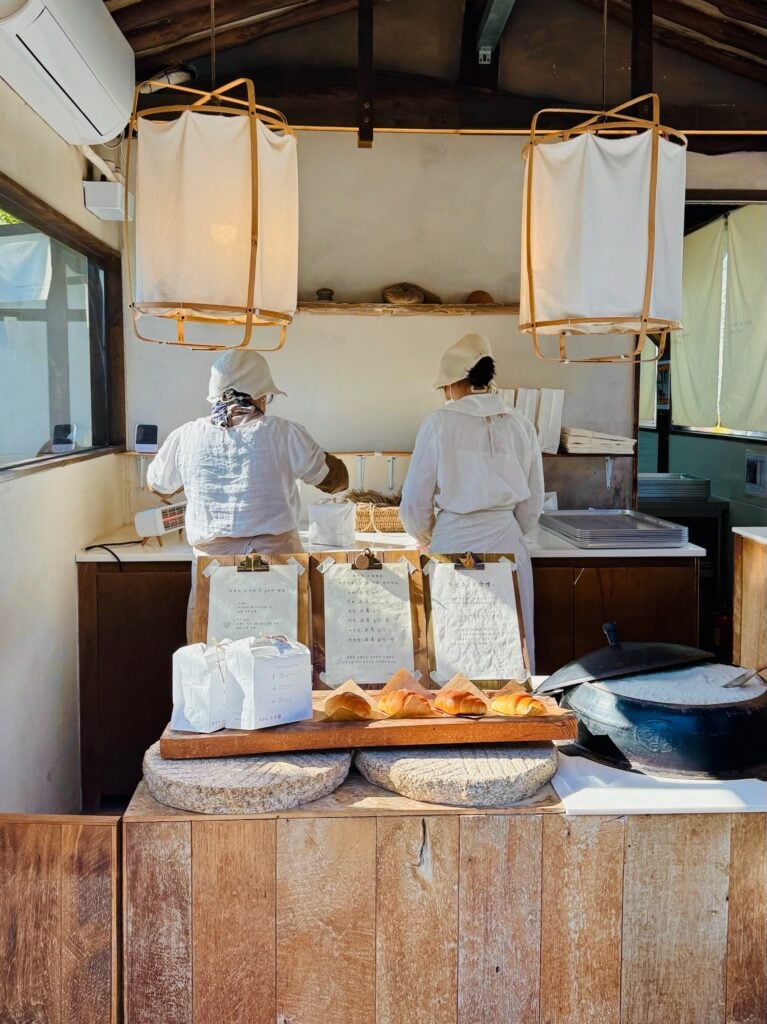

Another heavy hitter is Artist Bakery, currently one of the most talked-about spots in the city. Their salt bread is worth the wait!
I went to Korea knowing I wanted to try at least three salt bread spots over the 6 days we were there… at a minimum. Once I got to Ikseon-dong (aka land of salt bread), my bread curiosity went into full overdrive.
There were SO many bakeries packed into such a tiny area that it almost felt like a salt-bread crawl waiting to happen. We tried Jayeondo Salt Bread AND Soha Salt Pond, all within a timespan of 10 minutes.
Needless to say, it quickly became one of the most pastry-heavy days I’ve had in all my life. (So worth the carbs!!!)
3. Go Café Hopping
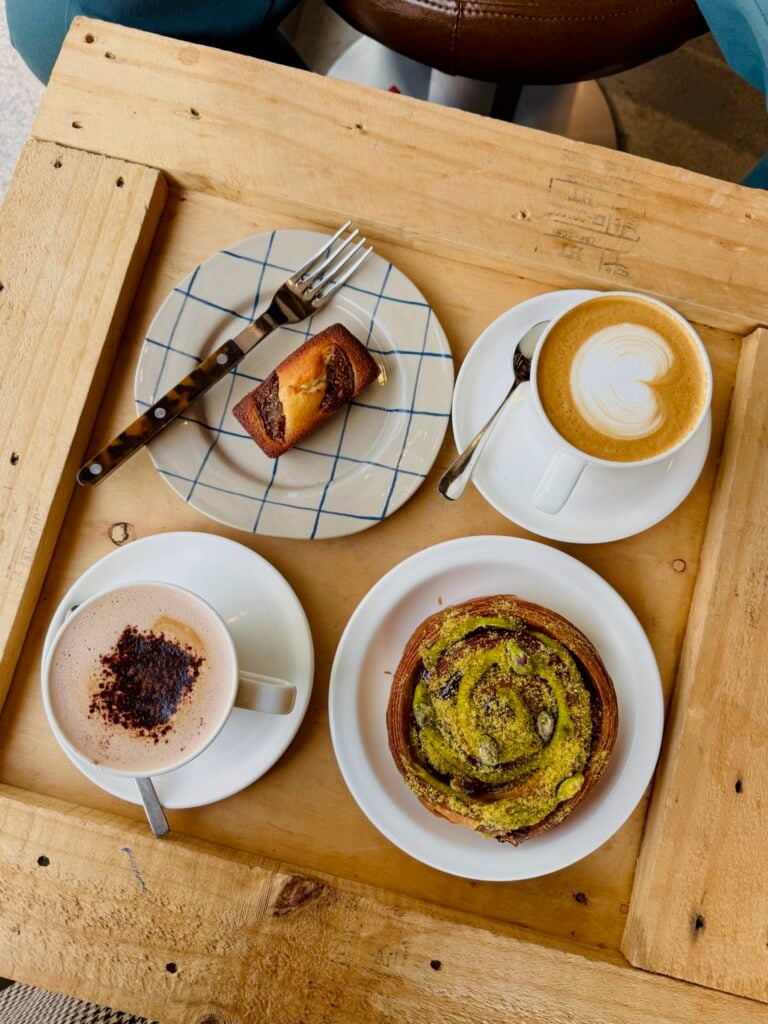
Café hopping is practically a sport in Seoul. The city takes coffee culture to another level — you’ll find theme cafés, minimal cafés, dessert cafés, third-wave cafés, and cafés so design-driven they feel almost like a museum exhibit.
Most places offer beautiful bakes alongside specialty drinks, and many cafés rotate seasonal menus that locals actively chase down. During our fall visit, figs were featured everywhere: cakes, brick toasts, shaved ice, you name it.
Visiting at least one cafe per day is a must! It’s the best way to slow down your trip while still experiencing something uniquely Korean.


We made it a habit to pop into any café that looked interesting, and it honestly became one of the most memorable parts of the trip. Every neighborhood has its own café personality, so no two café-hopping days ever feel the same.
It’s a bit hard to narrow our “favorites” down to a short list, so I’m not even going to try. Just search for coffee shops on Google Maps. You’re going to find them literally EVERYWHERE.
Some of the more trendy ones you’ll see all over social media include:
- Rain Report – don’t know if the coffee is good; people are mostly there for the rainy day vibes
- Cafe Onion – the Bukchon Hanok village location is especially lovely thanks to its hanok-style architecture
- Cheongsudang – a cafe in Ikseon-dong where the desserts are really the star of the show (coffee is really good too though)
- Anthracite Coffee – hip, trendy, and amazing coffee
4. Experience Old Meets New in Ikseon-dong

At this point, I’m pretty sure you’ve seen “Ikseon-dong” mentioned many times already. That’s because this area of Seoul is super duper charming!
This neighborhood blends hanok-style architecture with trendy cafés, boutique shops, and atmospheric restaurants. The alleyways are narrow and fun to wander around, and every turn reveals another cute storefront or dessert shop!
As I mentioned above, this area has also become a hotspot for Seoul’s salt bread craze, so you’ll find standalone bakeries and cafés showing off their own version!
If you’re looking for pointers on what to do/eat here, I got you. We experienced four memorable food spots here (and we highly recommend them all):
- Jongsamyook for KBBQ
- Soha Salt Pond for their creative assortment of salt breads
- Cheongsudang Bakery for coffee and dessert
- Tteuran for traditional Korean teas and sweets


In terms of cool shops to check out:
- Teterot Salon – a must-visit for modern Korean clothing (hanbok-style, but modernized)
- ROYALWATER Ikseon – fragrance shop
5. Experience a Traditional Market


Traditional markets are where you see everyday Korean life up-close. You’re bound to see a whole slew of produce sellers, fishmongers, pork knuckle stalls, banchan vendors, kimchis of all sorts for sale, and… our favorite part… lots of cheap street snacks!
Gwangjang Market is the most famous thanks to its Netflix feature, though these days, many of the highlighted stalls still have long lines. Tongin Market is a great alternative, though smaller, still charming, with both food and shop stalls.
If you want something more local, less geared toward tourists, and a bit cheaper than Gwangjang, Mangwon Market and Namdaemun Market are also fantastic alternatives.
6. Visit Gyeongbokgung Palace in Hanbok

Renting a hanbok and visiting Gyeongbokgung Palace is a classic first-timer experience that almost everyone recommends. Since I also love dressing up, I’m here for it too!
The palace architecture is quite grand, so you’re bound to get some effortlessly amazing photos.
You’ll see plenty of other travelers doing the same thing—families, couples, friend groups, everyone—so you never feel like the odd one out. It’s the same thing as dressing up at historic sites in Japan or China: playful, fun, and zero judgment.
If you’re a couple or traveling with family and want to bring home something more meaningful than magnets or keychains, pair the hanbok rental with a professional photoshoot! One of my friends did this with her mom, brother, and husband, and their photos were so freakin’ cute.
We didn’t get to squeeze it in on our last trip given our lack of time, but you already know it’s at the top of my list for next time. You get to dress up, explore a gorgeous historic site, and walk away with keepsakes that you can print out and hang up on a wall. Total win.
👉 Pro Tip: You can enter Gyeongbokgung Palace for FREE if you’re wearing hanbok. Both traditional and modern styles count! Just make sure you’re wearing a full set: an upper garment (jeogori) and a lower garment (skirt or pants). An overcoat alone doesn’t qualify.
7. Visit a Hanok Village

Seoul still has several neighborhoods where traditional hanok houses have been preserved. Bukchon Hanok Village is the most famous, with more than 900 homes and winding alleys that are best explored between 10 AM and 5 PM (yes, these hours are strictly enforced to respect residents still living there).
If you want something more low-key, Seochon Hanok Village and Namsangol Hanok Village are much calmer and easier to enjoy without constantly dodging crowds or tour groups.
We walked through a couple of these areas on our trip and loved having that slower moment in between all the food stops and sightseeing. It really hits you just how fast Seoul evolved when you’re standing in a centuries-old alley while skyscrapers peek out in the distance.
👉 Pro Tip: If you want to experience Bukchon Hanok Village with fewer crowds, aim for around 3 PM. Mornings and lunch hours are packed, but by mid-afternoon things mellow out and it’s so much easier to wander at your own pace. Just don’t cut it too close — they stop letting people in at 5 PM, and being shooed out by security or police isn’t fun.
8. Myeongdong Night Market
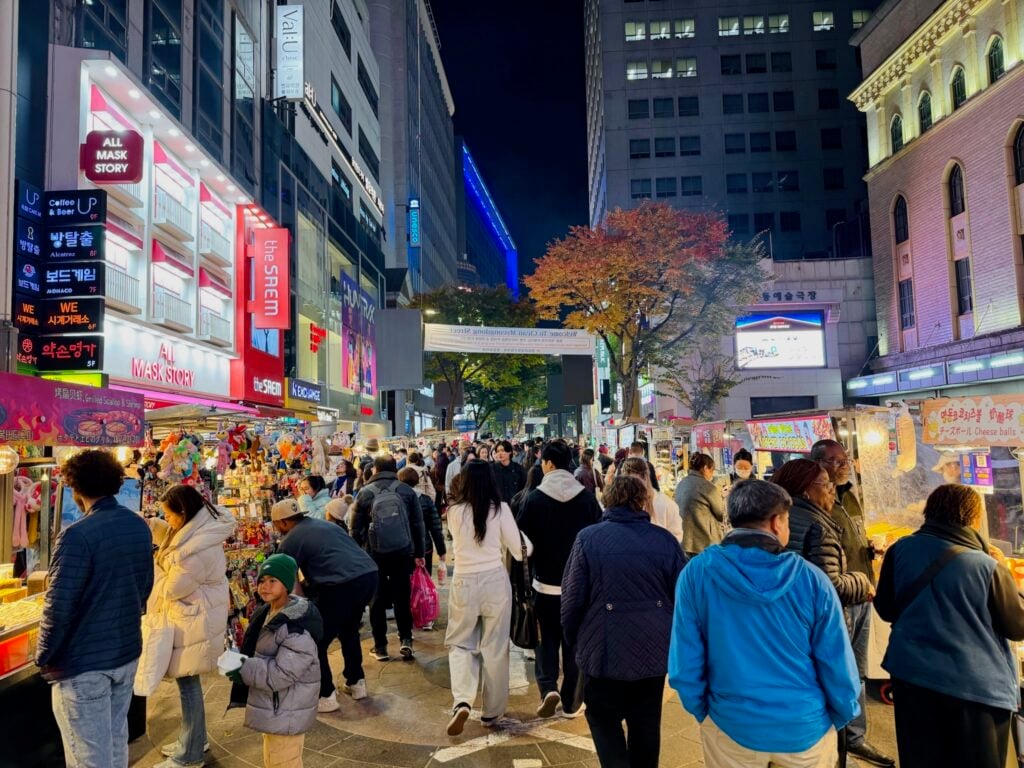
Myeongdong’s night market scene is the easiest way to get a quick fix of Korean street food (tornado potatoes, egg bread, tteokbokki, dumplings, meat skewers, freshly baked sweet potatoes, cheese-filled corndogs, you name it).
Since a lot of first-timers tend to stay in Myeongdong, the convenience of this night market is hard to beat. Yes, the stuff here is a bit more expensive than if you had sought out a night market further away, but boy, is it convenient if you’re staying in the area.
We stayed at voco Seoul Myeongdong, which put us close enough to enjoy the market without being in the hectic center of it. I recommend this hotel as a base if you like food at your doorstep without being in the thick of the mayhem!
9. Take A Day Trip From Seoul


There are dozens of easy day trips you could possibly take from the city, depending on your interests.
For instance, there’s the Garden of Morning Calm for nature lovers (OMG, this was so beautiful in the fall. My personal favorite!), Alpaca World for families, Seoraksan National Park for hikers, or the DMZ for history buffs.
Whenever we visit a major city (such as Seoul, Bangkok, or Tokyo), we plan for at least one day trip during our stay. I think they’re super refreshing and help break up a fast-paced, city-based itinerary.
Instead of experiencing skyscrapers, crowds, and shopping for a week straight, you’ll get a fresh side of South Korea without needing to venture too far outside of the city.
For more day trip ideas from Seoul, check out my full guide here.
10. Taste As Much Kimchi As Possible


Kimchi in Korea tastes wildly different depending on where you eat it — and that’s exactly the fun of it! Some versions are punchy with garlic, others are xxxxtra spicy, and some are surprisingly mild.
You’ll come across napa cabbage kimchi, radish kimchi, chive kimchi, and seasonal variations that reflect what’s freshest at the markets.
We made it a mini-mission during the trip to try kimchi everywhere we went, and the variety shocked us. Some were so good we asked for seconds; some were a little too spicy for my palate, but either way, someone in our group finished the whole plate!
Plus, it comes free with your meal. You can’t beat free!
11. Shopping in Seongsu-dong

Seongsu-dong is one of the trendiest, most creative neighborhoods in Seoul. It’s often compared to Brooklyn, NY because of its effortlessly cool atmosphere, industrial past, and warehouse-style shops.
Today it’s filled with cult Korean brands, stylish cafés, street art, concept stores, and indie designers. Many global luxury brands have even set up architecturally ambitious flagships here because the neighborhood carries so much cultural pull.
Handmade shoe workshops are another big draw, and you’ll see plenty of craft studios around the subway exits.
We ended up spending hours here hopping between cafés, bakeries, and shops, and it made complete sense why Seongsu is one of Seoul’s most tagged locations on Instagram.
What To Eat In Seongsu — Bakery Picks
Sorry, I’m obsessed with bakeries. If you are too, you’re welcome.


- Perment Bakeshop – The cream-stuffed kouign amann completely messed me up because now I cannot stop thinking about this heavenly pastry. Korean cream is impossibly light, not overly sweet, and on that caramelized crispy pastry… absolutely unreal.
- Ho Gwa Dang (Tiger Pie House) – Their apple pie and taco pie were freshly baked and so satisfying after walking around.
- Onion Seongsu – The iconic warehouse-style café that draws lines for its breads and photo-ready interior. A must-visit at least once.
- Rafre Fruit – Viral, but I totally get why. The seasonal fruit bingsu is 100% worth the splurge, especially in fall when figs are featured.
What To Do In Seongsu — Shops

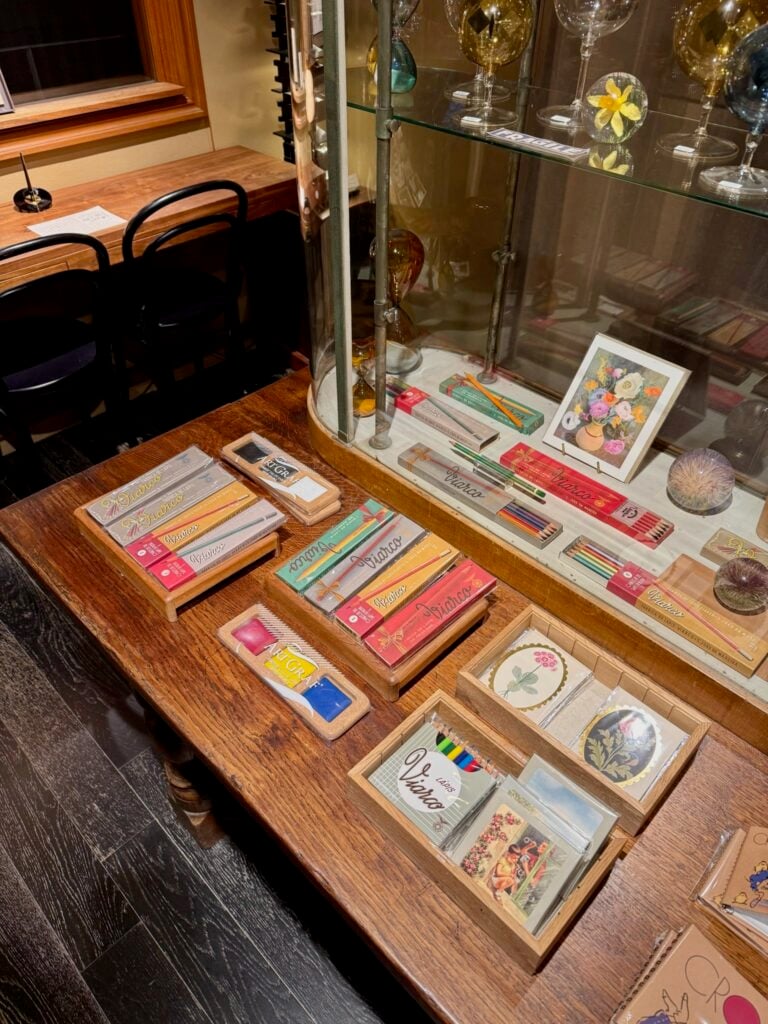
- Point of View – One of the best stationery stores in the city with giftable goods.
- Tamburins – A fragrance brand with a sculptural, gallery-like flagship.
- Seongsu Yeonbang – A cultural complex filled with cafés, slow-living shops, and a dreamy greenhouse café on the top floor.
- Musinsa Standard – An easy place to pick up well-priced essential pieces.
- Monami Factory – Great for DIY pen-making, inks, and stationery gifts.
12. Eat A Luxurious Bingsu

Bingsu is Korea’s go-to shaved ice dessert, and you’ll see it at cafés serving the classic mountain of milk ice topped with sweetened red beans, soybean powder, or fresh mangos with condensed milk.
Those are fine if you just need something cold or sweet, but if you’re only trying bingsu once on your trip, you’ll wanna level up. Seoul has a handful of spots that take it seriously, using ultra-soft shaved milk, fresh seasonal fruit, and toppings that don’t taste like they’ve been sitting in a fridge all week.
Rafre Fruit is one of the most famous spots and focuses on real fruit rather than sugary syrups. If you visit in the fall, their seasonal fig bingsu is what fig-lovers’ dreams are made of!
We waited about 45 minutes for our fig bingsu at their smaller Seongsu location, and it was absolutely worth every minute. This thing was not cheap (~$22 USD) but was covered in fresh figs and topped with a gooey honeycomb. Truly one of the best desserts I’ve ever had.
If you want to go even fancier, head to Andaz Seoul Gangnam’s Jogakbo for their seasonal mango or strawberry bingsu. It’s easily double the price, but people line up for a reason.
13. Eat Korean Porridge For Breakfast
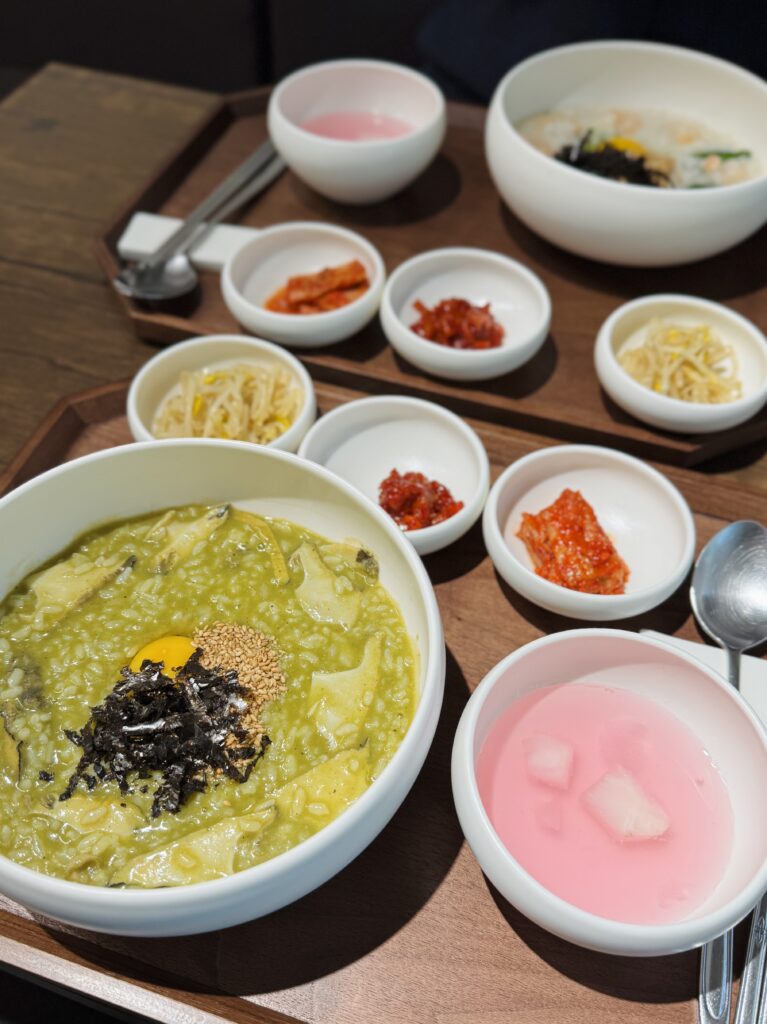
Korean porridge (juk) is comfort in a bowl. It’s warm, thick, and savory, and comes in all sorts of variations: pumpkin, red bean, seafood, mushroom, abalone… whatever your tummy desires!
The abalone version is the go-to if you want the “classic” experience, especially because abalone is considered a nutritious ingredient in Korean cooking. Most porridge chains open early, making it an easy breakfast option when you’re still adjusting to the time zone or just want something gentle on your stomach.
You can either search “juk” in your maps app or, for simplicity, search for Bonjuk (a local chain with locations in multiple neighborhoods). Seowonjuk and Songjuk are also great!
I make it a point to get abalone porridge whenever I’m in Korea, and it always hits the spot and tastes a million times better than the packaged version I’ve been buying from the Korean supermarket.
14. Kalguksu Alley in Namdaemun Market
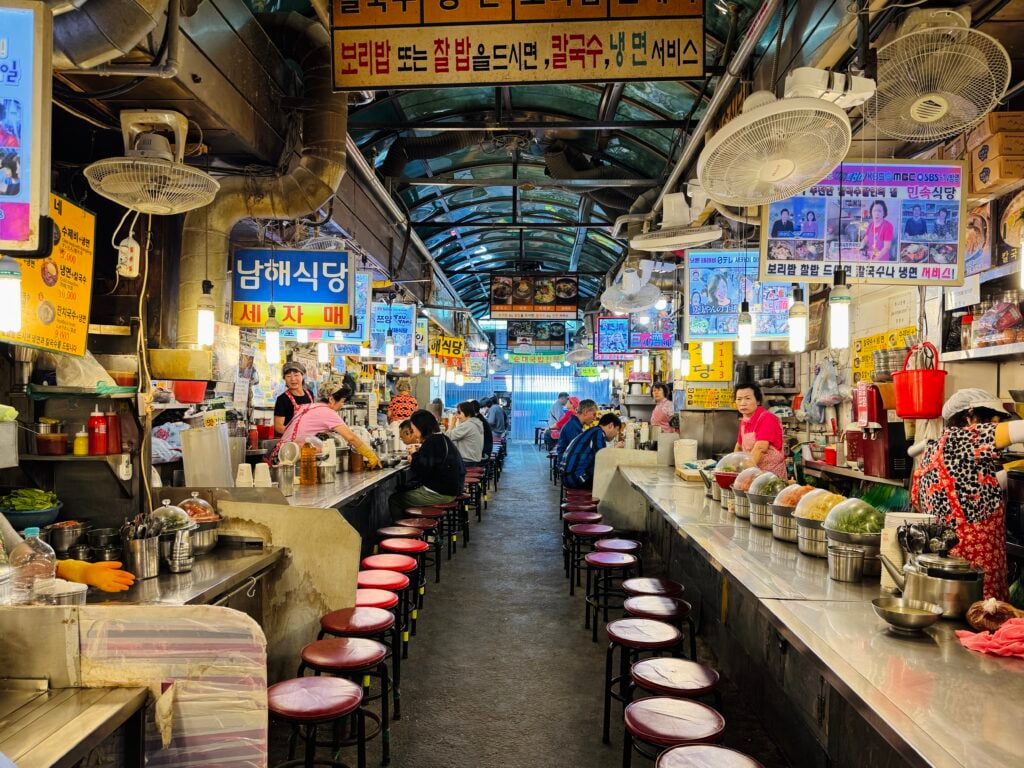
Namdaemun Market is Seoul’s largest traditional market, with over 10,000 stores packed into streets, alleys, basements, and multi-level buildings.
If you want to see how locals actually shop (without all the fancy name-brand storefronts), this is where you go.
You’ll find specialized areas for everything: women’s clothing, kids wear, bedding, glasses, stationery, cameras, military gear, and piles of household goods you didn’t know you needed.
Explore Namdaemun Market for long enough, and you’ll eventually come across a narrow strip crammed with small shops serving kalguksu (knife-cut noodle soup), bibim naengmyeon (spicy cold noodles), and bibimbap made with barley rice. This is Kalguksu Alley, a hidden-away noodle paradise.
Every stall looks kind of similar, and that’s part of the fun because it’s a real circus trying to walk through the alley as you try to decide which stall to eat at. Once you pick one, bowls fly out fast, everyone slurps unapologetically, and no one is there for the frills.
Order a bowl of noodles of your choice and be on your merry way.
How to get there: Hoehyeon Station (Line 4, Exit 5). Turn right, walk about 40m, then left into the alley with the “국수골목” sign. About 1 minute.
15. Visit an Olive Young
Olive Young is everywhere in Seoul… to the point where you’ll start recognizing their green signage in your sleep. They’re the authority for Korean skincare, cosmetics, supplements, haircare, and beauty tools. Like Sephora in the USA, with a little bit of Target energy.
In Myeongdong alone, you’ll see what feels like 6–10 Olive Young stores within a few blocks, each one stocked with the most current K-beauty trends, bestsellers, and exclusive deals you can only find in SK.
They carry everything from cleansing oils, toners, and serums to hair masks, beauty supplements, pimple patches, lip tints, sunscreens (very popular), body care, and every type of sheet mask under the sun.
If you’re not sure what to get, the staff is surprisingly knowledgeable and usually speaks enough English to help you figure out what your skin actually needs.
If you need to re-up on skincare, the stuff here is fractions of the price you’d pay in the USA!
I can attest to the awesome savings! For example, the Torriden Dive-In Serum costs ~$24 USD for the 50ml bottle. I went to Olive Young and got the set WITH a refill pouch for $18.50 USD. Plus, it was tax-free!
I’ve visited Olive Young more times than I can count, and each location is slightly different (so if you’ve been to one, you haven’t been to them all).
BONUS: Stop by Seoul Culture Lounge
If you’re looking for something hands-on, local, and genuinely fun, make time for a stop at Seoul Culture Lounge.
It’s located inside Seoul Tourism Plaza, right near Myeongdong and Insadong, which makes it an easy add-on between shopping, cafés, or wandering traditional streets.
This spot offers free cultural classes that dive into different parts of Korean culture. We’re talking things like Korean calligraphy, mother-of-pearl crafts, K-food cooking classes, paper art, and even K-beauty styling sessions.
If you’re lucky enough to snag a spot in one of their free classes, you won’t just be watching a demo… you’ll be actually making something or learning a skill you can take home with you!
Classes change weekly and fill up fast, especially the popular ones like K-food and K-beauty.
👉 Pro Tip: About a week before your trip, check the Seoul Culture Lounge site and sign up as soon as the new weekly schedule drops. Spots are limited, and once they’re gone, they’re gone.
Other Posts You’ll Love:

Seoul: T-Money or Climate Card? My Vote Goes 100% To Climate Card
When it comes to getting around Seoul efficiently, you’ll see two names pop up over…
15 Cool Things To Do In Gangnam – Seoul Neighborhood Guide
Gangnam was my home base for most of my Seoul trip, which means I woke…
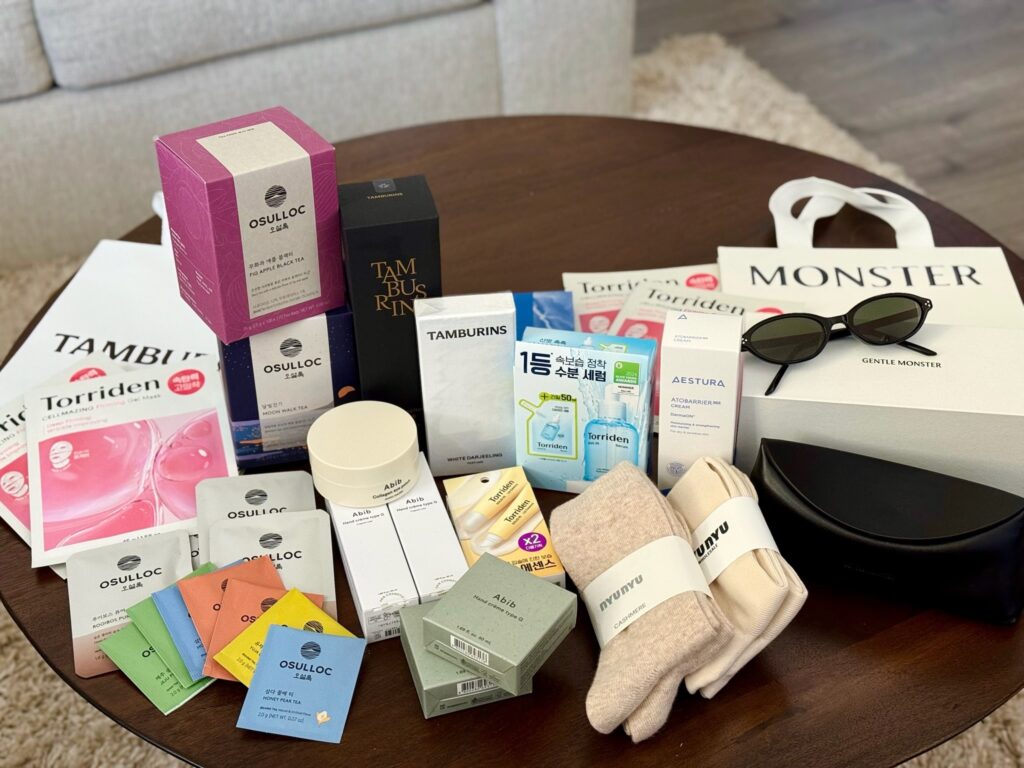
What To Bring Back From Seoul: 25 Ideas For Souvenir Shopping
Seoul has a way of making you fall in love downright obsessed with all the…

8 Cool Day Trips From Seoul To Escape The Big City Bustle
Once you decide to step outside Seoul, it quickly becomes clear that day trips here…
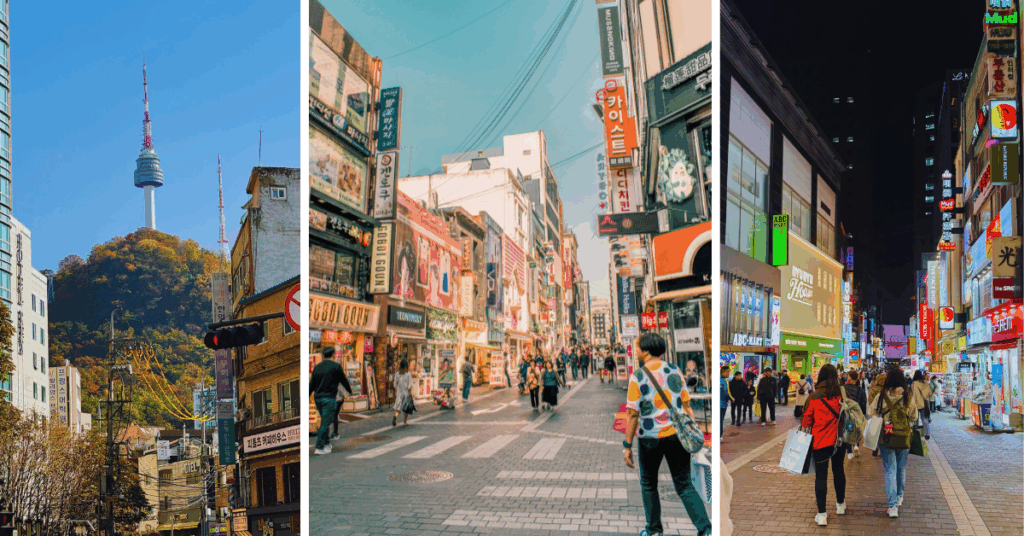
Myeongdong Neighborhood Guide: 17 Cool Things To Do In Seoul’s Livelist District
Myeongdong is the Seoul neighborhood that absolutely smacks the jetlag out of you the second…

15 Must-Try Foods At Gwangjang Market
Walking into Gwangjang Market is a feast for the senses. ALLLL the senses. The moment…
