
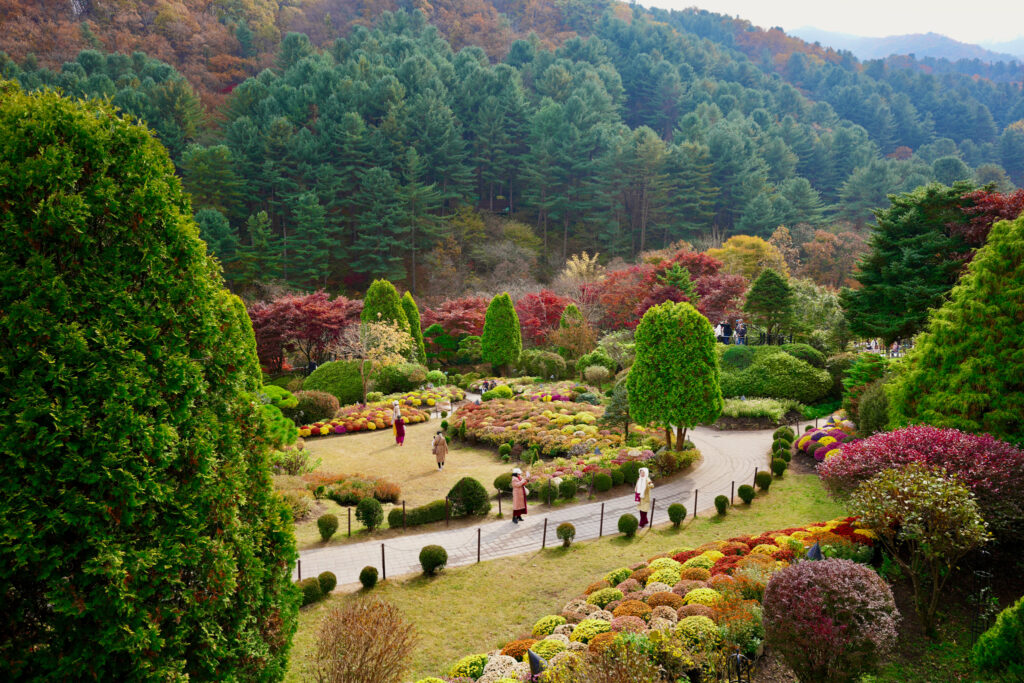
This year, I took my first-ever trip to South Korea, and I’m so glad it lined up with autumn. My first visit to Japan back in 2016 also happened in the fall, so it felt fitting that my first time in Korea unfolded under the same canopy of color.
And honestly? I can’t imagine a better season to go.
The hillsides were covered in deep reds, burnt oranges, purples, and bright yellows, all mixed with patches of still-green trees that looked like they were taking their time easing into the season.
Seoul itself puts on a solid show, but if you want jaw-dropping, too-good-to-be-real kind of scenery, you’ll want to carve out time for the Garden of Morning Calm.
I visited early in the morning on this combo day trip from Seoul that included the garden, Nami Island, and the Gangchon Rail Park. Out of the three, the Garden of Morning Calm easily stole the spotlight.
I’m the type who will go far out of my way for fall foliage (mostly because I barely get any of it where I live in Northern California) so this place felt like a total dream.
For the average traveler who enjoys nature, peaceful walks, and well-maintained gardens, the allotted time here feels just right. But if you’re a true botanical-garden devotee, you might find yourself wanting a bit more time to wander (in which case, renting a car and doing your own little foliage-themed road trip might suit you better).
Here’s a peek at what we saw during our morning at this beautiful garden.
This post may contain affiliate links. You won’t be paying a cent more, but in the event of a sale, the small affiliate commission I receive will help keep this blog running/pumping out useful and free content. Thanks a lot!


Table of Contents
What Is The Garden Of Morning Calm?
If you’re new to all things South Korea, the Garden of Morning Calm is one of the easiest and most rewarding day trips you can take from Seoul.
It’s a large, peaceful garden set in the mountains of Gapyeong, about 1.5 hours from the city. The garden was built by a professor who spent years studying gardens around the world. The outcome? A total masterpiece.
Think of it as a giant outdoor escape filled with themed gardens, blooming flowers–and in the fall–strikingly colorful trees.
The layout is intentionally designed in a triangular shape where all paths eventually meet in the center, making it nearly impossible to get lost. With over 5,000 plant species, the garden offers a quiet mix of forest paths, seasonal flowerbeds, and wide-open viewpoints that feel worlds away from the pace of Seoul.
Most people visit on a guided day trip that also includes spots like Nami Island, Alpaca World, or the Gangchon Rail Park, which keeps the logistics simple.
If you prefer having flexibility or you’re already planning a road trip, you can also drive yourself; parking is easy and the area is very car-friendly.
STILL NEED AN E-SIM FOR YOUR TRIP? Our go-to eSIM provider is Airalo! For a limited-time, you can use promo code AIRALOESIM10 for 10% off your booking. Explore all their affordable plans here.
Once inside, you’ll find more than twenty distinctly different gardens to wander through. Some of them are better than others, but all of them are pretty darn spectacular if you ask me!
These Garden Areas Are Not To Be Missed
While there are over 20 themed garden areas, these are the ones I found myself lingering the longest at:
1. The Sunken Garden

This is one of the most talked-about spots in the entire garden, and for good reason! The design symbolizes the Korean Peninsula using landscaping and flowerbeds, so you’re literally looking at a floral “map” from ground level.
When we visited in early November, the surrounding foliage was absolutely glowing, especially given the bright morning light. Shades of red, purple, and yellow lined the walkways, and it made the whole area feel extra special in photos!
If you’re short on time, this is one of the first places I’d recommend lingering in if you want scenic, colorful shots without much effort.
2. Millennium Juniper + Silvergrass “Couples Photo” Spot

The Millennium Juniper is one of the signature symbols of the garden, representing long life and good fortune. You’ll see Korean visitors quietly making wishes here, which adds a sweet cultural touch.
Just before the tree, there’s a patch of silvergrass that’s ridiculously photogenic—apparently this is the spot for couple photos.
Our tour guide mentioned it to us earlier on, but Papu and I had no idea this was the official “cute couple zone,” so when she ushered us to go take a photo there, we completely missed the memo and posed normally. A wasted opportunity!
Meanwhile, another couple in our group went full K-drama mode, and their photos were adorable and totally romantic. If you’re visiting with someone special, you’ll know exactly what to do here.
3. The Suspension Bridge (Our Favorite Photo Spot!)

This was hands-down one of the most magical parts of our visit! The moment you step onto the bridge, you’re surrounded by a huge sweep of fall colors: maples, pines, and golden foliage all wrapping the landscape.
Because the bridge sits high enough above the hillside, you get this layered view of the garden that you just can’t see from ground level.
👉 Pro Tip: This bridge gets packed later on in the day. If you show up at the garden early in the day, make this bridge your first stop as opposed to your last. That way, you’ll get cute pics with fewer people photobombing.
4. Seasonal Chrysanthemum Displays
If you happen to visit in November like we did, you’re in for a treat. The chrysanthemum area turns into a walkway of color, with giant blooms arranged in patterns and sculptures.
It’s a seasonal attraction, but when it’s in full swing, it’s one of the easiest places to get cheerful, bright photos without crowds piling behind you.
5. The Observation Deck
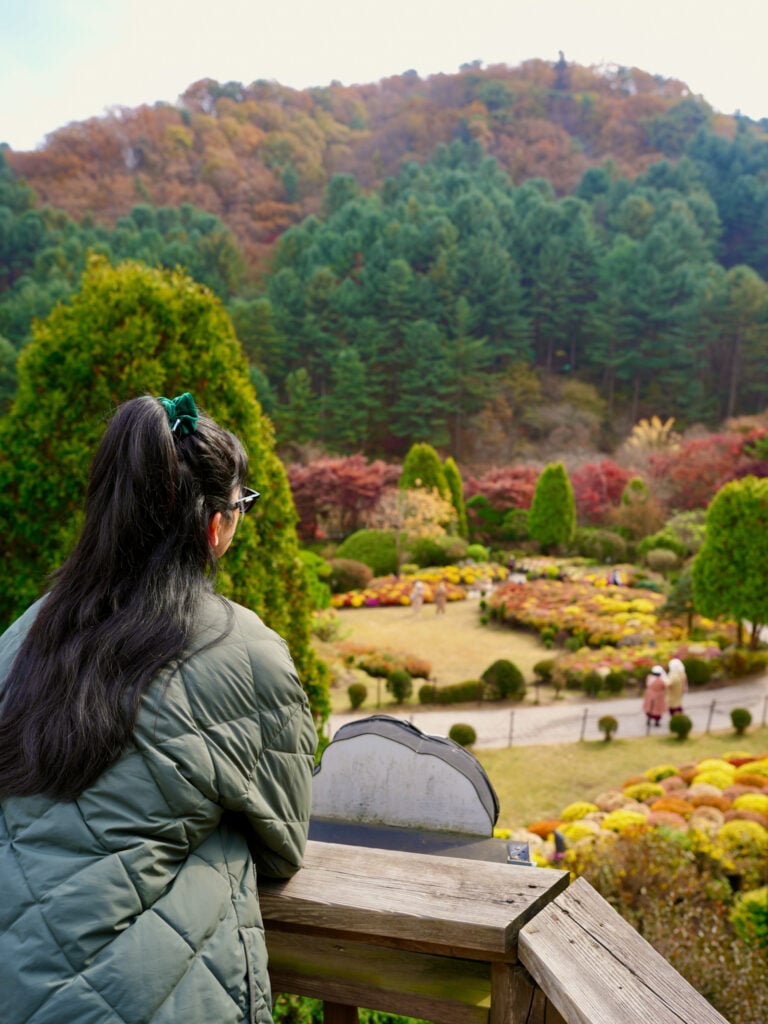

If you want a full panoramic view of the Sunken Garden, head up to the observation deck. You get a clear birds-eye look at the triangle layout and all the overlapping gardens.
This is especially nice if you want those wide landscape shots to compare how different the areas look from above.
6. Korean Garden (Traditional House + Pond)

The Korean Garden is where the landscaping gets a bit more intentional and artistic. The curves, the asymmetry, and the placement of the pavilion and hanok were all designed to create a sense of harmony.
Right next to the pavilion, you’ll find the Seohwayeon Pond Garden, which is easily one of the most photogenic spots in the entire Garden of Morning Calm. The still water dotted with lily pads reflects the surrounding trees, and the colorful chairs arranged along the edge make it a fun, cheerful place to take pictures.
When we visited, people were actually lining up for their turn, and I totally get why—this area is just so calming.
Just behind the pond, there’s also a small gardening shop and a café, so it’s a nice little area to slow down and enjoy before moving on.
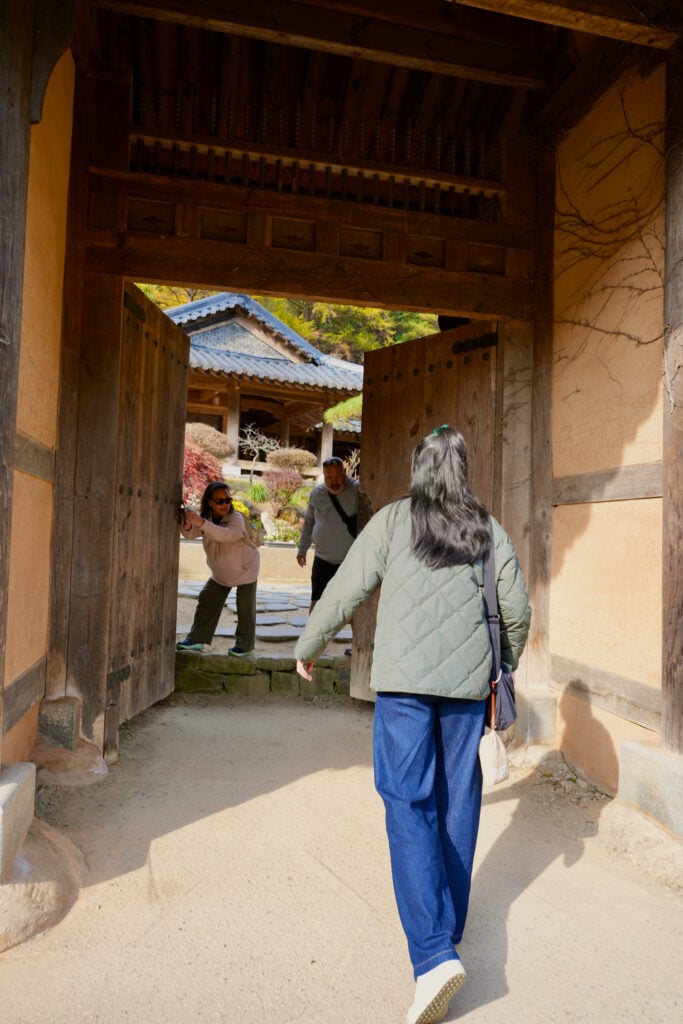

The hanok itself turned out to be one of the cutest spots for sitting, resting, and snapping a few photos, especially if you prefer quieter corners to the bigger viewpoints.
7. The Maple Tree Zone

I’m not sure if this is a designated garden area, but my personal favorite area was right in the middle of the garden, where clusters of Japanese maple trees arch over a small clearing dotted with traditional kimchi pots.
The colors were unreal! I was completely mesmerized by the fiery reds and golds almost glowing above the pots. I ended up sitting on a bench here for a while because the backdrop was just too pretty not to soak in. If you want that perfect “fall in Korea” moment, this is it.
Food, Coffee + Bonus Art Gallery
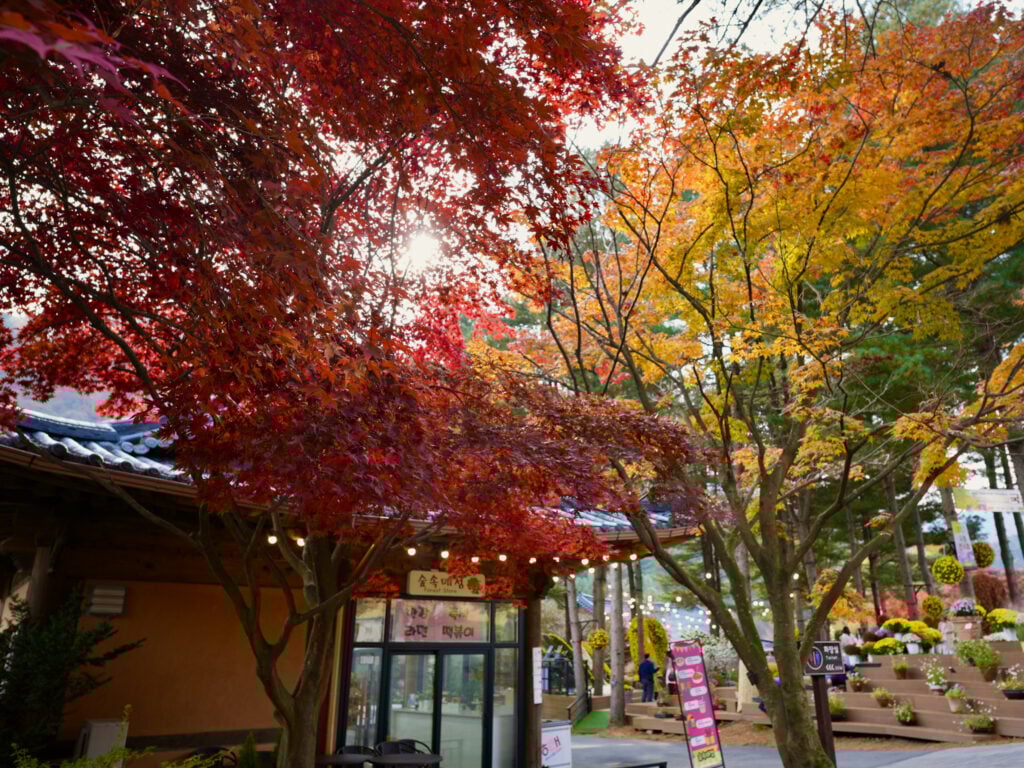

If you get hungry, there’s a full restaurant onsite plus two cafés located within Garden of Morning Calm. Since you’ll do a fair amount of walking there, these are perfect spots to grab a refreshment or a meal, warm up, and take a breather.
Before you leave, don’t skip the Small Gallery near the ticket office. It displays photos of the garden through all four seasons, so even if you visit during fall or winter, you can still see what spring and summer look like here!
How To Get To Garden Of Morning Calm
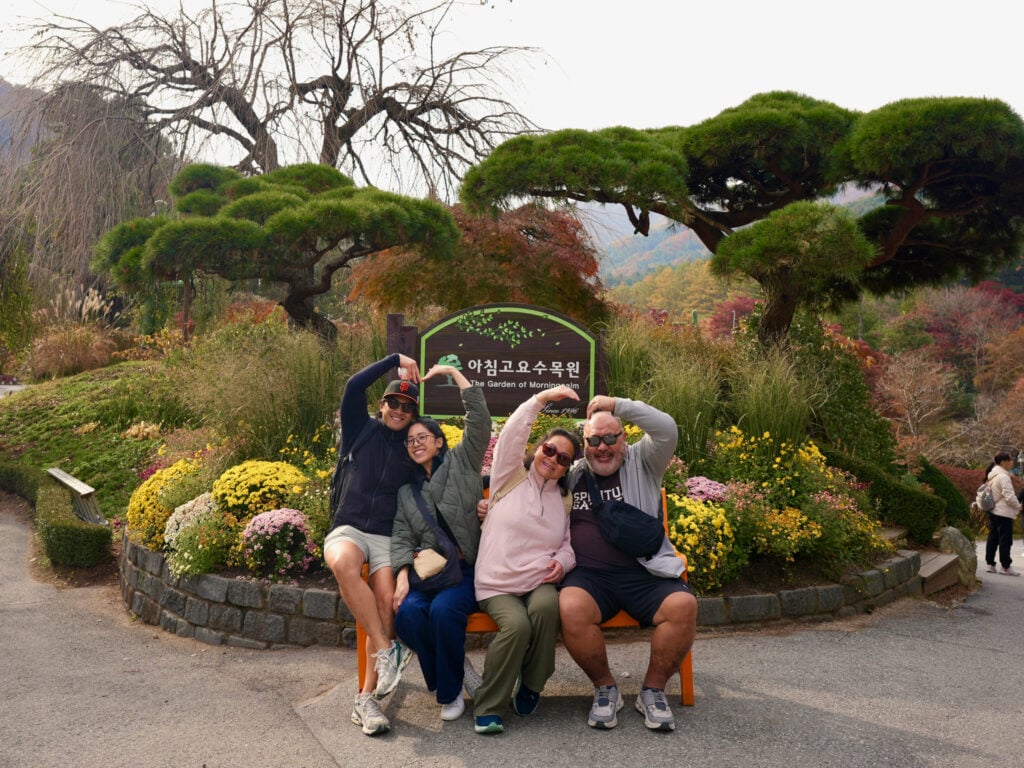
If you’re coming from Seoul, the easiest way to visit the Garden of Morning Calm (and maximize your time out of Seoul) is to join a guided day trip tour.
This is exactly what we did, and honestly, it just made everything smoother. No transfers to figure out, no worrying about bus schedules, and no debating which spots are worth your time.
Our tour ran about 11–12 hours total. We left Seoul around 8:00am and were back by roughly 7:30pm, which still left plenty of time for a solid KBBQ dinner in the city.
The biggest perk of doing a tour like this is how many places you can fit into one day without lifting a finger. Ours included the Garden of Morning Calm, Nami Island, and the Gangchon Rail Bike.
The Garden of Morning Calm and the Gangchon rail bike ride ended up being two of the coolest things we did during our entire week in Korea!
If you’re short on time or you just want a low-stress way to see several iconic spots in one shot, a day trip like this is the way to go.
Best Time To Visit The Garden of Morning Calm

The Garden of Morning Calm takes pride in being a true year-round destination (with its four-season display). No matter when you go, something is always blooming or on display—whether it’s spring flowers, summer greenery, autumn foliage, or winter lights.
I most recently visited in the fall, and it was honestly peak autumn perfection. If you’re into seasonal flowers, autumn also welcomes a huge Chrysanthemum exhibition with over 200 varieties on show.
Spring travelers aren’t missing out either. Cherry blossoms, wildflowers (around 60 different types!), and a dedicated Spring Festival from mid-April to late May make it another crowd-favorite season.
And if you’re planning a winter trip? Don’t sleep on the Winter Lights Festival, happening every December through mid-March. The entire garden transforms into a glowing wonderland with themed light tunnels, illuminated sculptures, and festive displays.
This is one of the most popular winter attractions outside Seoul, well worth building into your trip itinerary!
How Many Hours To Spend At The Garden of Morning Calm?
With 30 themed gardens, cafés, restaurants, and several shops spread across the property, you’ll want at least 2–3 hours here to do it justice.
That gives you enough time to wander through the major garden zones, enjoy a slow walk along the paths, and take a break at one of the cafés without rushing.
We visited as part of a day tour and had just over 1.5 hours, which ended up feeling fine timing-wise, only because we skipped the food and coffee stops.
If you plan to sit down for a meal, grab a latte, or browse the shops, you’ll want a little more padding. You’ll naturally lose track of time, especially once you start discovering tucked-away photo spots and the quieter themed gardens away from the main walkways.
Pro tip: If you’re visiting in autumn or during the weekends, aim for the earlier part of the day. Foot traffic picks up quickly, and the paths feel way more relaxed before the big groups arrive!
