

Walking into Gwangjang Market is a feast for the senses. ALLLL the senses.
The moment you enter, you’re hit with the clang of metal ladles against bubbling pots, the nutty smell of mung beans frying on oversized griddles, and the sight of vendors who’ve been perfecting the same dishes for decades.
Gwangjang is one of Korea’s oldest, continuously operating traditional markets (since 1905), originally built for locals to shop for fabrics, hanbok, and household essentials.
Over time, though, it evolved into a place where the studious youth and office-working Seoulites passed through to grab quick, hearty meals between shifts.
These days, Gwangjang Market entices curious travelers to come and get a real taste of everyday Korean cooking.
Today’s visitors usually arrive with a mission: they want a bite of “traditional Korea,” the kind of food you won’t find in trend-driven neighborhoods or glossy restaurant districts.
And thanks to its recent wave of TV fame, Gwangjang has become even more recognizable. Its stalls have appeared on Korean shows like Running Man and on Somebody Feed Phil, but the moment that really launched it into global travel itineraries was the Netflix Street Food: Asia episode featuring Cho Yoonsun and her hand-cut kalguksu.
Overnight, her tiny noodle stall became a bucket-list food stop. (Don’t worry, I’m not recommending you wait in line for her booth. You can plop down at any kalguksu stall within the market; they’re all going to be good.)
With all the media buzz and the crowds, you might find yourself too overwhelmed to know where to start. If you need a quick guide on how to tackle the market, here are our picks for must-try dishes that truly capture what Gwangjang Market is all about.
This post may contain affiliate links. You won’t be paying a cent more, but in the event of a sale, the small affiliate commission I receive will help keep this blog running/pumping out useful and free content. Thanks a lot!

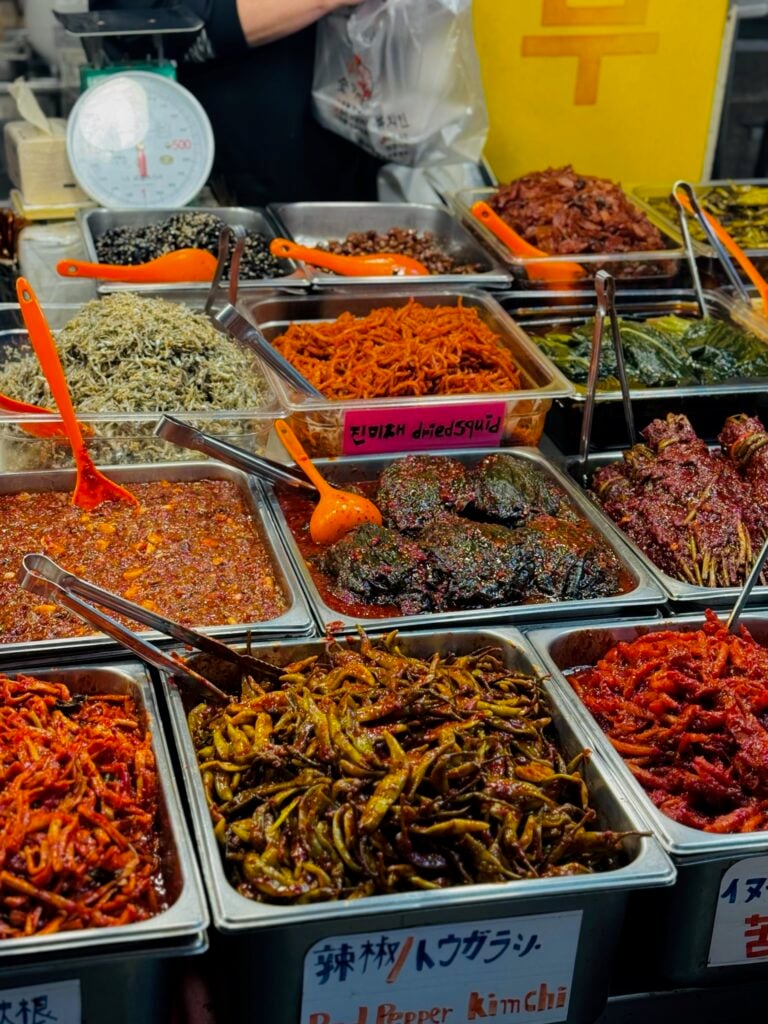

Table of Contents
Gwangjang Market: Need-To-Know Tips For Your Visit
- The best time to visit to avoid crowds: right when the majority of the food stalls start opening up (around 11am) or late afternoon/evening on a weekday.
- Peak hours: 12 pm to 3 pm + all day on weekends.
- Restroom access: The main row with all the food stalls has bathrooms that cost money. Veer out of the main food area and you’ll find free bathrooms within the market.
1. Yukhoe (Korean Beef Tartare)

If you’ve never tried raw beef before, this is easily one of the gentlest introductions.
Yukhoe is hand-cut raw beef mixed with sesame oil and served with matchstick slices of Korean pear. The pear gives it a light crunch and natural sweetness, balancing the richness of the meat.
The combination of ultra-fresh beef, sweet Korean pear, and the sesame oil sauce for dipping is shockingly smooth, easy to eat, and totally addicting.
At Gwangjang Market, look for the restaurants on the sides of the market. If you see photos of beef tartare at the entrance, pop in! That’s where you’ll find it.
2. Bindae-tteok (Mung Bean Pancake)
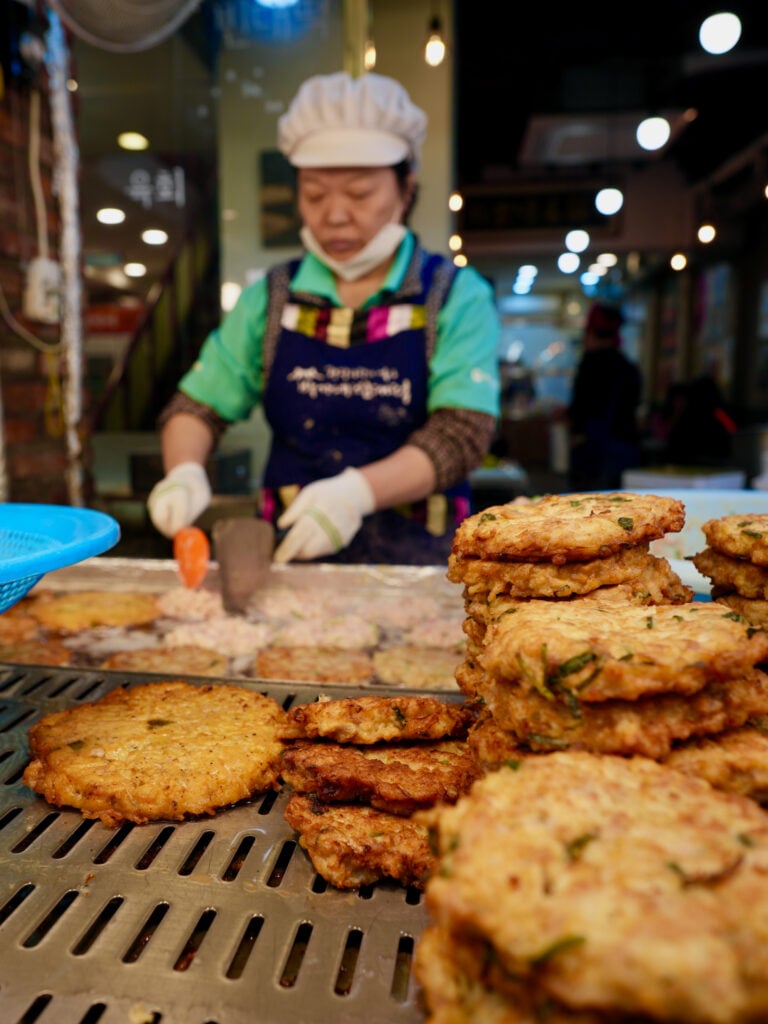
This is the unofficial mascot of Gwangjang Market. You’ll see literal mountains of these pancakes piled up at nearly every corner. Even if you try to avoid it, the smell of pan-fried batter and crispy edges will find you.
STILL NEED AN E-SIM FOR YOUR TRIP? Our go-to eSIM provider is Airalo! For a limited-time, you can use promo code AIRALOESIM10 for 10% off your booking. Explore all their affordable plans here.
The pancake is made from ground mung beans and vegetables, pan-fried until golden. The outside is crispy, the center stays soft and hearty, and it’s served with a tangy dipping sauce plus a spoonful of pickled onions.
3. Kalguksu (Knife-Cut Noodle Soup)
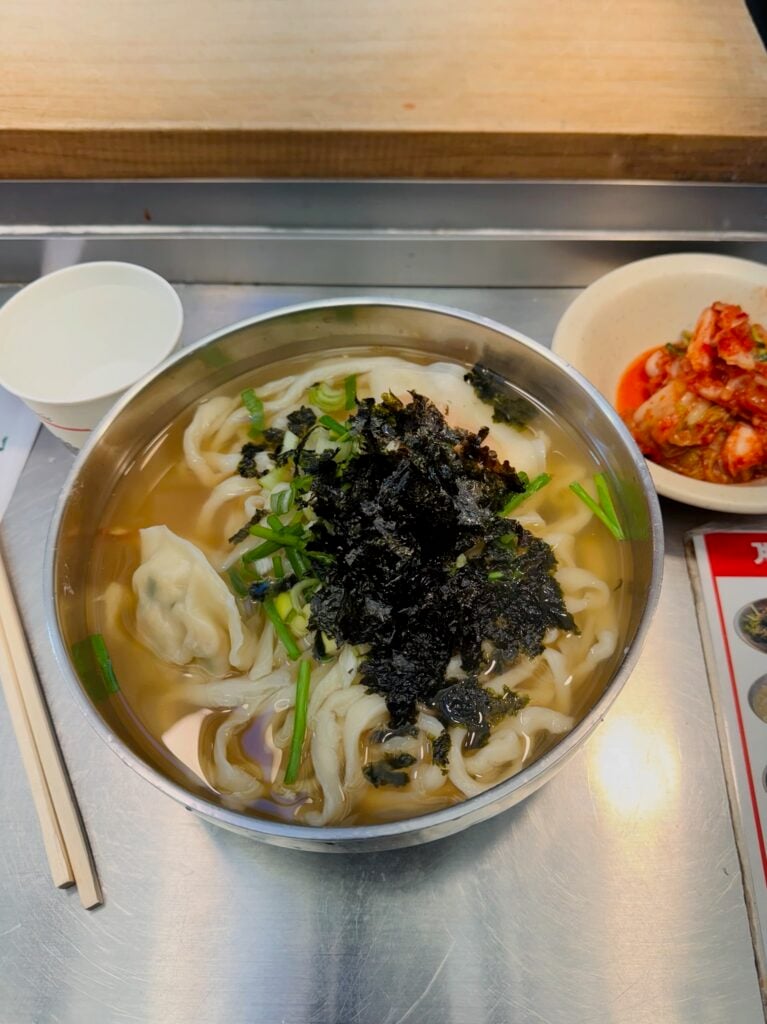
Kalguksu is the comfort dish made famous to most foreigners by Netflix, but it’s been a local favorite long before that. If you’re new to Korean food, it’s one of the most approachable noodle soup dishes in the market.
The noodles are hand-cut from dough, dropped straight into a light but savory broth, and served with toppings that vary by stall (seaweed and a side of kimchi is a staple, though). Some stalls offer dumplings on the side; others give you bo-ssam (boiled pork belly) as a set.
Pick the combo that speaks to you, grab a stool, and enjoy a bowl of something warm and simple.
Just a heads-up: not every kalguksu stall makes the noodles on the spot. Some use pre-packaged ones you’ll see in clear bags. If you want the real hand-cut version, look for a vendor actually cutting the dough right in front of you.
4. Sujebi (Hand-Torn Noodle Soup)
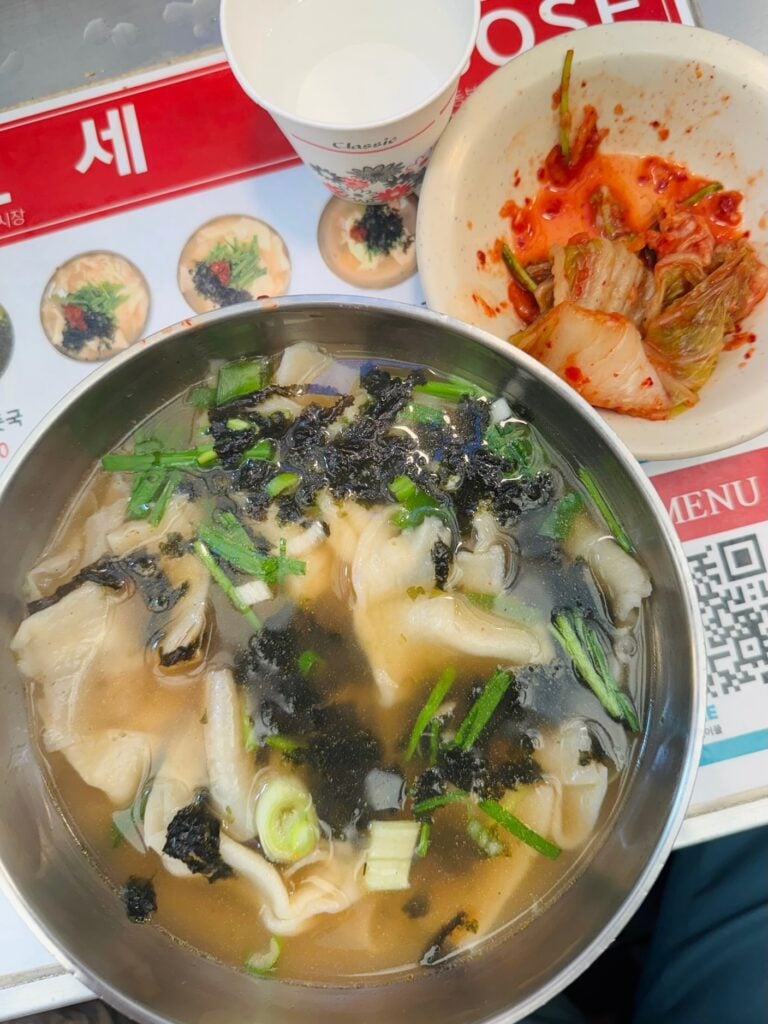
Sujebi is the cozier, more rustic cousin of kalguksu. Instead of being sliced into long noodles, the dough is torn by hand into irregular, chewy pieces that feel almost like soft dumpling strips.
The broth is usually light and comforting, often made with anchovy stock and vegetables, and it’s a local fave on chilly days when they want something simple and satisfying.
If you love chewy textures or you’re curious about Korea’s homestyle soups, this is a great one to try at Gwangjang Market.
5. Mayak Gimbap (Mini Seaweed Rice Rolls)
First off, sorry for having no photo of this one. Gimbap in Seoul looked underwhelming compared to what gimbap (kimbap) looks like in the USA, so I totally forgot to take a photo!
What they lack in presentation and visual appeal, they make up for in taste. You’ll see these everywhere within the market and all over Seoul, for that matter. “Mayak” translates loosely to “addictive,” and that’s exactly the point.
These tiny rolls are filled with rice, vegetables, and sesame oil. They look simple (and they are!), but once you dip them in the sweet mustard sauce they come with, it’s game over.
Because each pack/order of gimbap comes with multiple rolls, they make a great shared snack. They’re not the most photogenic, but they do taste pretty addictive.
In fact, of all the food we ate on our Gwangjang Market food tour, this turned out to be Papu’s mom’s #1 favorite item!
6. Tteokbokki (Spicy Rice Cakes)
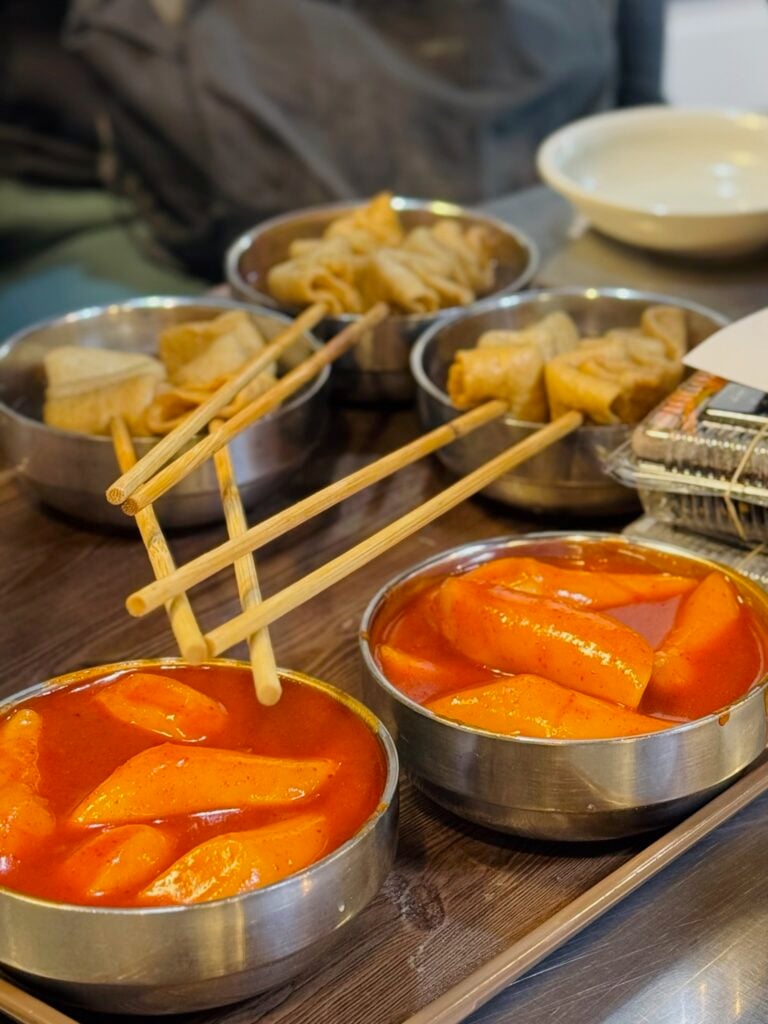
Tteokbokki is one of Korea’s most beloved street foods! They’re basically thick, chunky, chewy rice cakes simmered in a spicy-sweet red sauce.
Traditional versions can be quite fiery, but market stalls here tend to go milder for foreign visitors. The texture is the real star if you’re like me and totally obsessed with all things QQ (bouncy, chewy, and incredibly satisfying).
The restaurant that our walking food tour took us to served the FATTEST rice cakes I’ve ever seen. Totally drooling as I reminisce about the meal shown in the photo above… If you’re a texture person, you’re going to love this one!
7. Odeng (Fish Cake Skewers)
Odeng is the street snack you grab on a cold day in Seoul without even thinking. It everywhere.
Fish cakes are skewered and kept warm in a slightly peppery broth. Most people dip the skewer in sauce (like the spicy tteokbokki sauce), chomp it up quickly, then sip the hot broth for good measure.
If you’re someone who enjoys Japanese oden, this will feel very familiar.
8. Bibim-guksu (Cold Spicy Noodles)

You’d normally expect noodles to arrive steaming hot, but not here. Bibim-guksu is a cold noodle dish built on thin, springy noodles tossed in a sweet, spicy, and tangy gochujang-based sauce.
It’s then loaded with shredded vegetables and topped with sesame seeds, making it both refreshing and surprisingly punchy.
After a stretch of heavier or fried foods, this dish does wonders to reset your palate. Even if cold noodles aren’t usually your thing, the mix of heat, acidity, and chewy texture makes it worth trying.
9. Raw Marinated Crab

As featured on Netflix’s Street Food Asia and in countless YouTube mukbangs, this is the dish adventurous eaters come hunting for.
Locals love soy sauce–marinated raw blue crabs for their briny, buttery texture and deep umami punch. In Gwangjang Market, you’ll find them mostly in the fresh seafood and restaurant section rather than the main street-food corridor.
If you’re curious but unsure, watch how the vendors prepare it! Seeing the care that goes into cleaning and marinating the crab makes the whole experience way more enticing.
While I didn’t get to eat this while I was in Korea, I did eat it in LA’s Koreatown years ago (which is basically Korea, right?). It’s an incredibly tasting food, I’ll tell you that much! Raw crab is such an intriguing texture.
10. Sundae (Korean Blood Sausage)
This is the dish most visitors hesitate over, but hear me out—it’s not what you think.
Korean sundae is made from pig’s blood, glass noodles, and rice stuffed into a casing. The flavor is mild, earthy, and nowhere near as intense as European blood sausage.
Most stalls serve it sliced with salt or a dipping sauce, and locals treat it as comfort food. If you want to say you’ve eaten like a local, this is your badge of honor dish!
They were pretty ugly to look at, so I didn’t take a photo of them, sorry lol.
Pro Tip: Eat it with a piece of salted cabbage or perilla leaf if you’re unsure. It softens the flavor.
11. Hotteok (Korean Sweet Pancakes)
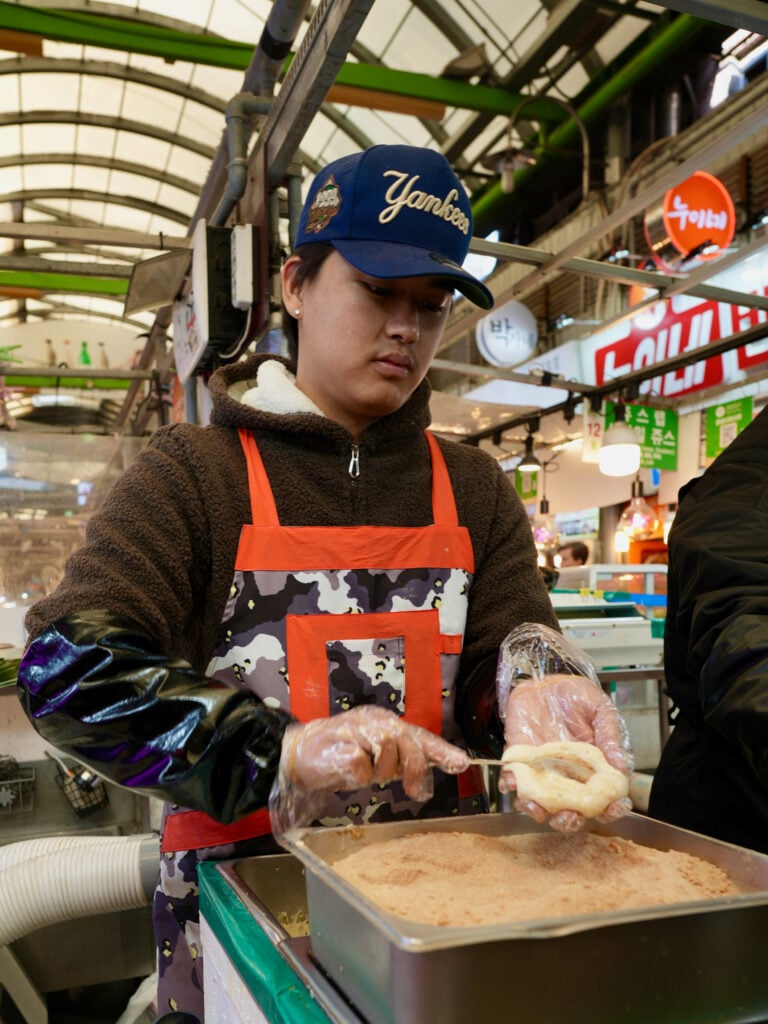
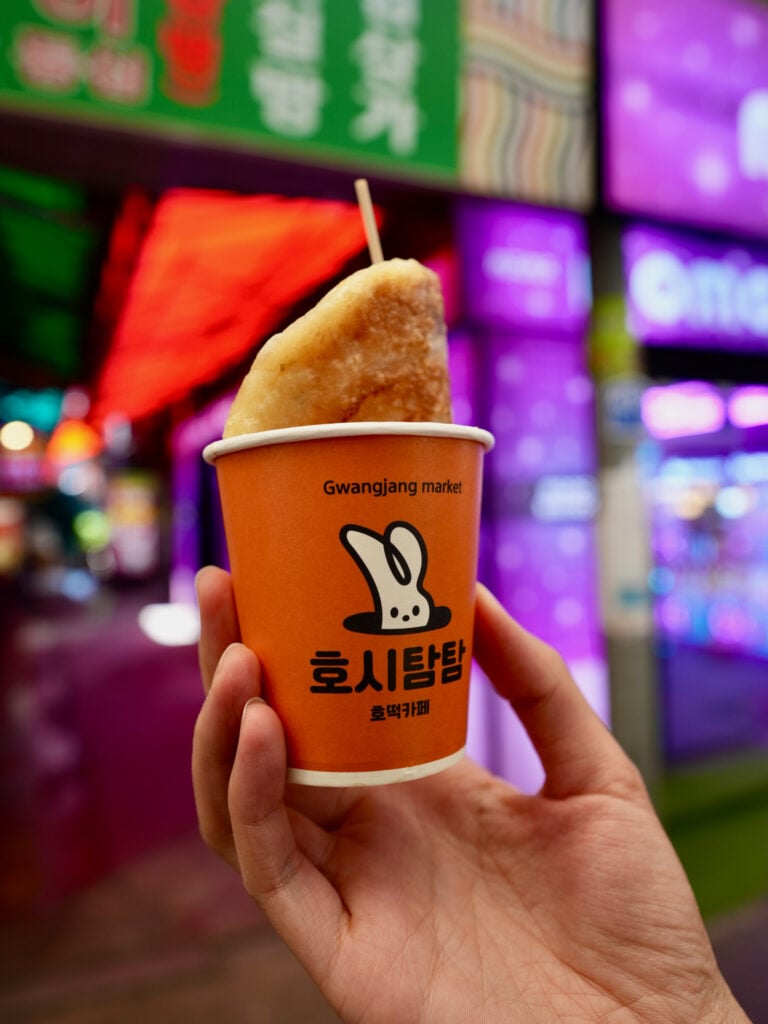
This was easily one of the best things I ate in Seoul. Hotteok looks like a simple pancake, but when you bite into it, the center is oozing with sweet (or savory) goodness.
The classic version is packed with brown sugar, cinnamon, and crushed peanuts, so you get that caramelized, sticky interior that tastes almost like a handheld dessert bun. You’ll also find fillings like sweet potato, red bean, or even cheese if you want something savory.
It’s best eaten the second it comes off the griddle, when the outside is crisp, the inside is molten, and you’re almost in danger of burning your taste buds.
If you only have room for one dessert, make it this.
12. Kimchi


Kimchi comes with just about every meal in Korea, but if you want to see the full spectrum of what kimchi really is, head to the main market section where locals buy their groceries to-go.
If you thought kimchi was only the napa cabbage version you see in Korean BBQ restaurants, think again. The selection here is massive—daikon-only kimchi, napa cabbage, chive-only versions, mixes of all three, plus leafy green varieties I couldn’t even identify.
Rows of tubs line the aisles, each one packed with something punchy, crunchy, sour, spicy, or all of the above. Even if you don’t plan to buy any, it’s worth walking through just to see how diverse kimchi can be.
13. Garlic Boy’s Truffle Garlic Bread

This went viral for a reason. Because the garlic bread there is THAT good.
Go for the soft cream and truffle cream versions; both are going to be spectacular. No, they’re not heavy or cloying; you’re not dealing with dense cream cheese here. It’s closer to a light sour cream in texture, so it melts right into the warm bread instead of sitting on top like a slab.
Eat it on the spot if you can, and try to time it so you get a fresh-out-of-the-oven batch!
The bread comes out warm, fluffy, and sweet in that way Asian bakery bread always is (slightly airy, slightly milky, and nothing like the dry dinner rolls you might be used to). The garlic flavor is bold but not harsh, and the cream fills every fold of the bread so you get a perfect hit in each bite.
This is the best garlic bread I’ve ever eaten. Full stop. I’m not being dramatic when I say there’s no point in me ordering garlic bread anywhere else again! Already dreaming of eating this again on my next trip to Seoul….
14. Mandu (Korean Dumplings)
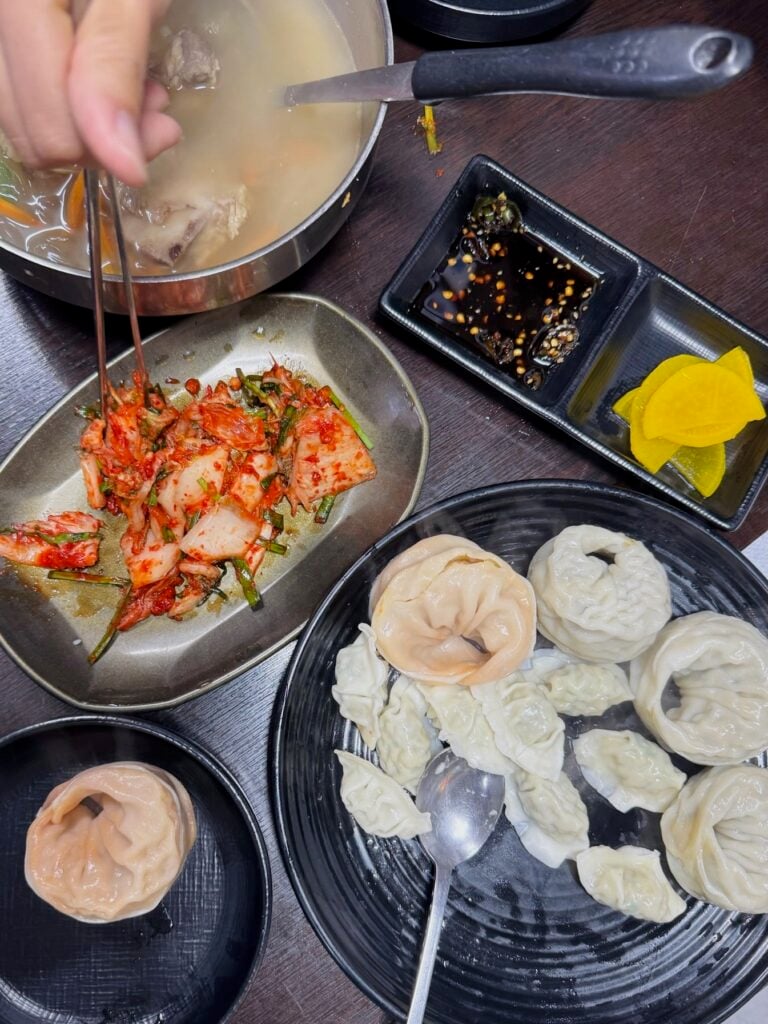
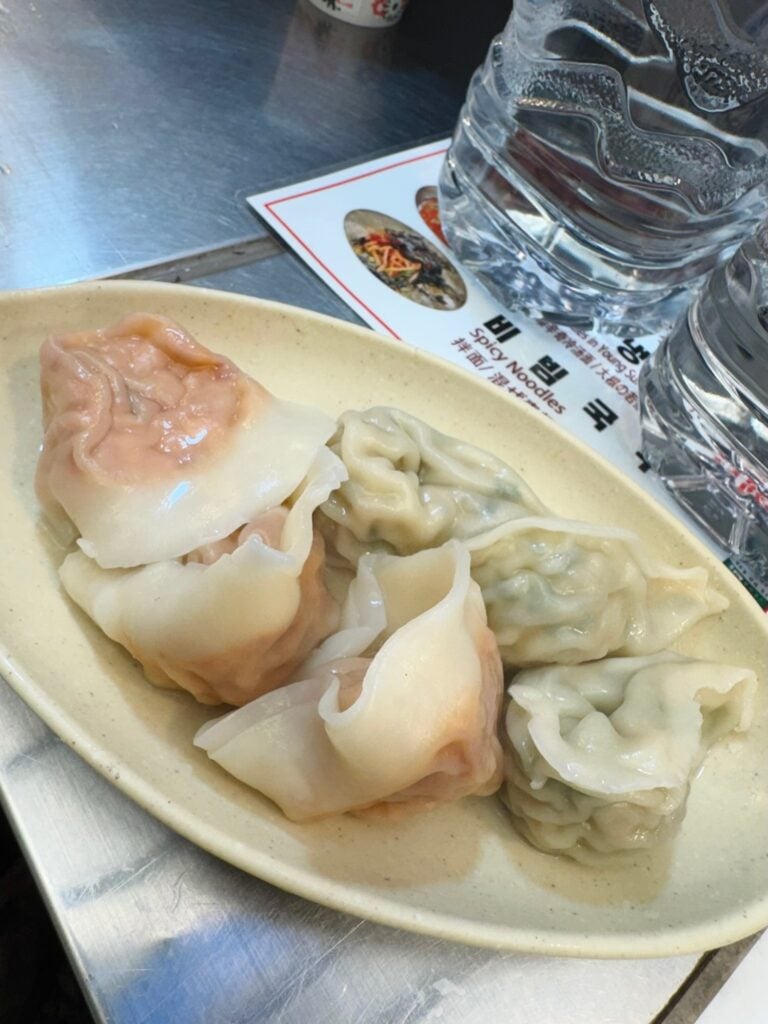
You’ll spot mandu everywhere in Gwangjang Market: piled high in steamers, tucked into noodle soups, or served on their own with a simple dipping sauce. These dumplings are as straightforward as comfort food gets.
The two most common versions you’ll find here are filled with minced pork or kimchi, both generously stuffed and pleasantly hearty. If you’re already ordering a bowl of kalguksu, upgrading with a few mandu on the side is an easy add-on.
If you’d rather keep things simple, grab a freshly steamed plate and eat them as-is! They’re satisfying either way.
15. Sikhye (Sweet Rice Punch)
Sikhye is a traditional Korean drink made from malt water and cooked rice, giving it a lightly sweet flavor with soft grains of rice floating throughout. It’s both comforting and refreshing at the same time… almost like a dessert you can sip!
You’ll spot fresh vats of sikhye at the fruit juice stalls around the market. It’s a super affordable way to cool down before you continue exploring nearby neighborhoods like Ikseondong, Bukchon Hanok Village, Insadong, etc.!
How to Eat Your Way Through Gwangjang Market Without Getting Overwhelmed
If this is your first time headed to Gwangjang Market, the easiest way to approach the market is:
- Start with something simple (kalguksu or gimbap)
- Layer in one crispy dish (mung bean pancake or chive/kimchi pancake)
- Try a classic street snack (tteokbokki or odeng)
- Level up with adventurous dish (yukhoe, blood sausage, marinated crab, live kicking squid)
- Grab a Garlic Boy garlic bread if the line isn’t insane
- End with a sweet and hot hotteok
This way, you’ll get a well-rounded taste of the market without overdoing it.
If you want to try as much as possible, I’d recommend taking a food tour of Gwangjang Market (which is how we tried so many things in one day)!
Other Posts You’ll Love:

Seoul For First Timers: 15 Must Do’s On Your Very First Trip!
Seoul is a sensory overload of a city. I mean that in a VERY good…

Seoul: T-Money or Climate Card? My Vote Goes 100% To Climate Card
When it comes to getting around Seoul efficiently, you’ll see two names pop up over…
15 Cool Things To Do In Gangnam – Seoul Neighborhood Guide
Gangnam was my home base for most of my Seoul trip, which means I woke…
What To Bring Back From Seoul: 25 Ideas For Souvenir Shopping
Seoul has a way of making you fall in love downright obsessed with all the…

8 Cool Day Trips From Seoul To Escape The Big City Bustle
Once you decide to step outside Seoul, it quickly becomes clear that day trips here…
Myeongdong Neighborhood Guide: 17 Cool Things To Do In Seoul’s Livelist District
Myeongdong is the Seoul neighborhood that absolutely smacks the jetlag out of you the second…
