
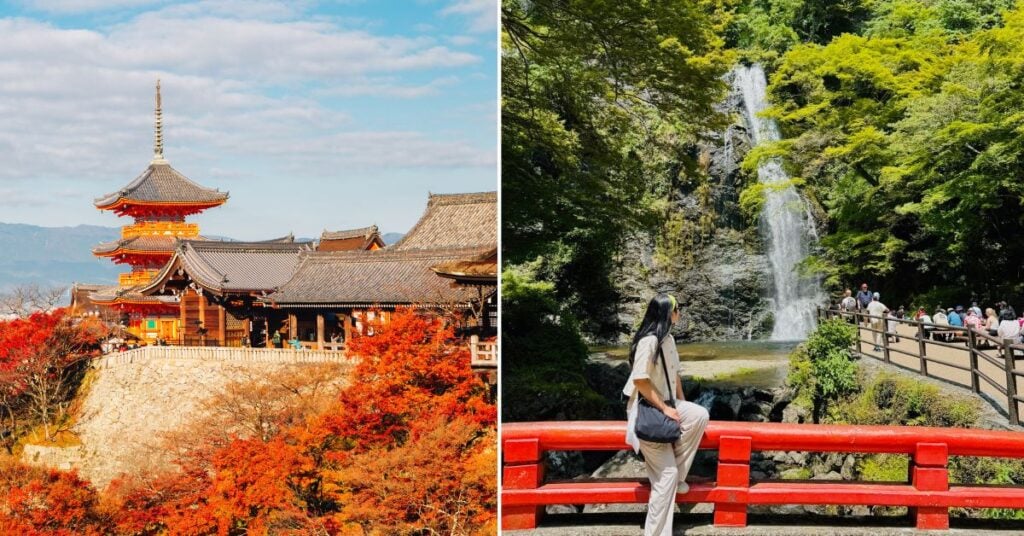
At this point, I’ve been to Japan more times than I can count on two hands — and across all those trips, I’ve experienced Japan in pretty much every season. I’ve seen it hot, humid, rainy, snowy and everything in between.
STILL NEED AN E-SIM FOR YOUR TRIP? Our go-to eSIM provider is Airalo! For a limited-time, you can use promo code AIRALOESIM10 for 10% off your booking. Explore all their affordable plans here.
And yet, there’s one season I still haven’t bothered to cross off my Japan bucket list: sakura season.
Honestly though? I think cherry blossom season is overrated and not worth the effort/cost. Yup, I said it, and I stand by my hot take!
That said, I do love springtime in Japan.
But before we go any further, let me clarify what I mean when I use the term “spring” in this article. I’m talking about March through May as a whole. And, in this case, I’m intentionally excluding peak cherry blossom season.
When most Japan travel guides compare “spring vs. fall,” they’re really talking about sakura season, when cherry blossoms typically peak from late March into April. That’s a very specific (and VERRRY short) sliver of spring.
And it’s actually the sliver of spring I am NOT recommending… that is, unless seeing Japan covered in cherry blossoms is a once-in-a-lifetime bucket-list experience for you. And if that sounds like you, you’ve probably already made up your mind.
You don’t even need to continue reading. But feel free to check out some of my other Japan travel guides while you’re here!
👀 For those of you who are still here…
I’m not rejecting cherry blossom season because I don’t think it would be beautiful to experience. Obviously, it would. There’s a reason people pay buku bucks to fly halfway around the world to see it.
But the incredibly short window of peak blooms, the crowds, the inflated prices, and the unpredictability of trying to time an entire international trip around a few days of flowers just isn’t worth the time, effort, or money for me.
With that said, having been to Japan in May multiple times, I think spring in Japan is still absolutely gorgeous without the cherry blossoms. And that’s the spring I’m referring to here!
I love traveling to Japan once the sakura mayhem is done for the year, when you can walk around in that perfectly warm weather without a jacket but before summer’s humidity kicks in and has you sweating through your clothes.
You get hot-pink flower fields, fresh green hills, and blooming landscapes everywhere you look. In more nature-y parts of the country, spring can be downright spectacular, and you don’t have to fight your way through a famous cherry blossom viewing spot to enjoy it.
Then there’s the fall season, which I love just as much. The autumn scenery is captivating, and experiencing it is extremely easy to work into a Japan itinerary. You don’t even necessarily have to leave the big cities to experience them!
STILL NEED AN E-SIM FOR YOUR TRIP? Our go-to eSIM provider is Airalo! For a limited-time, you can use promo code AIRALOESIM10 for 10% off your booking. Explore all their affordable plans here.
You can just walk past a Japanese maple on the streets of Tokyo, wander through a famous garden in Kyoto, or simply stroll through a park and suddenly you’re surrounded by fall color.
If you’re debating between Japan in the spring or fall, this isn’t going to be the usual “cherry blossom vs. fall foliage” comparison. I’ll be sharing my thoughts about spring in the broader sense — the entire season from March through May (minus the cherry blossom madness) versus autumn.
Alright. Enough blabbing. Here’s how I rank them, what makes each season worth visiting, and which one I’d choose depending on whether you’re planning a classic Tokyo-Kyoto-Osaka trip or willing to venture beyond the big three.
This post may contain affiliate links. You won’t be paying a cent more, but in the event of a sale, the small affiliate commission I receive will help keep this blog running/pumping out useful and free content. Thanks a lot!
Table of Contents
Spring vs. Fall in Japan: In A Nutshell
| 🌸 SPRING | 🍁 FALL | |
| Pros | Flowers everywhere; mild weather; green landscapes; fewer crowds | Spectacular foliage; easy to see in cities; beautiful gardens; bucket-list season |
| Cons | Flowers are seasonal; allergies can be rough; weather can be more unpredictable | More popular; bigger crowds; higher accommodation prices |
| Best for | Flower lovers + countryside road trips | City trips + gardens + fall foliage lovers |
| Our Rating | ⭐⭐⭐⭐⭐ | ⭐⭐⭐⭐⭐ |
You might be thinking.. “WHAT! 5 stars for both?? How unhelpful!”
But really, that’s how I feel about both seasons! I genuinely love them equally. There isn’t a clear winner in my mind.
My top recommendation is to visit once in the spring AND once in the fall.
Heck, I’ve been to Japan over 10 times now!
To help you pick which season to prioritize, I think it really comes down to what you’re planning to do once you get there. We’ll touch on that more later!
Why I Love Japan in Spring


1. The shoulder season brings such comfortable weather for exploring
Spring is one of my favorite times to be outside in Japan because the weather can be just about perfect. I’m talking jacket-free but not sweaty, with a teensy tiny hint of early summer humidity that hasn’t fully arrived yet.
STILL NEED AN E-SIM FOR YOUR TRIP? Our go-to eSIM provider is Airalo! For a limited-time, you can use promo code AIRALOESIM10 for 10% off your booking. Explore all their affordable plans here.
This kind of weather makes you want to be outside all day, whether you’re wandering through a city neighborhood, exploring a national garden, or traipsing through the countryside. And depending on where you go, you’ll also get to experience gorgeous rolling hills at their greenest and fresh spring landscapes that make road trips especially pretty.
Check out the photos in my Kyushu road trip for some springtime inspiration!
Of course, spring weather can vary depending on where and when you go, so I’m not promising every day will be perfect. But for the most part? Pure perfection.
2. Mt. Fuji in the springtime is pretty hard to beat


Another spring trip that sticks out in my mind was to the Fuji Five Lakes area, where I got to experience Mt. Fuji while its famous snowcap was still intact for 3 whole days.
Unbeknownst to many, the snow capping the peak doesn’t stick around forever! By summer, the mountain looks very different (and very bare… and honestly not that pretty). Sure, the Fuji visibility can be hit or miss (it’s mountain weather, after all), but the temperatures for exploring were amazing nonetheless.
I also got to experience one of my bucketlist items during this season: the blooming of the seasonal shibazakura, or moss phlox, aka hot-pink flower fields with Mt. Fuji looming behind them.
Needless to say, when visibility is right, springtime in the Mount Fuji area is postcard-perfect!

3. The weeks outside of cherry blossom season are quite affordable.
This is probably the biggest reason I’ve been choosing spring over autumn lately. And why I’ve been skipping cherry blossom season entirely. Times are hard, man! We don’t have an unlimited budget to blow on flights and hotels to Japan!
The peak of cherry blossom season is incredibly short. Like ONE WEEK kind of short.
This means you’re trying to plan an expensive international trip around a tiny window. In my opinion, not practical and not worth the stress. Add the crowds and higher prices that come with one of Japan’s most famous seasonal attractions, and it’s just not something I’ve felt the need to chase.
I’d much rather visit during the broader spring season, when you’re still getting flowers, fresh greenery and fantastic outdoor weather, but without making my entire itinerary revolve around whether the blossoms decided to cooperate with people’s predictions.
And because you’re traveling outside that peak window, you can often find much more reasonable prices on flights and accommodations.
I did a quick spot check on hotel prices to prove my point. And get this… I did this search over 6 months ahead of cherry blossom season!!! The inflated cherry blossom week prices were already in effect:
Mitsui Garden Hotel Kyobashi, Tokyo Station – Standard Queen Room w/ breakfast included
- March 28-April 3 (sakura week): $2,481
- April 25-May 1: $1,673
Hotel Intergate Tokyo Kyobashi – Double Room w/ breakfast included
- March 28-April 3 (sakura week): $1,964
- April 25-May 1: $1,057
Needless to say, the price differences are insane!
4. You get plenty of flower views and springtime events to enjoy


This is my biggest argument for the broader spring season: cherry blossoms are far from the only flowers putting on a show in Japan!
Once sakura season is over, the flower calendar is just getting started, with shibazakura, wisteria, nemophila, tulips, azaleas and more blooming across the country.
If Fuji Five Lakes is on your radar, put the Fuji Shibazakura Festival near Lake Motosuko on your list. From mid-April through May, hundreds of thousands of moss phlox create a carpet of pink, purple and white with Mt. Fuji in the background.
Nearby Oishi Park in Kawaguchiko is another great flower stop, featuring seasonal blooms backdropped by majestic Mt. Fuji.
Not too far away, Ashikaga Flower Park in Tochigi hosts the annual Great Wisteria Festival, running from mid-April into May. You can expect massive wisteria trellises, a long white-wisteria tunnel and even nighttime illuminations.
Then there’s Hitachi Seaside Park in Ibaraki, famous for its sweeping fields of blue nemophila that typically peak from mid-April to early May. The park’s spring flower season also includes daffodils, tulips, poppies and roses, so you can catch different blooms depending on when you visit.
And these are just a few examples of some of the country’s most famous springtime destinations! As you can clearly see, Japan’s spring flower calendar stretches well beyond cherry blossoms.
Why I Love Japan In The Fall

1. The fall colors can be enjoyed just about anywhere
If spring is for people who love flowers, fall is for people who love pretty trees.
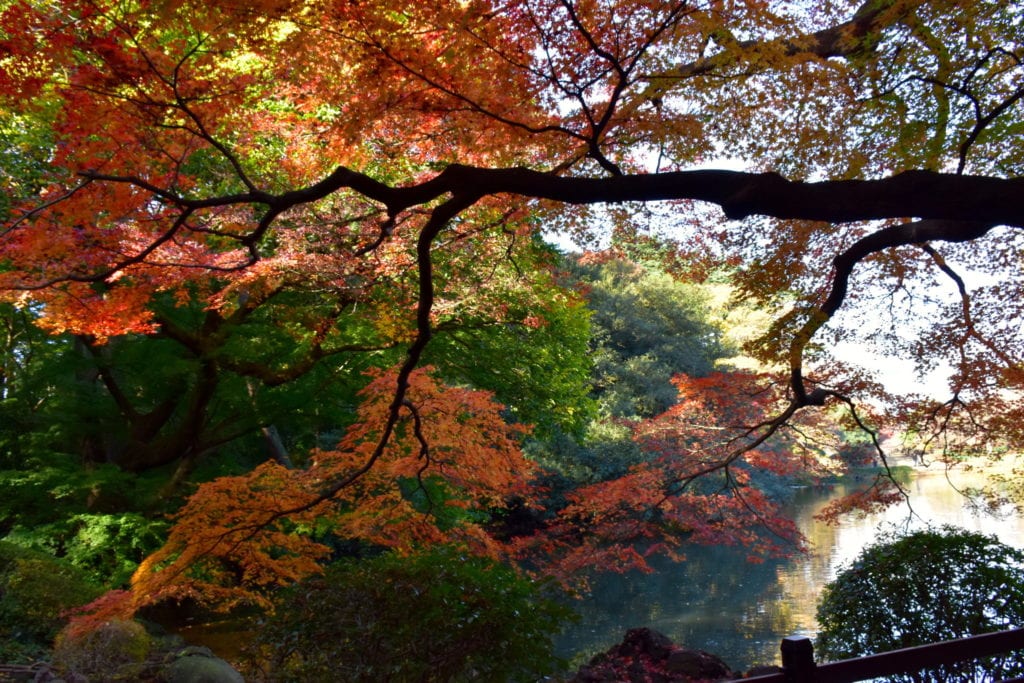
And the great thing about autumn in Japan is that you don’t necessarily have to leave the city to experience it. The fall colors make their way into the everyday streets of Tokyo, Kyoto and other major cities; you’ll easily spot fiery-red Japanese maples, golden gingko trees, and gardens bursting with all kinds of pretty reds and oranges without having to plan an elaborate day trip out of the city.
And then there are the gardens. The oh-so-majestic gardens! Places like Tokyo’s Rikugien Gardens or Kyoto’s Gyoen National Garden are jaw-droppingly STUNNING when the foliage is at its best.

2. It’s easier to build a ‘typical’ trip around the popular cities
This is where I’d give fall the edge if you’re planning a more traditional first-time Japan itinerary.
If you’re sticking primarily to Tokyo, Kyoto, and Osaka, you can enjoy plenty of fall scenery without renting a car, road-tripping through the countryside, or spending hours getting somewhere just to find a pretty landscape.
Take Kyoto, for example. It’s the ultimate example of how you can effortlessly enjoy autumn scenery without even trying.
You can spend the morning sightseeing (Kiyomizudera Temple, pictured below, is an absolute wonderland of red trees), wander through more temple grounds in the afternoon, watch the rowboats go by while strolling the famed Togetsukyo Bridge, and still get your autumn fix without going out of your way.


For travelers who don’t want to go out of their way to travel TO the scenery, that’s a pretty big advantage.
3. My first Japan trip was in the fall
My first two-week trip to Japan was in the fall, so I have a bit of a soft spot for the season. We had a whole year to plan, and off-bat I knew fall was the season I wanted to experience first.
I’ll just let the photos speak for themselves. 🙂
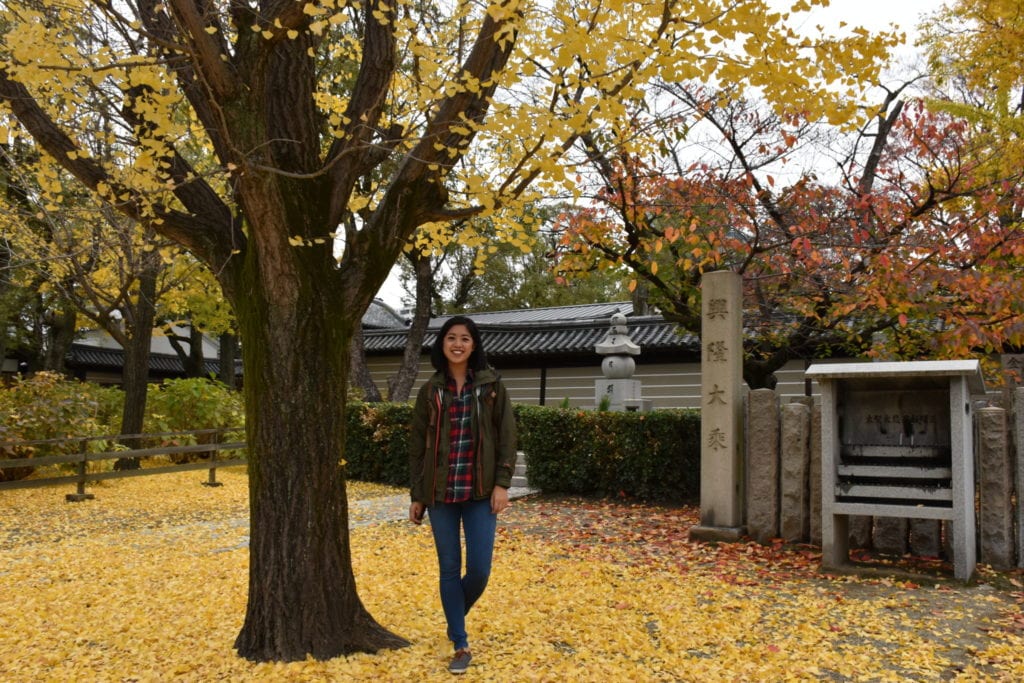


There’s a reason fall has become such a popular time to visit Japan. The scenery really is THAT good. You’ll be oohing and ahhing at just about every tree adorned in red and yellow leaves. Trust me, haha.
4. Fall foliage lasts a lot longer than cherry blossom season
If you plan a trip to Japan in the fall, you’re almost guaranteed to experience the famous views that the season brings.
Generally speaking, fall foliage season runs from October through late November. Higher elevations and northern regions change first, while places like Tokyo and Kyoto typically hit their best color later in November.
Once the leaves have turned, the slightest breeze can send them drifting down around you, creating what feels like a literal rainstorm of red, orange, and yellow leaves. Walking beneath a canopy while leaves are falling all around you is something you need to experience for yourself. It’s pure magic!
Unlike cherry blossom season, where the window for peak blooms can feel agonizingly short, fall foliage unfolds across a much longer period and moves through different regions at different times. That gives you more flexibility (and way more chances to experience it) when planning your trip.
Still Undecided? Here Are My Final Thoughts
If you still haven’t made up your mind by this point, here are my final thoughts to sway you one way or the other.
Choose spring if… you’re willing to travel beyond Tokyo, Kyoto & Osaka


Choose spring if you’re willing to get out of the big three.
My May road trip through Kyushu is probably the best example of why. Fukuoka, Yufuin, Beppu, and Kurokawa Onsen gave us a completely different side of Japan, and the spring scenery was a HUGE part of what made the trip so wonderful.
The Fuji Five Lakes trip was another reminder of how much spring has going for it: Mt. Fuji with a snow cap + hot-pink shibazakura + beautiful mountain weather? Such a perfect combination.
Ultimately, if your idea of Japan includes things like road trips, countryside scenery, flower park, botanical gardens, outdoor attractions, and day trips to smaller towns, I’d seriously consider spring.
Choose fall if… you’re mostly staying within cities
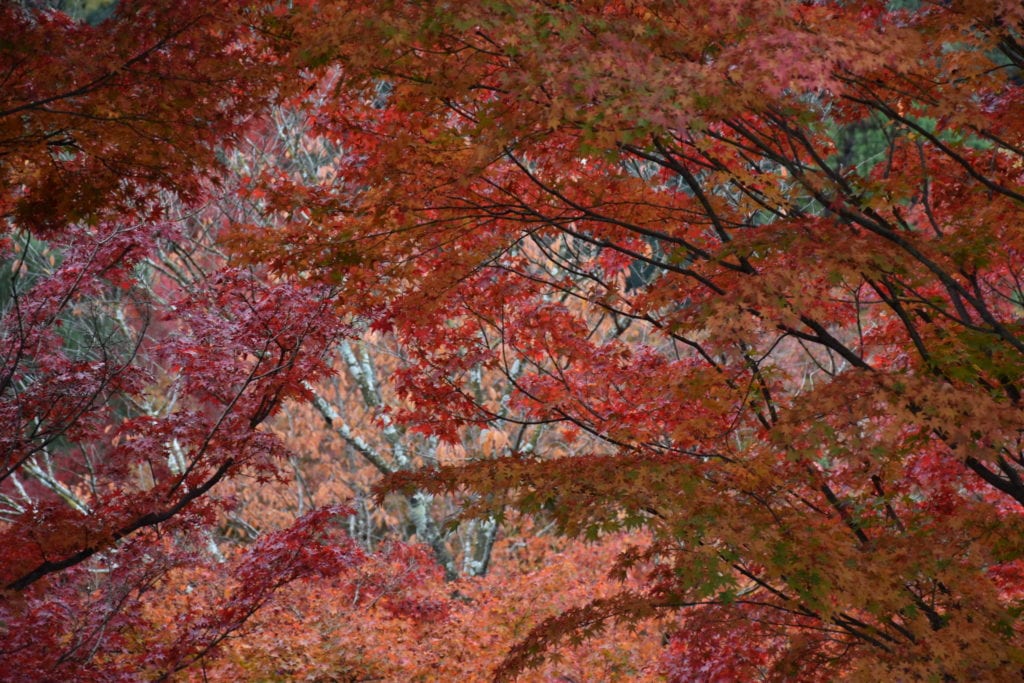

If you’re planning a more classic first Japan trip (i.e. Tokyo, Kyoto and Osaka with maybe a few easy day trips) I’d lean toward fall.
The biggest reason is simple: you don’t have to work very hard to find the pretty stuff.
Fall colors are woven into the cities themselves, no matter if you’re on quiet neighborhood streets, national gardens, or temple grounds. You can effortlessly experience fall foliage on an otherwise standard sightseeing itinerary rather than making a special trip just to see them.
And if you’re someone who struggles with spring allergies, that may be another reason to favor fall!
GOOD TO KNOW: Autumn in Japan is a bucket list item for many, many travelers. The combination of comfortable weather and incredible foliage makes it one of Japan’s most desirable travel seasons, so be prepared to deal with more crowds and higher hotel rates.
But if you’ve never experienced autumn in Japan? Put it on the list. I did my first Japan trip in fall, and after all these trips back, I still understand exactly why so many people want to experience it.

Planning Your Trip To Japan?
Here are some of our other Japan travel guides to help you plan an incredible trip!
Osaka
- 4 Days of Fun in Osaka: Ultimate Itinerary for an Epic Trip
- 15 Fun Things To Do In Osaka (Other Than Castles + Shrines)
- 20 Fun And Free Things To Do In Kyoto and Osaka, Japan
- Where To Stay In Osaka, Japan: Neighborhood Guide
Kyoto
- 2 Days In Kyoto: The Ultimate Kyoto Highlights Itinerary
- 25 Unique Activities To Add To Your Kyoto Bucketlist
- 7 Best Ryokans In Kyoto To Truly Feel Relaxed
