
On my most recent trip to China (this time, we did Shanghai, Hangzhou, and Wuzhen), I had done plenty of research before we left, and Wuzhen was the #1 destination I was most excited about.
I was so fascinated by all the dreamy photos I had seen on Trip.com and Dianping that I knew I needed to get my butt over there at some point in my life.
I initially considered spending two full days there, or at the very least booking an overnight stay (which is what most people recommend if you really want to experience the town’s unique atmosphere at night/early morning).
Papu, on the other hand, wasn’t quite as convinced. Since I was the one doing all the research and itinerary planning, all he knew were the words “Wuzhen water town” and nothing of the magic the town held inside its walls. He was understandably a little skeptical about adding another stop to an already-packed trip.
Well, Wuzhen ended up stealing the show. FOR BOTH OF US!
We were completely blown away by how enormous the place was, how much there was to see and do, and how many little restaurants, shops, museums, and traditional experiences were tucked along its canals and narrow streets. We went in expecting a picturesque-looking water town and came away calling it our favorite stop of the entire trip.
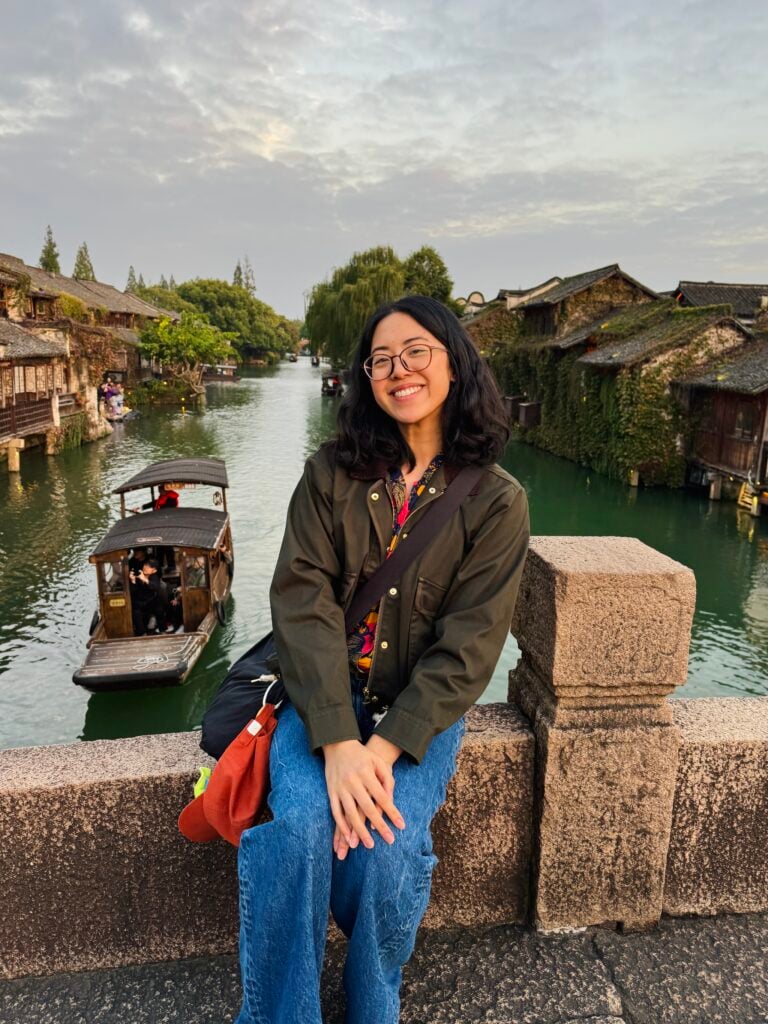
The funny part? We hadn’t even planned to visit as a day trip. Originally, we intended to spend a night inside Wuzhen’s West Scenic Area, which was one of the experiences I was particularly looking forward to.
Then, just one week before our trip, I got a message from the hotel saying the West Scenic Area would be closed for the World Internet Conference (the first week of November). NoooooOOOOoo! I was actually devastated.
Cue a mad scramble to reshuffle the itinerary. I initially canceled the entire Wuzhen portion (because I didn’t want to go all the way to Wuzhen and NOT see the West Gate Scenic Area), spent the next week quietly sitting with my FOMO, and eventually decided I simply couldn’t bear to visit the region without seeing Wuzhen.
So, at the last minute, once I learned that the West Gate Scenic Area would reopen to tourists on the last day of the conference at 12pm (this also happened to be our very last full day in China!), I rearranged everything and made a day trip happen.
And I’m so glad I did! Even without the overnight stay I’d originally envisioned, Wuzhen became the absolute highlight of our trip. As soon as you see the photos throughout this guide, you’ll see why!
If you’re considering adding it to your own Shanghai or Hangzhou itinerary, here’s everything we saw, did, and ate, along with how I’d organize your visit.
This post may contain affiliate links. You won’t be paying a cent more, but in the event of a sale, the small affiliate commission I receive will help keep this blog running/pumping out useful and free content. Thanks a lot!
Table of Contents
Understanding Wuzhen: East Gate vs. West Gate
Before you start planning, there’s one important thing to understand: Wuzhen’s layout. This is critical info to know before booking hotels!
Wuzhen is divided into two main scenic areas, Dongzha (East Gate) and Xizha (West Gate). Both are historic canal-side districts, but they offer different experiences, and you’ll want to know what each is best for.
STILL NEED AN E-SIM FOR YOUR TRIP? Our go-to eSIM provider is Airalo! For a limited-time, you can use promo code AIRALOESIM10 for 10% off your booking. Explore all their affordable plans here.
Dongzha (East Scenic Area)
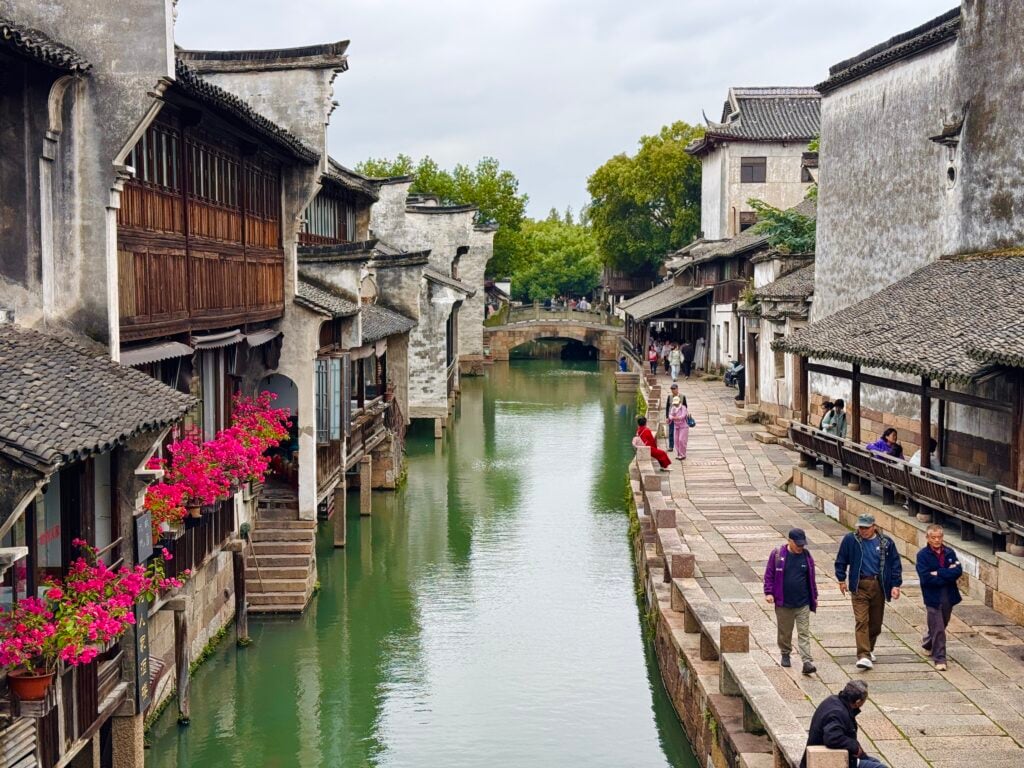
Dongzha (东栅), or the East Scenic Area, was the first part of Wuzhen to be developed as a tourist attraction, opening to the public in 2001. Covering approximately 0.9 square kilometers, it’s the smaller of the two areas and has a more traditional, lived-in feel. You’ll find old wooden houses lining the canals, six bridges crossing the river, and plenty of traditional workshops and cultural attractions.
What makes Dongzha particularly interesting is its collection of museums and demonstrations showcasing traditional Chinese crafts and everyday life. This is where you’ll find things like indigo dyeing workshops, traditional wine-making, an ancient bed museum, and exhibits about local wedding customs.
Unlike a district turned entirely into a tourist attraction, there are local residents who still live here, and many traditional homes now operate as guesthouses and restaurants. It was pretty common to see homes with elderly residents who have converted their front living room into a storefront selling either freshly steamed snacks or souvenirs.
I’ll walk you through the specific places worth stopping at later in this guide.
Xizha (West Scenic Area)
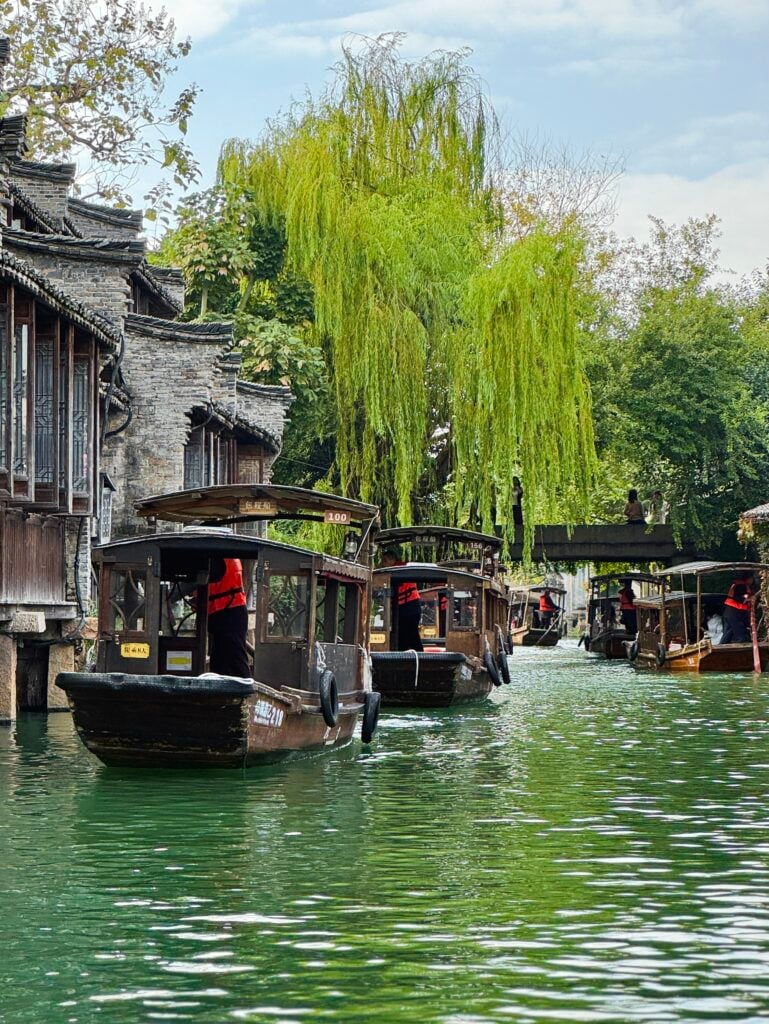
Xizha (西栅), or the West Scenic Area, is the much larger and more expansive part of Wuzhen. And when I say large, I mean it. Multiple long main streets run along either side of the canals, with smaller lanes and side streets branching outward.
You can easily spend hours wandering around without realizing how much ground you’ve covered. We spent four hours in Xizha and barely got a chance to see both sides of the canal—a full day in Xizha would have been ideal!
While Dongzha focuses more on traditional customs and museums, Xizha is where you’ll find the postcard-worthy canal scenery Wuzhen is famous for. You’ll get a hodgepodge of everything: traditional wooden buildings, stone bridges, waterfront restaurants, little shops, tea houses, and plenty of places to stop for street snacks and local delicacies.
If you think this is just a little sleepy water town where things start shutting down by 5pm, think again!
There’s a lot more happening here in the evening, when the buildings and bridges are illuminated and the entire waterfront takes on a different atmosphere entirely.
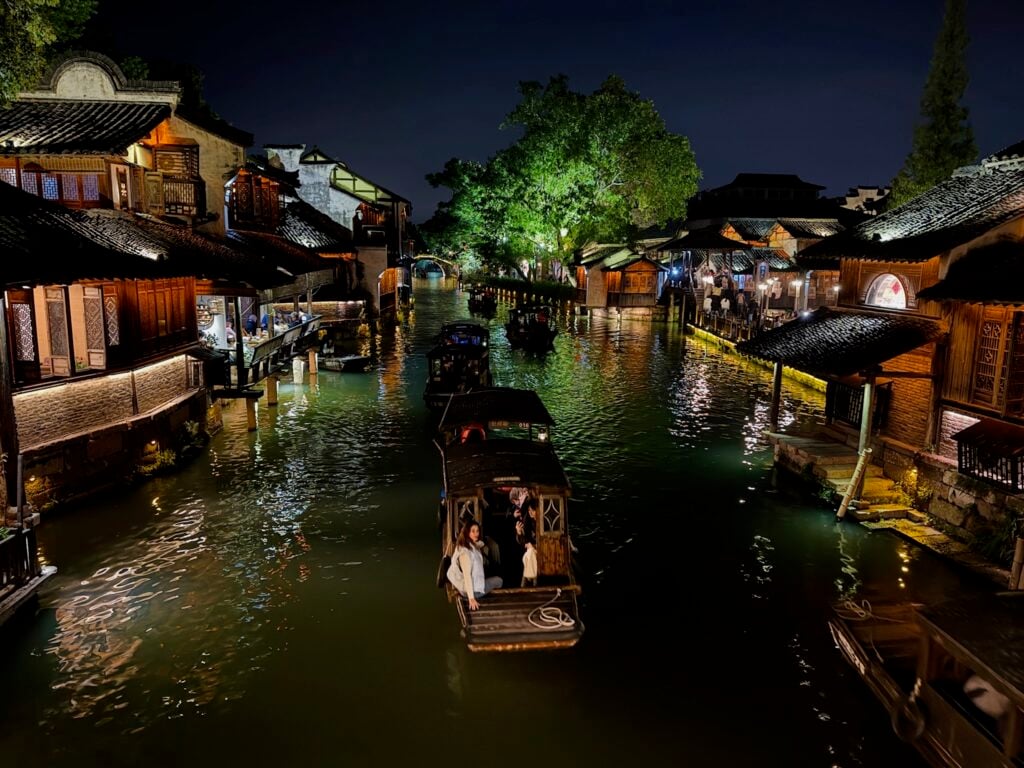
If you’ve seen photos of Wuzhen at night, chances are you’re looking at Xizha. Young people on Chinese social media especially love it at night! You’ll find tons of visitors renting traditional Hanfu outfits and arranging professional photoshoots along the canals.
The nighttime scenery is a big part of the appeal, and I’d argue it’s worth planning your day around staying here until after dark.
How to Organize Your Visit To Wuzhen
How you organize your time in Wuzhen really depends on whether you’re visiting as a day trip or staying overnight.
If you have the flexibility, I’d wholeheartedly recommend spending at least one night here. That was actually my original plan, and after seeing the town for myself, I STILL wish we’d been able to do it.
That said, if a day trip is all you can swing, I’d still recommend it! We visited both scenic areas in one day and still came away feeling like we’d experienced something pretty darn special.
How To Structure An Overnight Stay
If you’re able to spend a night in Wuzhen, I’d organize your visit a little differently. Rather than rushing through both scenic areas in one day, give yourself the first afternoon and evening to explore Xizha (West Scenic Area), then save Dongzha (East Scenic Area) for the following morning.
Day 1: West Gate Scenic Area in the afternoon and evening
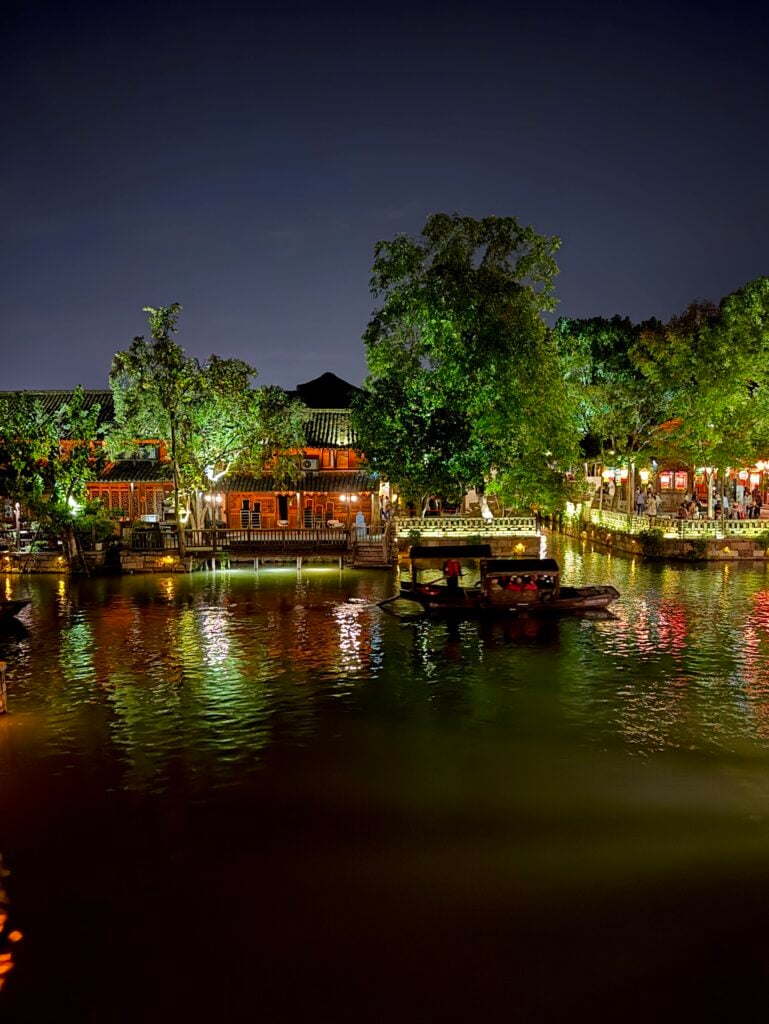
Start with Xizha (West Gate), which is the larger of the two areas and where you’ll want to spend the most time. Wander along the canals, explore the side streets, browse the shops, visit the cultural attractions, and stop for whatever street food catches your eye.
Most importantly, stick around after sunset. The illuminated buildings, bridges, and waterfront streets are a huge part of Wuzhen’s appeal, and the atmosphere changes considerably once the evening lights come on.
One of the biggest perks of staying overnight is that you don’t have to watch the clock or worry about catching the last train or arranging transportation back to Hangzhou or Shanghai. You can enjoy the nighttime scenery at your own pace and even venture out again once the regular day visitors have left.
Day 2: East Gate in the morning
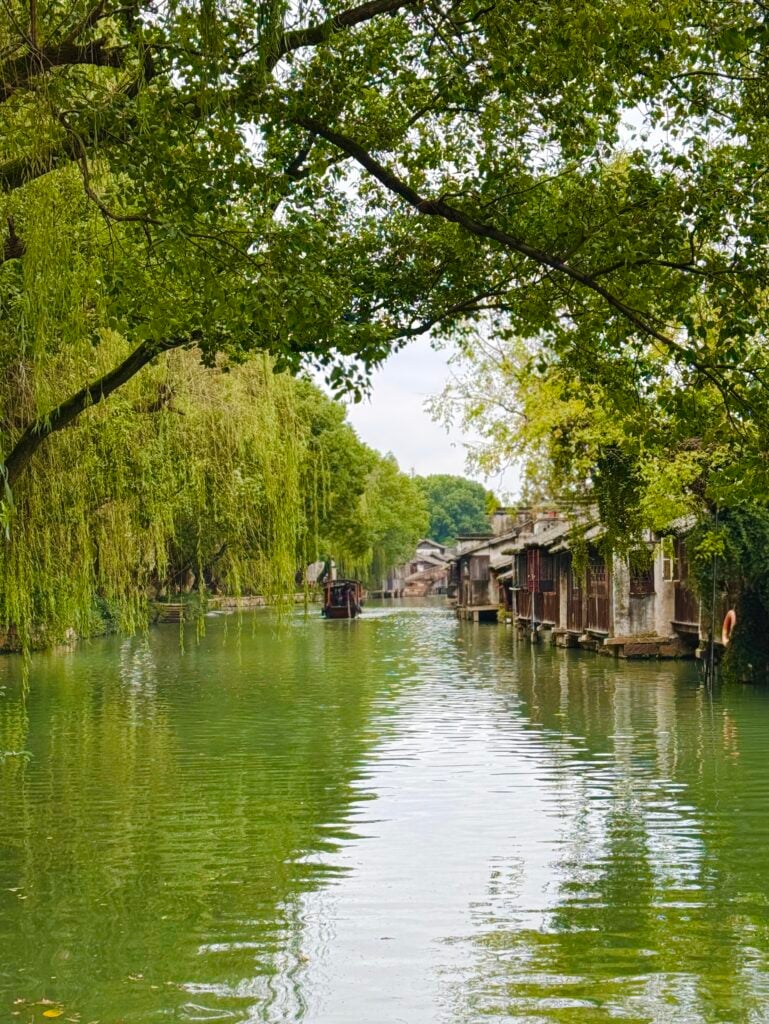
After breakfast, head over to Dongzha for a morning of exploring the traditional workshops, museums, and cultural attractions. It’s smaller than Xizha and easier to cover in a few hours, making it a good final stop before heading onward to your next destination.
A note about tickets: If you book accommodation inside Xizha’s West Scenic Area, admission to Xizha is included with your stay. You’ll also receive in-and-out access privileges, meaning you can leave and return to the scenic area during your stay. This is a major advantage over visiting as a regular day-tripper, especially if you want to experience the serene canals early in the morning or later at night!
How To Structure A Day Trip
If you can’t stay overnight, you can absolutely visit both Dongzha and Xizha in one day. This is how we ended up experiencing Wuzhen, and while I still wish we’d had more time, it was enough to understand why this place became the highlight of our trip.
For a day trip, my recommendation is simple: start with Dongzha in the morning and save Xizha for the afternoon and evening. Evenings in Wuzhen’s West Scenic Area are a must!
Dongzha is smaller and more focused on museums, workshops, and traditional cultural experiences, making it a good place to start while you have plenty of energy for exploring.
Make your way over to Xizha for the second half of the day, ideally before 3pm so you can maximize your time there. Between the sheer size of the scenic area, the number of shops and restaurants, and all the side streets branching away from the main canals, there’s a lot more ground to cover than you might expect. Grab an afternoon tea/coffee along the canal, browse the shops, stop for snacks, and just admire everything around you!
Most importantly, stay until after sunset. This is when Xizha comes ALIVE! As the lights switch on along the canals, the bridges and traditional buildings become even more photogenic. It’s a whole experience in itself.
Wuzhen Ticket Prices
| Ticket Type | Price per Person |
|---|---|
| Xizha (West Scenic Area) | CNY 150 |
| Dongzha (East Scenic Area) | CNY 110 |
| Combined Dongzha + Xizha ticket | CNY 190 |
If you’re visiting as a day-tripper, you can purchase a combined ticket to save on admission fees.
At these prices, the combined ticket is the obvious choice if you plan to visit both areas in the same day. Buying them separately would cost CNY 260, so you’ll save CNY 70 per person with the combo ticket.
If you’re staying overnight in Xizha, remember that admission to the West Scenic Area is included with your accommodation, so you won’t need to buy a ticket there. You’ll only need to account for Dongzha admission if you plan to visit the East Scenic Area the following day.
WUZHEN: HOTEL SPOTLIGHT
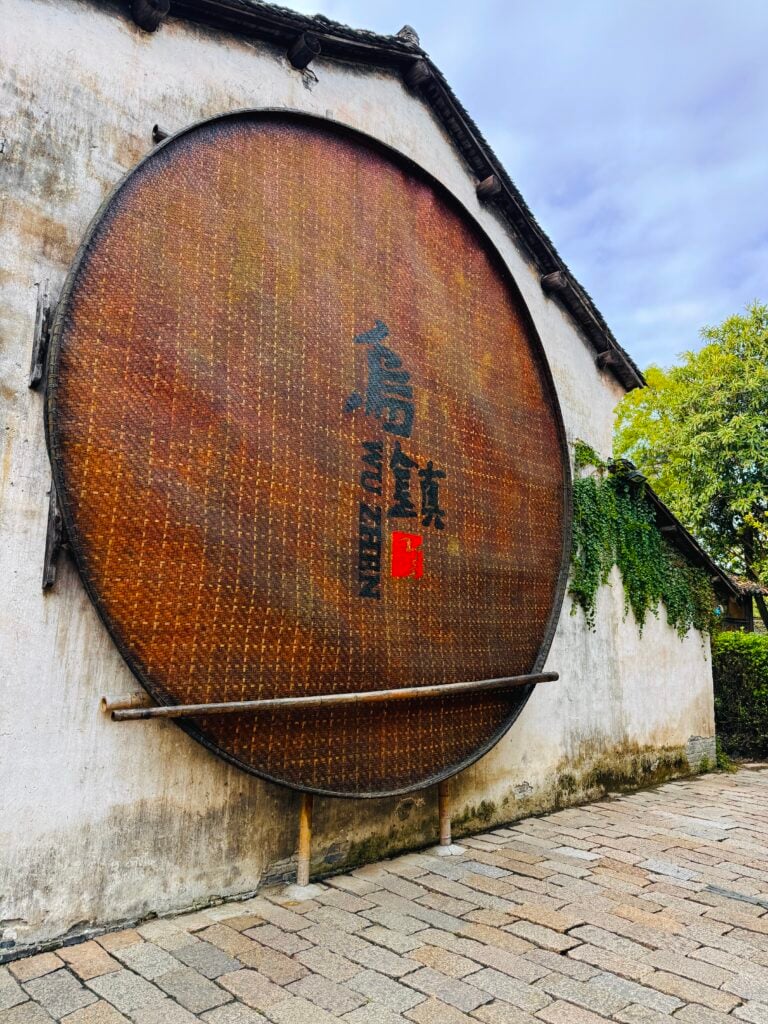
Dishang Resort
Set within Wuzhen’s West Gate Scenic Area, this elegant retreat pairs traditional surroundings with thoughtful luxury.
Rooms are beautifully designed, service is polished, and the details go above and beyond. From L’Occitane bath amenities to smart-adjustable mattresses that tailor firmness to your height/weight, and nighttime singing bowl sound rituals—all make bedtime feel like its own little ritual.
Mornings bring a generous, high-quality breakfast, while the fourth-floor infinity pool offers a welcome place to unwind after exploring the cobbled lanes and canals.
Where To Stay In Wuzhen
If you’re lucky enough to find an available room inside the Xizha West Scenic Area, I’d go with this location. It’s an easy decision!
These are the hotels inside the West Scenic Area I recommend:
- Dishang Resort ($$)
- Silk Commerce Clubhouse ($$$)
For a historic water town, it’s kinda absurd how you could find such luxury, am I right? These rooms tend to go quickly, so if you see availability, I’d book sooner rather than later!
Here’s why… staying within the scenic area comes with some worthwhile perks that you won’t get at an ordinary hotel outside the gates.
For starters, guests staying inside Xizha West Scenic Area receive complimentary admission to the West Scenic Area. You also get access to the scenic area after regular day visitors have been ushered out, which means you can enjoy the canals during quieter hours without the same crowds.
Another perk is access to the waterfront breakfast experience, which is reserved for hotel guests staying inside the scenic area. Imagine starting your morning with breakfast along the canals before the waves of visitors arrive… amazing.
Yes, staying inside the scenic area may cost a little more than booking a hotel outside the gates, but I’d argue the added access and experience make it worthwhile. You’re not simply paying for a room; you’re paying for the opportunity to experience Wuzhen at times when most visitors can’t.
Couldn’t snag a room inside Xizha? Don’t worry. There are still good alternatives nearby. When I was planning my original overnight stay, these were two properties I had shortlisted:
- Eryou Homestay ($): A cute, apartment-style homestay with free breakfast that’s also surprisingly affordable. You’ll be steps from the Wuzhen West Scenic Area.
- Wuzhen Baifuyuan Hotel ($$): An absolute pinnacle of boutique guesthouses; rooms are big, bright, and airy, and the hotel offers tea rooms, private bars, and photo shoot services.
Wuzhen West Scenic Area (Xizha): What to See + Do
West Scenic Area (Xizha) is the larger of the two scenic areas, and my personal favorite! On this side of town, you’ll find the classic canal-town scenery most people picture when they think of Wuzhen: traditional wooden buildings perched over the water, stone bridges connecting narrow lanes, little storefronts tucked into old buildings, and restaurants with tables overlooking the canals.
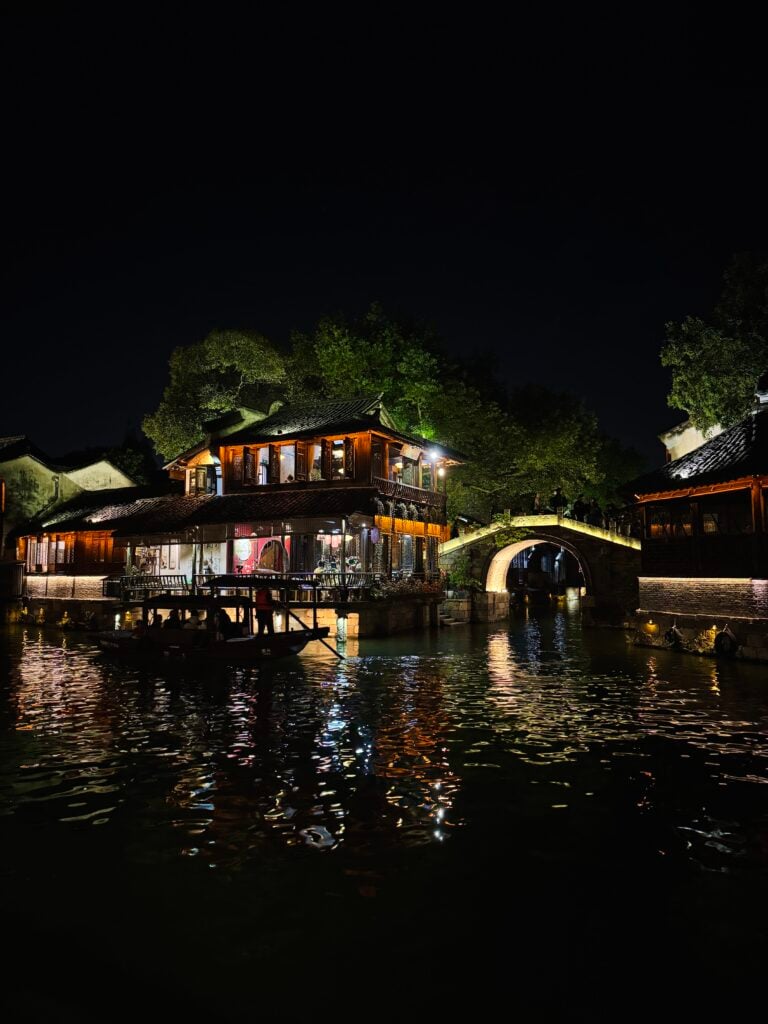
It looks and feels like a pure dream! It’s often described as the “Venice of the East“, and while I first thought it was such a corny name meant to romanticize the town for marketing purposes, I ended up agreeing with the coined term. It really DID feel like Venice…but in China!
The best way to experience Xizha is to give yourself plenty of time to wander. There are several main streets that run through the area (Xizha Street, Xiushuilang Street, Lingshui Street), don’t be afraid to duck down the smaller lanes branching off them.
You’ll come across everything from traditional craft shops, tea houses, and snack stalls to little courtyards, cafes, and even a garden with a stellar nighttime illumination and water show. Above all, the atmosphere is insane. It’s such a beautiful water town, and it will likely blow your expectations out of the water.
And while there are a handful of attractions worth seeking out, I wouldn’t make your entire visit about getting from one to the next. It’s way too easy to just walk aimlessly in one direction; without even trying, you’ll run into cool things to see/eat.
A few places and experiences to get you started….
Take a boat ride along the canals
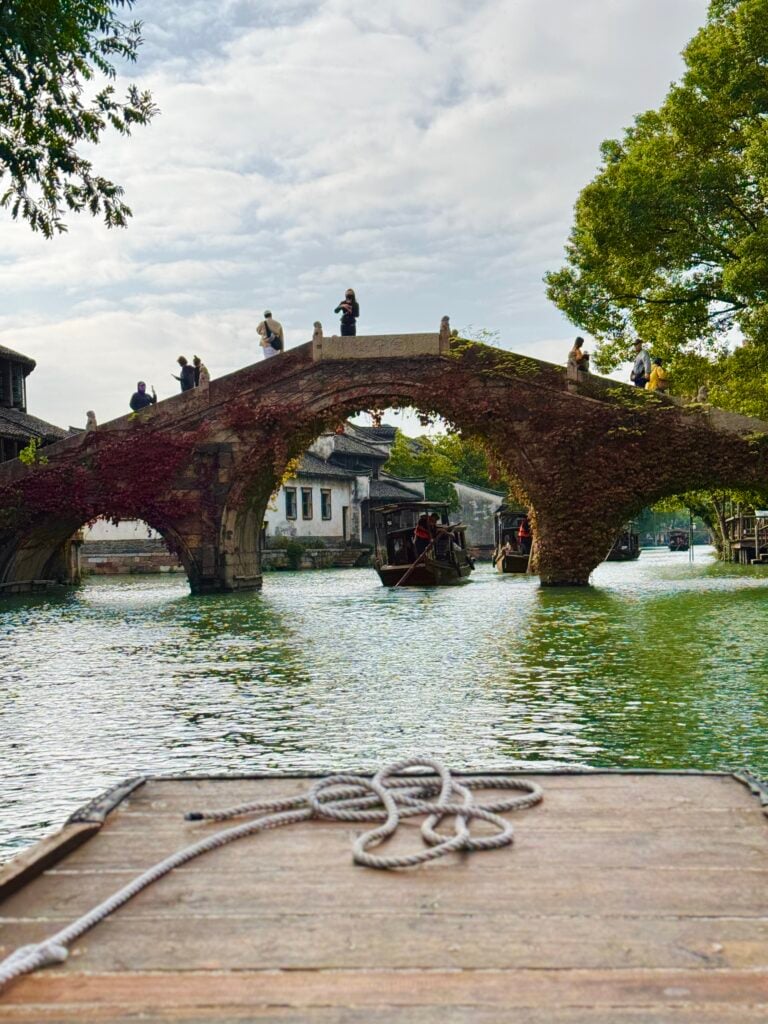
You can’t visit a water town like Wuzhen without getting out on the water! A boat ride gives you a completely different perspective of the town, gliding past traditional wooden homes, stone bridges, and waterfront shops.
Both Dongzha and Xizha offer traditional wooden boat rides, with shared and private options available. At the time of writing, shared rides cost approximately CNY 30 per person in Dongzha and CNY 60 per person in Xizha, with boats accommodating up to eight passengers.
If you’d rather have the boat to yourselves, private rides are available too. In Xizha, a private boat costs around CNY 480. Dongzha charges by boat and passenger capacity:
- 4 passengers or fewer: CNY 160 per boat, one way
- 5–8 passengers: CNY 240 per boat, one way
Bridge within a Bridge (桥里桥)
One of Wuzhen’s most recognizable bridge views, this sight is actually made up of two bridges, Tongji Bridge and Renji Bridge, positioned at right angles to each other. Stand at just the right spot and you’ll see one bridge framed through the arch of the other. It’s a classic photo opportunity, and you can also catch the view from the water on a boat ride.
Market on Water
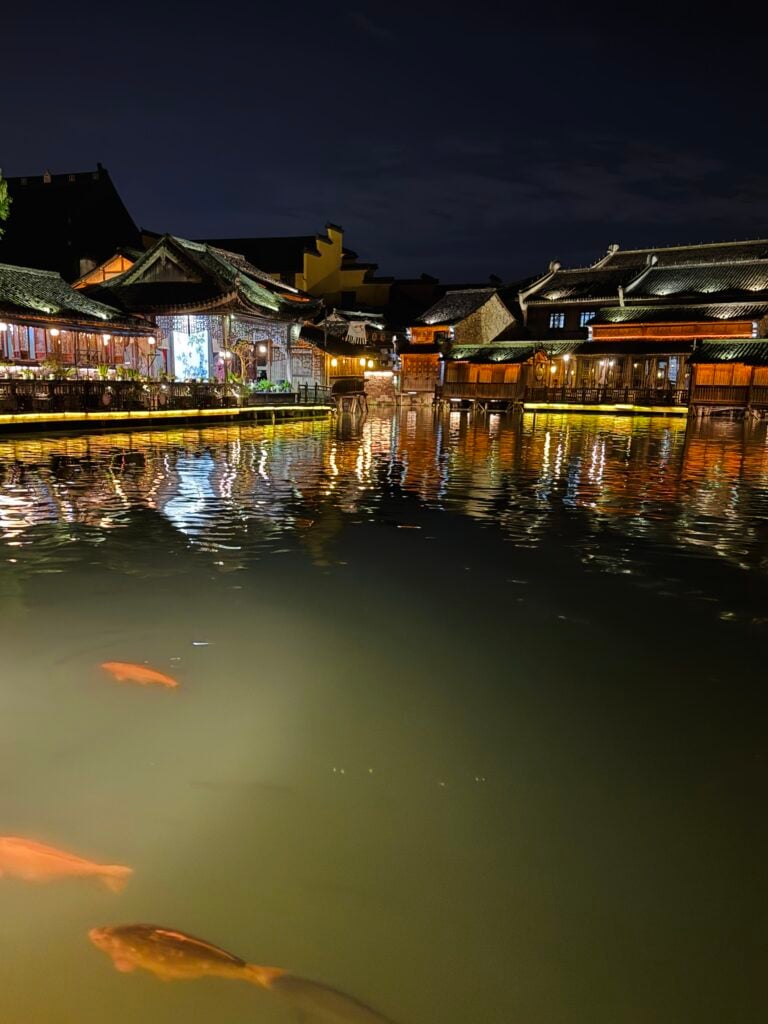
Waterways were once essential to Wuzhen’s daily commerce, and this area gives you a glimpse of how closely trade and life were tied to the canals. Wander through and imagine what buying and selling goods here would have looked like generations ago. Today, occasional market fairs still take place, along with large koi viewing areas along the wooden bridge.
Waterfront Stage
Located near the Water Market, this reconstructed Qing Dynasty-era opera stage sits right beside the canal. Traditional performances are held here, making it a fun stop if you want to see a little local performing arts rather than spend your entire visit looking at old buildings. Check the schedule when you arrive, since performances and programming can vary.
Immersive Light Show Garden Walk
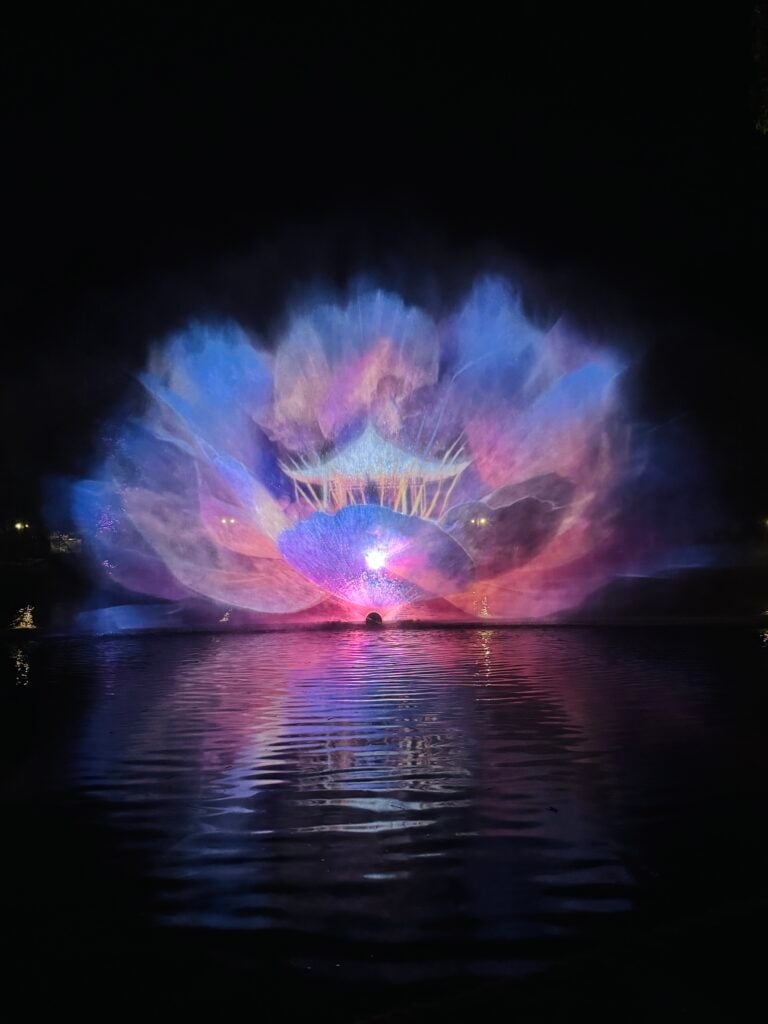
If you want a break from the traditional architecture, take a walk around Lingshui Garden after dark. First, walk around the garden, where you’ll see the prettiest illuminations throughout (light butterflies fluttering on the ground, trees glittering with light, etc.).
Then, head to the show viewing area. Wuzhen’s new immersive light show transforms its classical garden into a dreamlike world after dark, perfectly integrating light and water scenery. The show is just about 10 minutes long and runs multiple times per night.
White Lotus Pagoda
At the western end of Xizha, near the Grand Canal, you’ll find this historic pagoda. It’s a good place to walk toward if you want to explore beyond the busiest central streets. You can climb up for views over Wuzhen and the canal during the day, while the illuminated pagoda becomes a landmark in the evening.
Eat your way through Wuzhen’s local specialties
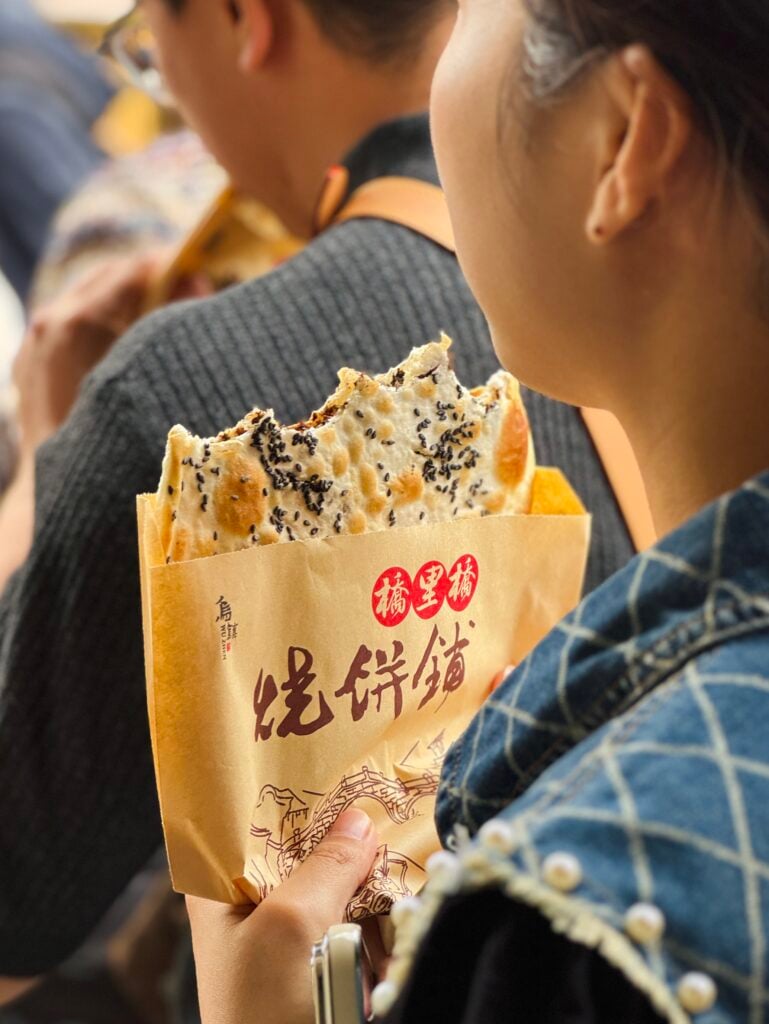
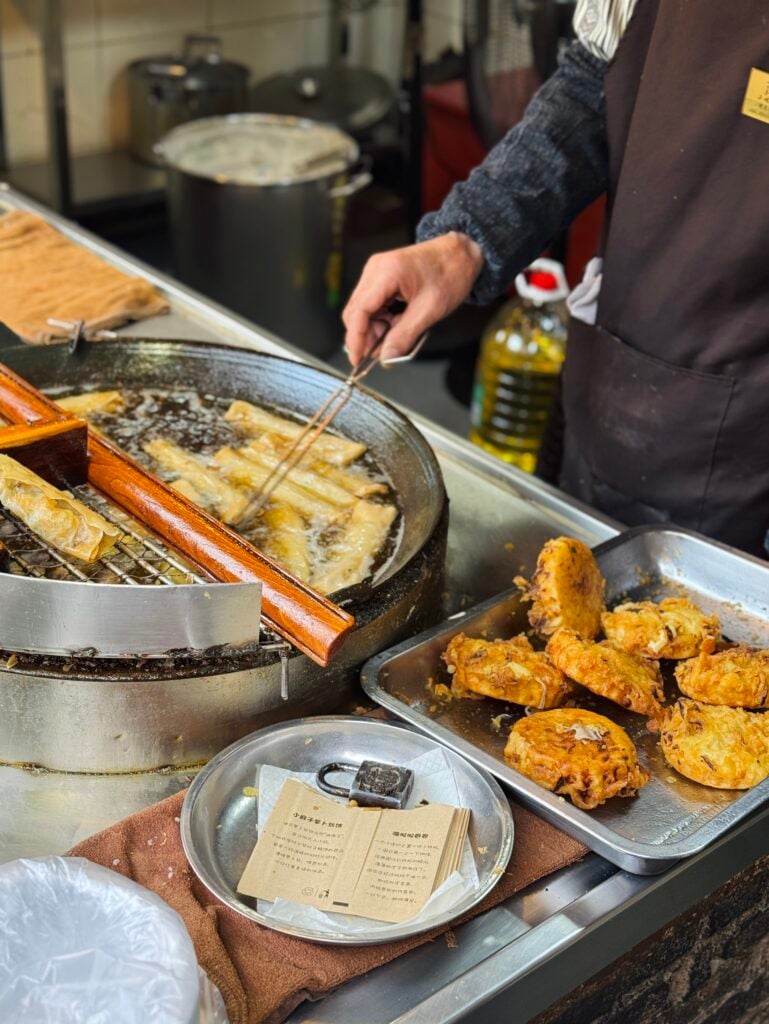
Honestly, this deserves to be an attraction in its own right. Xizha has plenty of restaurants and snack stalls, so I’d leave some room in your schedule (and stomach space) to try a few things as you wander.
Look out for scholar’s lamb noodles, a local signature dish; radish shredded pancakes at Zilala Deep-Fried Stall, which are a delightful savory snack; Dingsheng cake, a traditional sweet rice cake; and cong bao hui, a crispy fried snack made with scallions and dough.
That’s only the start of the list! You can find our full Wuzhen food guide here with all the popular spots travelers line up for. Based on our personal experience, you can spend sooooo many hours snacking around Wuzhen it’s not even funny!
If you love trying local food, make time to eat at as many of the spots as possible. Getting in line for anything/everything that looked yummy was definitely one of the most memorable aspects of our trip!
Soak in the nighttime atmosphere
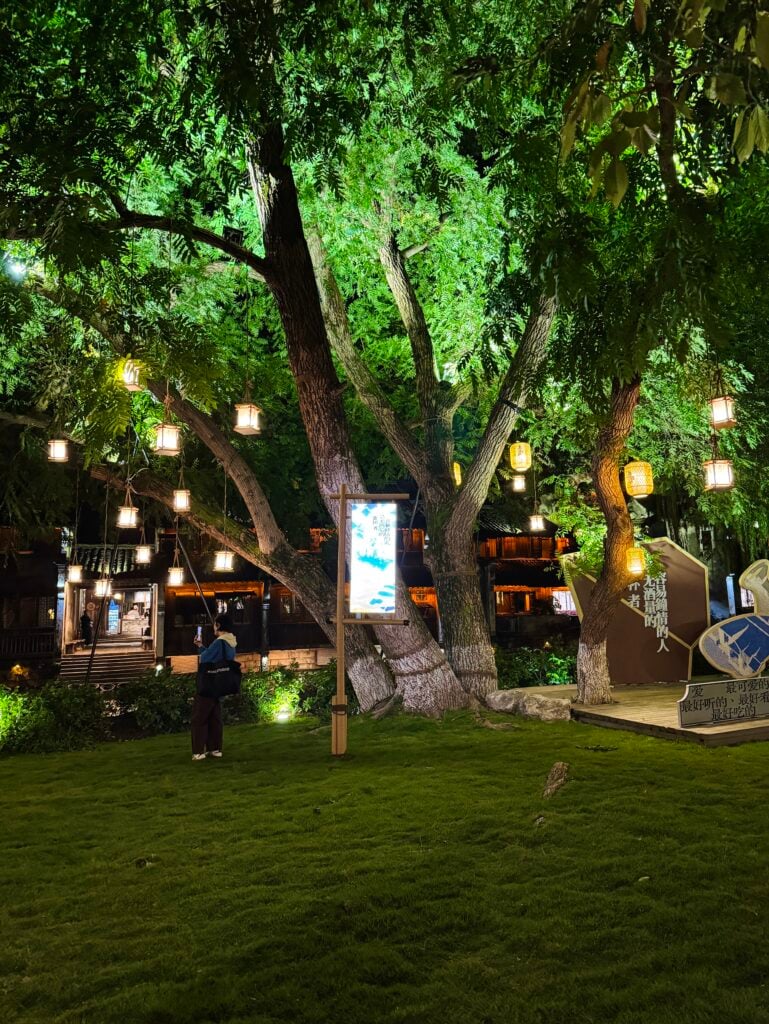
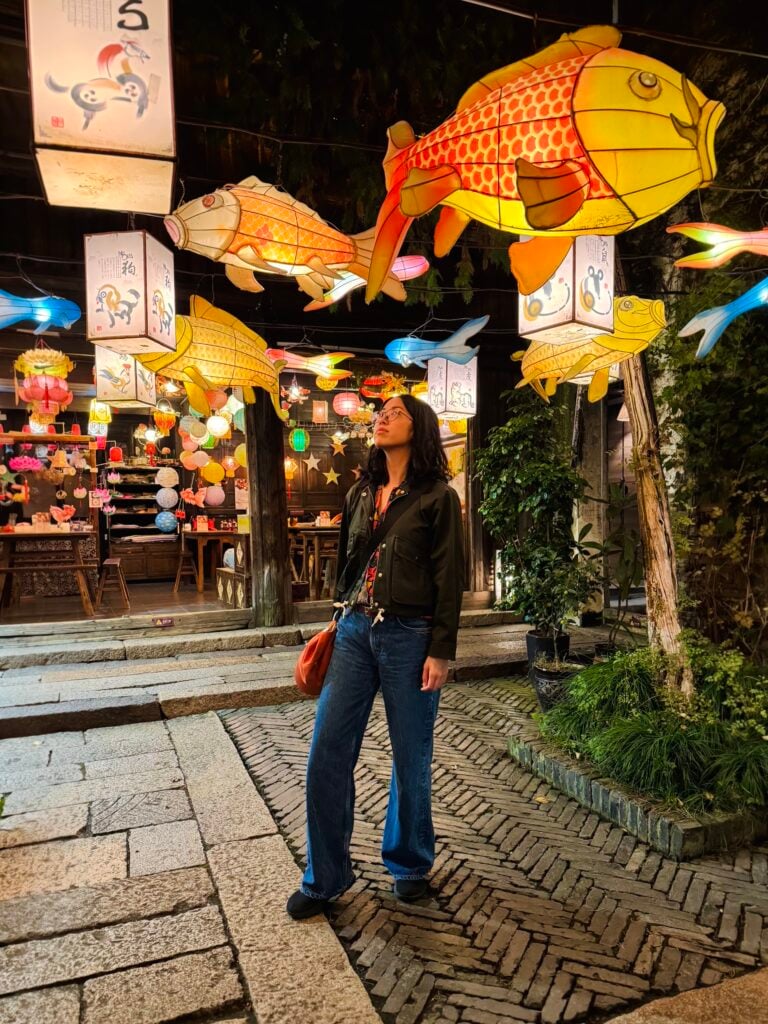
Xizha looks completely different once the lights come on. At sunset, thousands of lanterns and hidden lights illuminate the arched stone bridges and wooden facades, turning the town into a true fairytale setting.
Buildings, bridges, and waterfront walkways glow in warm yellows and oranges, their reflections stretching across the canals as rowboats glide past. Along the water, families settle onto the stone edges to watch the boats go by, while black swans paddle around the canals. Seeing black swans was a first for us! How regal.
And then there’s the activity happening along the streets. Photographers call out directions to visitors dressed in elaborate Hanfu costumes, trying to get that perfect shot against the illuminated bridges and traditional buildings. Once dinner rolls around, the smell of food draws you toward the restaurants and snack stalls, where people happily chow down on bowls of Wuzhen’s famous noodles and other local specialties.
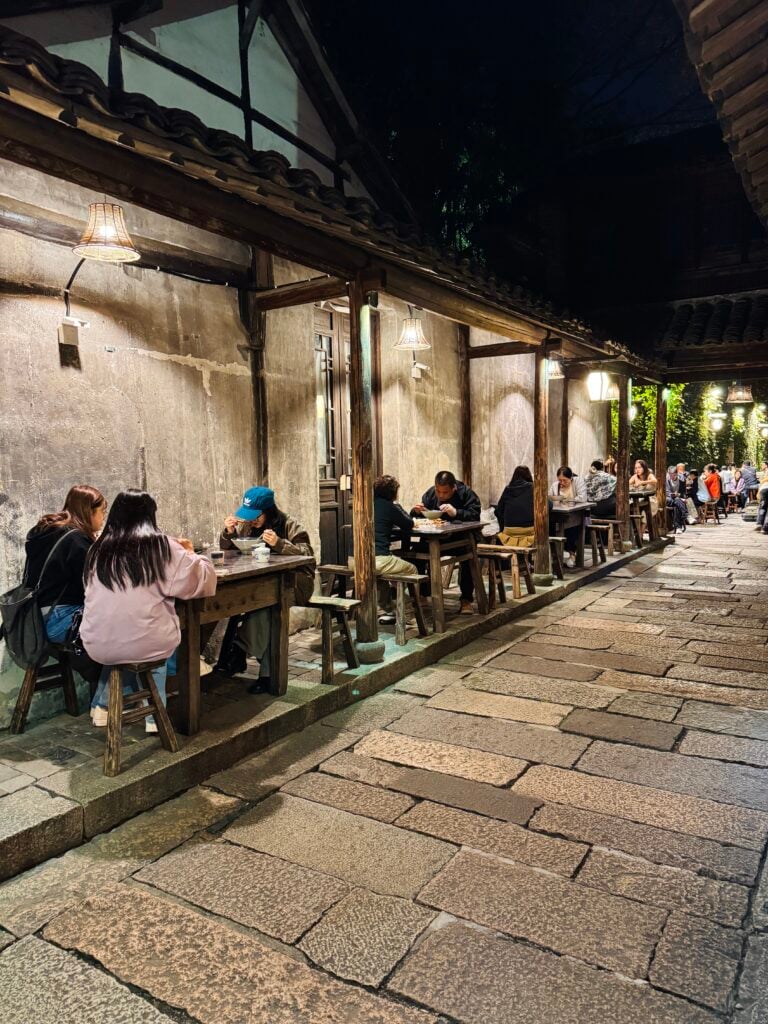
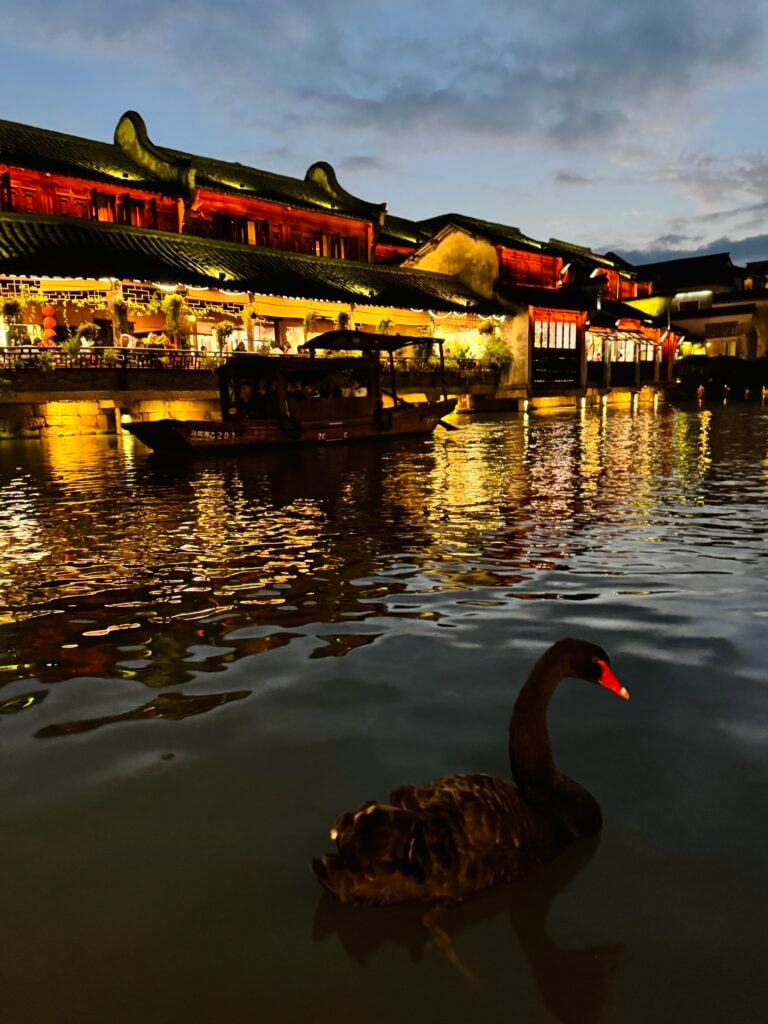
I loved the whole atmosphere. I never wanted to leave! In fact, this was the moment I really started feeling the FOMO of not having booked an overnight stay. Sadly, we had to catch our tour bus back to Hangzhou at 7:30pm. I wanted to soak it all in for a few more hours, see what the town felt like late at night, and experience Xizha again once the day-trippers had cleared out.
The nighttime atmosphere is unmissable. If I could give one piece of advice, it’s to see Xizha in the afternoon and evening. And if you can swing an overnight stay, even better.
Wuzhen East Scenic Area (Dongzha)
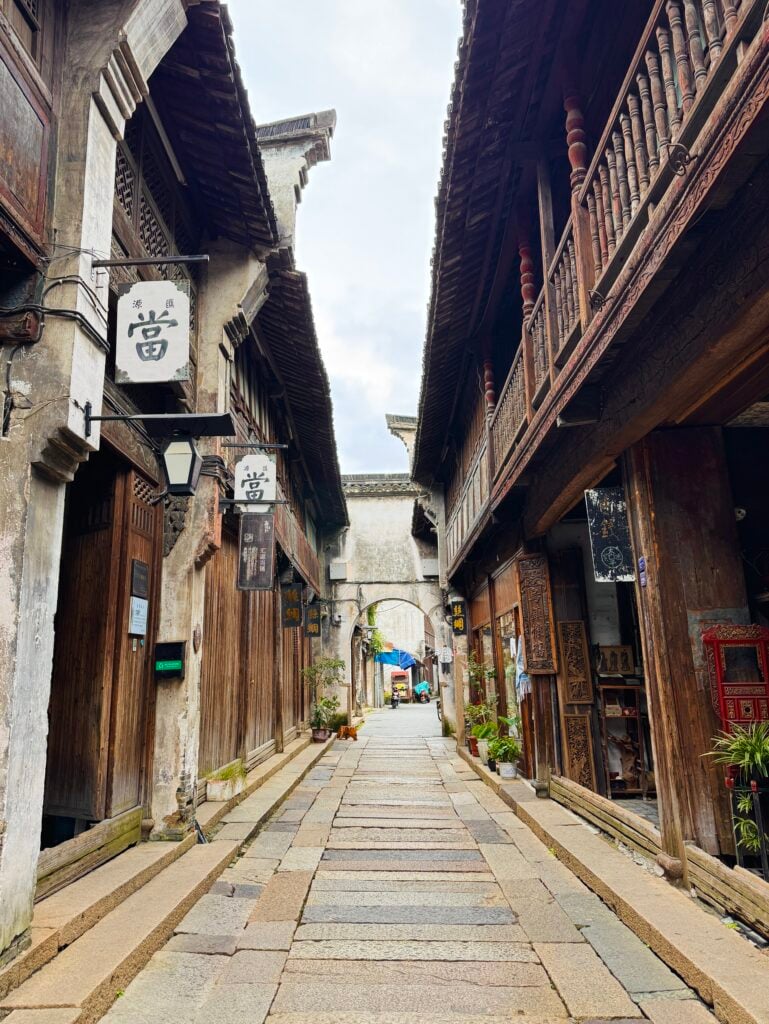
Dongzha is smaller than Xizha, but it offers a different perspective of Wuzhen. This is the older, more traditional-feeling district, with wooden homes lining the canals, narrow stone lanes, and a collection of museums and workshops dedicated to the town’s history and everyday customs.
Some residents still live in Dongzha, and you’ll notice that the area feels a little less expansive and more focused on cultural attractions than the West Scenic Area. It’s a good place to spend a morning learning about traditional crafts and seeing how people in this part of China once lived.
Here are the main stops to look out for:
Jiangnan Hundred Beds Museum (Ancient Bed Museum)
This museum houses a collection of traditional Chinese beds, some dating back to the Ming Dynasty. And these aren’t exactly the simple wooden frames you might be imagining!
You’ll see elaborate carved designs and intricate craftsmanship that turn the beds into works of art in their own right.
Folk Customs Museum
Get a glimpse into everyday life in Wuzhen during the late 19th and early 20th centuries. Exhibits cover traditional wedding customs, birthdays, childbirth, and seasonal celebrations. We really enjoyed our time here, seeing all the different outfits of the time and learning that different classes of people had different “signature outfits”.
It’s a good stop to work into your itinerary if you want more context on the customs and traditions behind the town’s historic homes.
Indigo Fabric Workshop
Wuzhen has a long history of indigo-dyed textiles, and this workshop area offers a look at how the distinctive blue fabric is made. You’ll get to see the traditional dyeing process and the finished textiles, which are also a nice souvenir to bring home if you’re looking for something more locally connected. They also offer a DIY indigo-dyeing experience.
Papu ended up getting an indigo-dyed headband from their gift shop for his sister; it was actually really cute!
Wine Distillery Workshop
This stop introduces Wuzhen’s traditional rice-wine-making culture, including the production of Sanbai Wine, a local specialty. It’s an interesting look at another part of the town’s food and drink heritage.
Shadow Puppet Theater
If you haven’t seen Chinese shadow puppetry before, this is a fun opportunity to catch a short performance! Local artists use illuminated screens and carefully manipulated puppets to act out traditional stories.
Performances last about 30 minutes and run several times a day. If you want to prioritize this experience, I’d recommend checking the day’s schedule right when you arrive so you can plan your day around it. The show times are posted right outside the venue.
Dongzha Ancient Stage
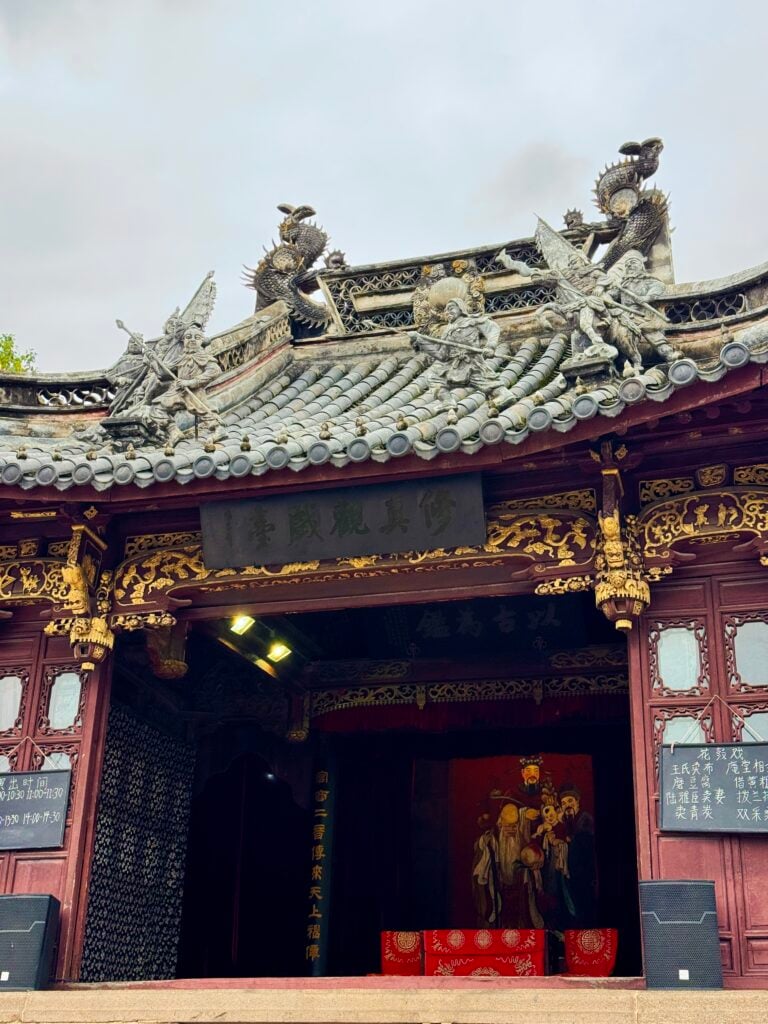
Located in Xiuzhen Temple Square, this traditional opera stage dates back to 1749, during the Qing Dynasty. It was originally built as an auxiliary building to Xiuzhen Temple, where performances were held during important temple fairs and religious celebrations.
The two-story wooden structure has an elaborate gable-and-hip roof, beautifully carved details between its beams and columns, and a traditional stage facing the square.
Historically, performances here were also used to settle community disputes. Known as “punishment plays,” they required people who had caused public grievances to pay for a troupe to perform before the gods as a way of showing their repentance.
Today, it’s returned to its original purpose, with traditional local performances taking place throughout the day, including Huagu (flower drum) opera, a centuries-old regional style performance from Tongxiang. You probably won’t understand the words or the meaning (we ourselves didn’t), but the performance was still pretty and very pleasant to watch.
Kungfu Boat
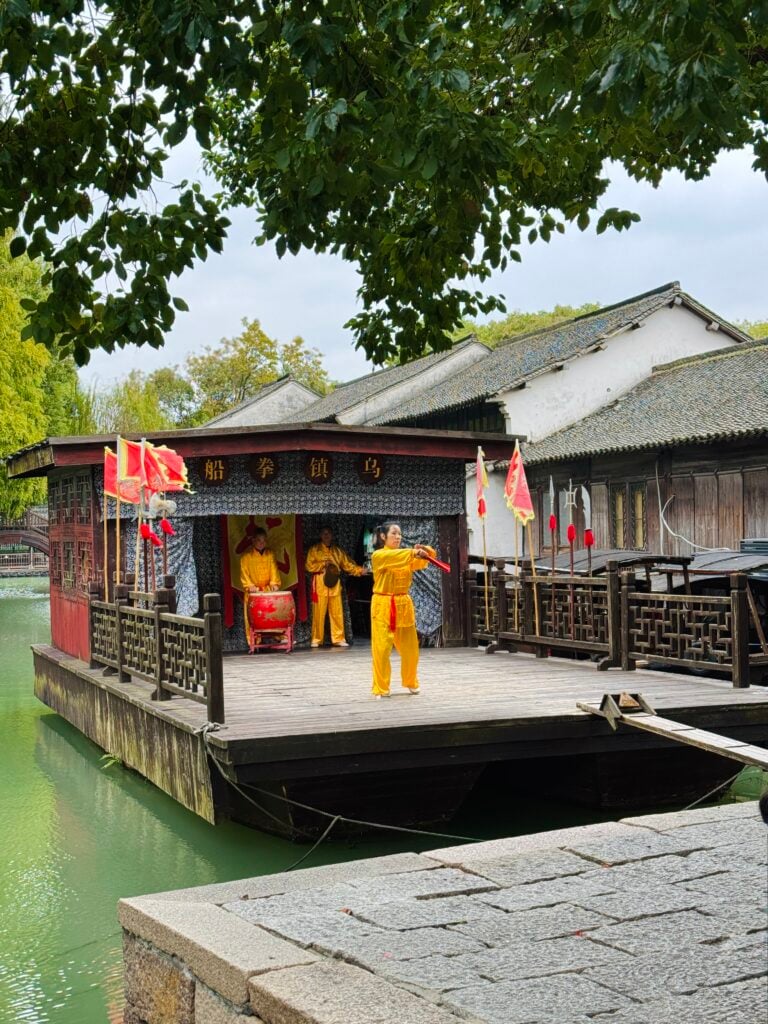
One of Dongzha’s more unusual traditional demonstrations, this performance takes place on a boat and traces its roots to the Southern Song Dynasty. Local performers demonstrate martial arts movements on the water, a practice that historically served as both exercise and a way to help defend the town.
Dongzha doesn’t need as much time as Xizha, but I’d still give it around 2 to 3 hours if you want to visit a few museums and catch a performance or two.
My biggest tip here is to check the performance schedules before you start wandering. Shows run at specific times, so it’s worth planning your morning around anything you’re particularly interested in seeing.
How To Get To Wuzhen
Wuzhen is relatively easy to reach from both Shanghai and Hangzhou, but getting there independently does require a little coordination. You have three main options:
- take a direct bus from either city
- travel by high-speed train to Tongxiang, transfer to bus or DiDi for the final leg
- opt for a guided tour
If you prefer the train, take a high-speed rail service to Tongxiang Station. From there, you can either take the K282 bus, which takes about 40 minutes to reach Wuzhen Bus Station, or take a taxi directly to Wuzhen, which is also about a 40-minute ride. From Wuzhen Bus Station, take the K350 to either the East or West Scenic Area. If you’re visiting both areas, there’s also a free shuttle bus connecting Dongzha and Xizha, with a ride of roughly 20 minutes.
Since we were visiting as a day trip, we didn’t particularly want to spend our time figuring out transportation connections, coordinating transfers, or worrying about how to get between the East and West Scenic Areas.
After roughly running the numbers, we decided to book a guided day trip tour instead. Our Wuzhen day trip tour included admission to both scenic areas, transportation to and from Wuzhen, and the transfers we needed throughout the day.
Basically, we could just show up and enjoy ourselves without managing any of the logistics (other than getting ourselves to the initial pickup point in HZ). For us, that convenience was SO worth it.
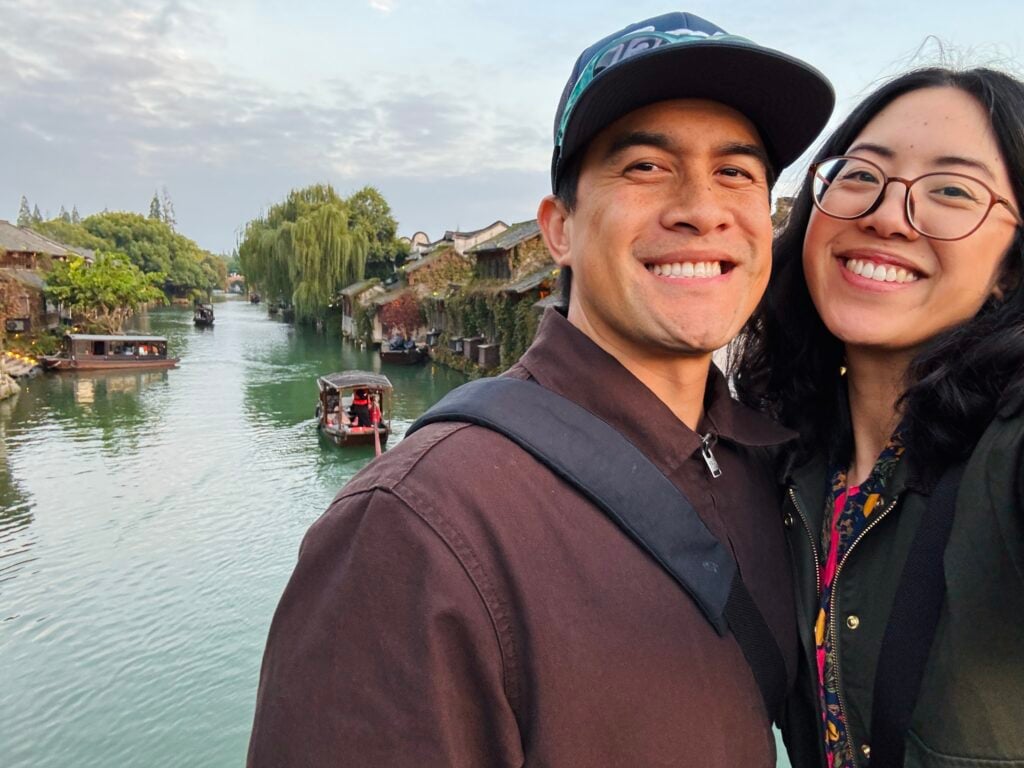
If you’re planning an overnight stay, traveling independently may make more sense, especially if you want the flexibility to explore at your own pace. But if you’re squeezing Wuzhen into a day trip from Shanghai or Hangzhou, I’d compare the cost of a tour with the bus and train options before deciding. Sometimes paying a little extra to simplify the day is money well spent.
We opted for this Wuzhen East + West area full-day tour (it was in Chinese since that was all that was available from Hangzhou — Klook does offer privately guided English-language tours, but these usually depart from Shanghai and cost a bit more). Honestly, I just went for it because it was so much easier than figuring out how to get ourselves there and between the two scenic areas on our own (as foreigners who don’t really speak Mandarin!).
Because it was already so affordable, I didn’t bother crunching the numbers to compare booking everything ourselves vs. going with the tour group. And to not have to worry about logistics so I could actually ENJOY my time there? Definitely worth the few extra bucks for a tour bus and a tour guide!
Other Posts You’ll Love:
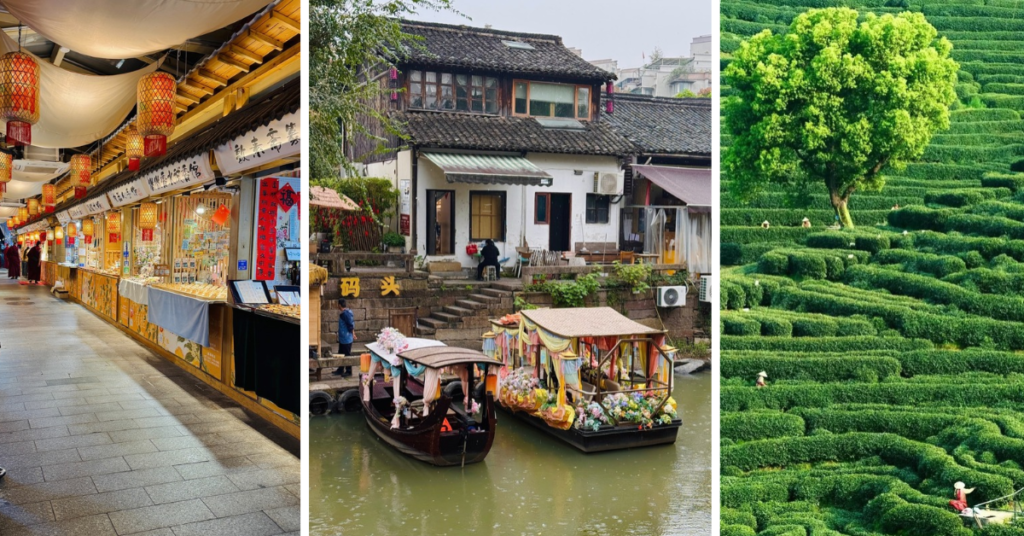
Hangzhou: What to Do, See & Experience (Beyond West Lake)
When Papu suggested that we lead a trip to China with some of his college…
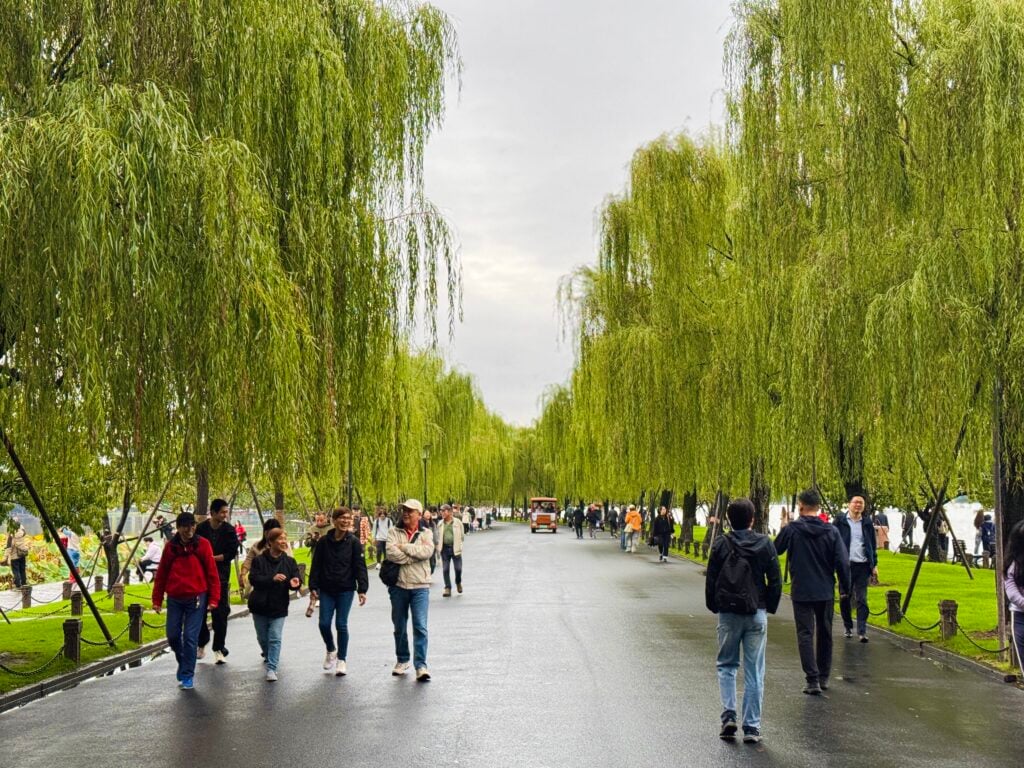
How To Spend A Perfect Day At Hangzhou’s Iconic West Lake
When I was researching how to best spend our five days in Hangzhou, I knew one…
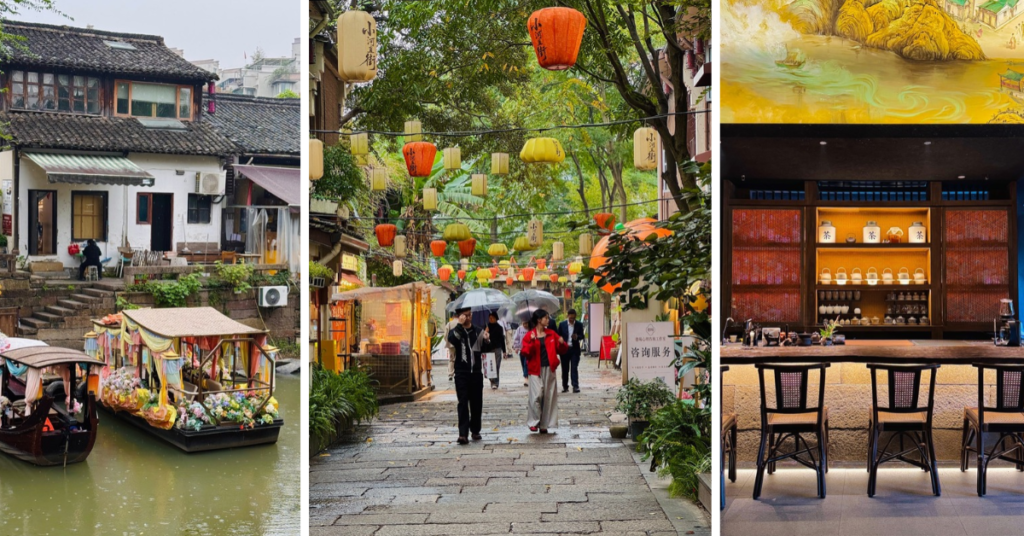
Xiaohe Historical Block: Hangzhou’s Most Charming Canal Neighborhood
One of my favorite things about Xiaohe Historical and Cultural Block was just how much…
Where To Stay In Shanghai: A First-Timer’s Guide
Shanghai is absolutely massive, and given that Western mapping products like Apple Maps and Google…

Is Chengdu Worth Visiting? Here Are 10 Reasons Why We Think So
Chengdu’s appeal is as much about its everyday rhythm as it is about the pandas….

5 Unique Things Xi’an Is Known For (Other Than Terracotta Warriors)
Most travelers heading to China default to the big names: Beijing for the Great Wall,…
