
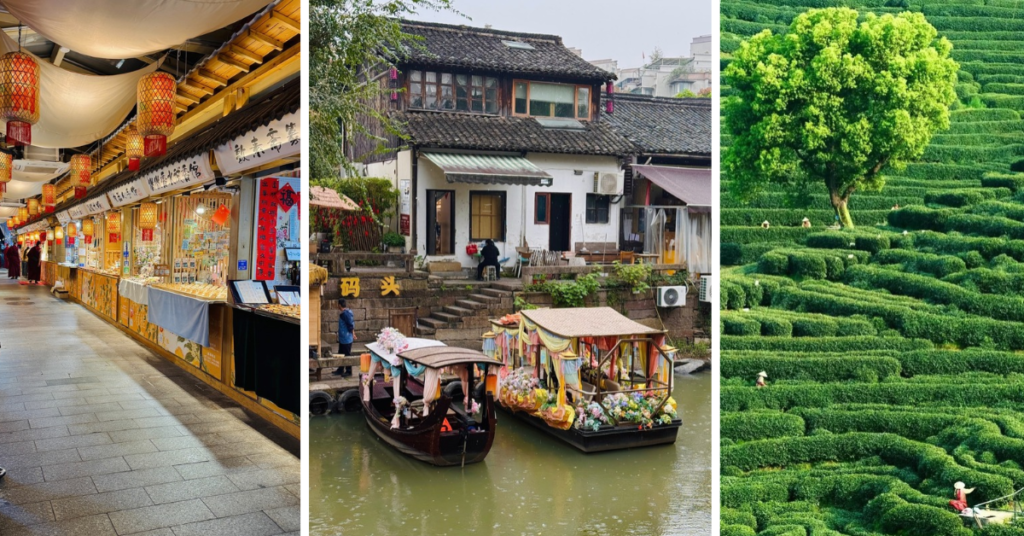
When Papu suggested that we lead a trip to China with some of his college friends who were itching to experience the country for the first time, we immediately knew there was one catch: they were big-city kind of travelers.
As first-timers, they were not yet ready to commit to a China trip that required hopping on another plane to explore another province. (Their loss!)
So it was settled. Since we were basing the trip around the Shanghai area, we started looking for places that would give everyone a taste of China beyond Shanghai’s metropolis without requiring another flight.
Suzhou and Hangzhou were the obvious contenders. Both fit naturally into the classic Shanghai-area route that many first-time visitors to China follow, making them easy additions without turning the trip into a logistical challenge.
Neither was on my radar as a must-visit city, so I started my usual deep dive into what we’d actually do in each one. After way too much research, I concluded that Hangzhou was worth more of our time than Suzhou (it really came down to which we liked more: massive outdoor green spaces vs impeccably manicured gardens).
Originally, I figured we’d spend two days in Hangzhou and move on. Then I kept finding more things I wanted to see. Two nights became three. Three became four. Four became five.
We just came back from our trip and in hindsight, I’m glad we gave HZ all that extra time. I knew Hangzhou was famous for West Lake, but I didn’t realize just HOW much else there was to do here.
You can find our 5-day itinerary of what we actually did here! Heck, we could have stayed for 7 full days and would have still found stuff to do.
Beyond spending an entire day wandering around West Lake, you could head into the countryside to pick Longjing tea, explore historic neighborhoods along the Grand Canal, duck into independent shops and cute cafés, wander through atmospheric old streets, and even spend an evening watching elaborate performances that bring Chinese history to life!
We ended up liking Hangzhou a LOT more than we had originally thought going into the trip. It’s got greenery, gardens, coffee, shopping, atmospheric streets, historic districts, grand shows, and so much more.
And even with all that to do, HZ is a slow traveler’s dream.
I have so many fun photos and experiences from my time in HZ to share with you! And because I know firsthand how difficult it is to plan a trip to China, I hope this guide makes your itinerary planning easier.
I’ve organized this guide by interest, so you can skip the sections that don’t sound like your jam and instead, zero in on the sections/experiences you’ll actually enjoy.
Love temples and history? Prefer nature and scenic boat rides? Want to eat, browse little shops, drink tea, and wander historic streets? I’ve got separate sections for all of these categories.
And if you want to immerse yourself in Chinese culture rather than just wander through historic landmarks or read yet another snoozy museum placard, Hangzhou has some surprisingly fun options.
STILL NEED AN E-SIM FOR YOUR TRIP? Our go-to eSIM provider is Airalo! For a limited-time, you can use promo code AIRALOESIM10 for 10% off your booking. Explore all their affordable plans here.
Here are the best things to do in Hangzhou based on what you’re into.
This post may contain affiliate links. You won’t be paying a cent more, but in the event of a sale, the small affiliate commission I receive will help keep this blog running/pumping out useful and free content. Thanks a lot!
Table of Contents
If You Like Atmospheric Streets & Local Culture
Wander along Hefang Street
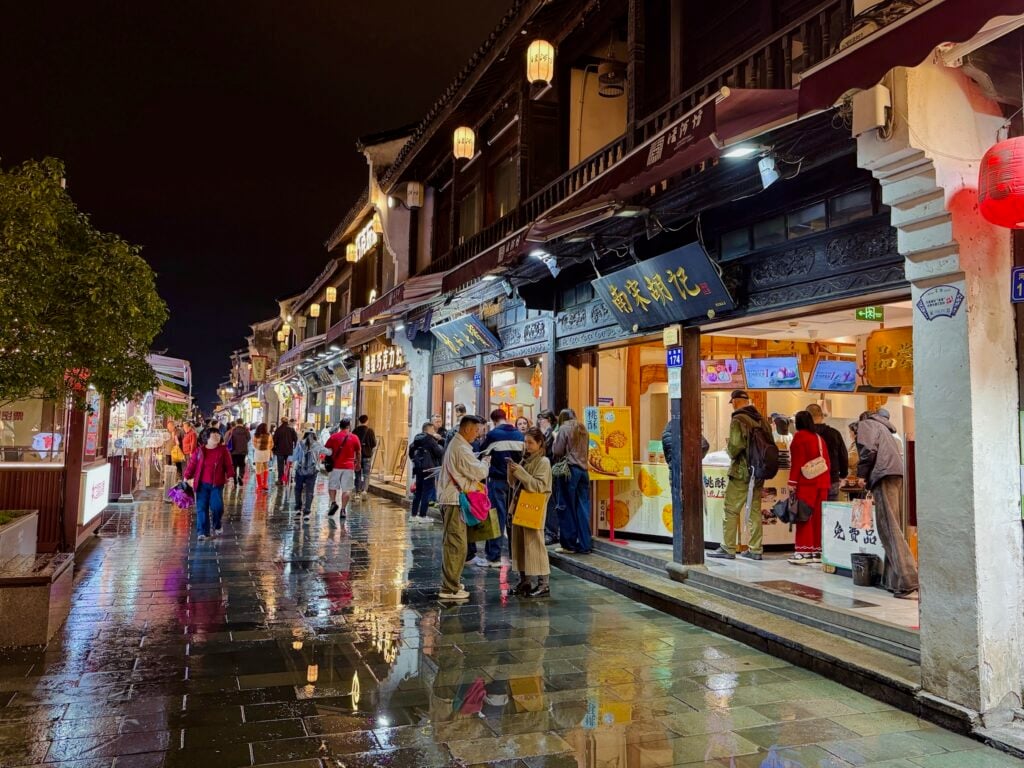
For a glimpse of old Hangzhou without leaving the city center, spend an afternoon wandering through Hefang Street, a historic commercial district dating back to the Southern Song period.
The street follows the layout of an old shopping quarter, with narrow storefronts opening directly onto the pedestrian lanes and traditional buildings topped with dark tiled roofs.
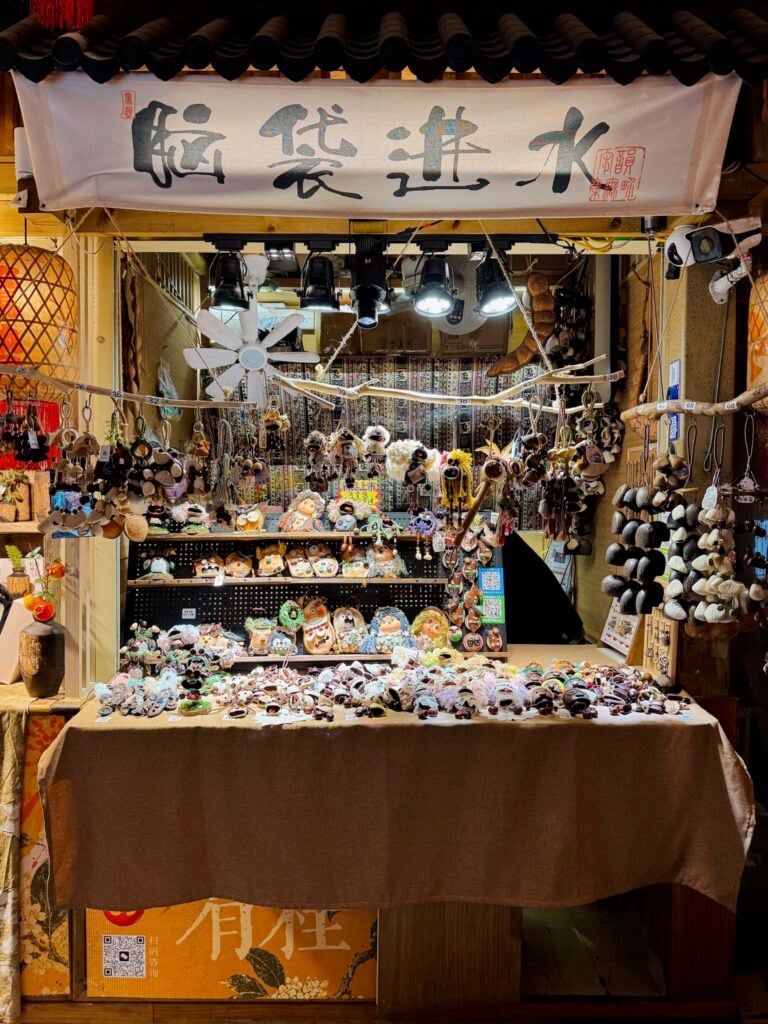
Today, those shopfronts are filled with tea merchants, silk sellers, herbal medicine shops, craft stores, snack stalls, and restaurants, so you can browse all the unique storefronts while watching the street’s everyday theater unfold around you.
This is also a great place to go shopping for Longjing tea products and other souvenirs to bring home! Multiple tea shops let you sample their Longjing snacks and tea products.
Food is just as much a part of the experience: look for sesame cakes, dumplings, candied fruit, herbal drinks, and other Hangzhou snacks being cooked right on the street. Come hungry and let yourself wander rather than arriving with a checklist of things to see.
This place is a vibe, and it’s one of the most popular areas in Hangzhou, second only to West Lake, so prepare for crowds.
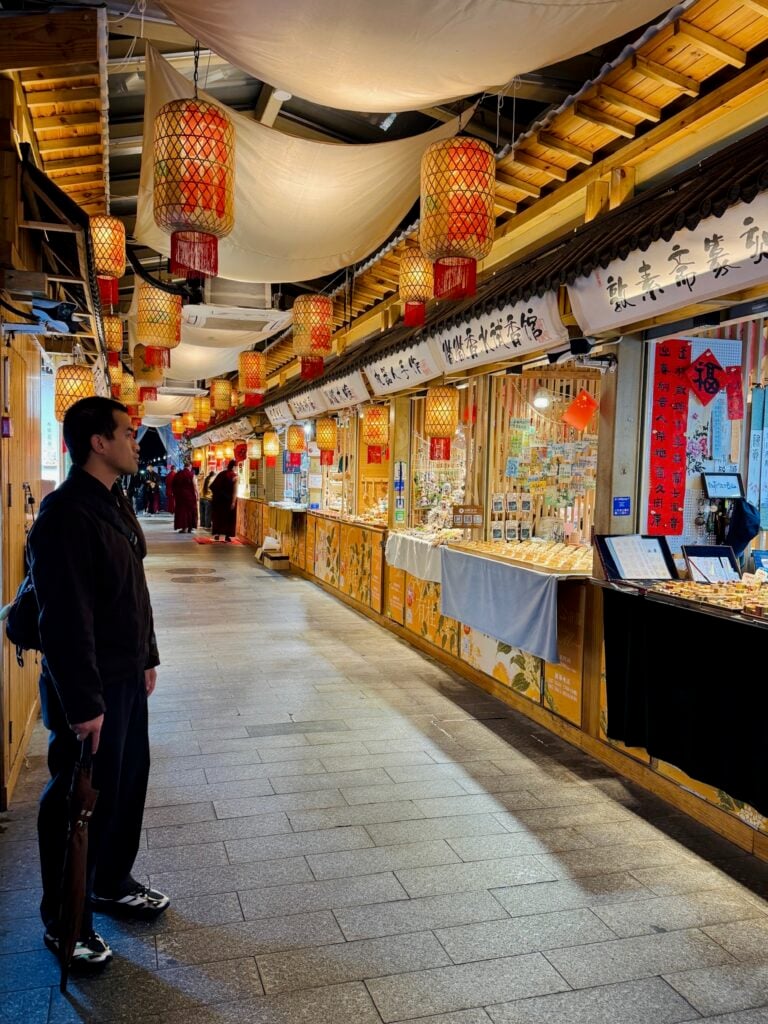
👉 Pro Tip: Don’t stop at the main pedestrian stretch; slip into the smaller lanes branching off the street. The crowds will thin out and you’ll get a better feel for the older neighborhood. For even prettier views, go later in the afternoon and stay into the evening, when lanterns and shop lights come on and the street takes on a warmer, more atmospheric feel.
Eat Your Way Through Hangzhou
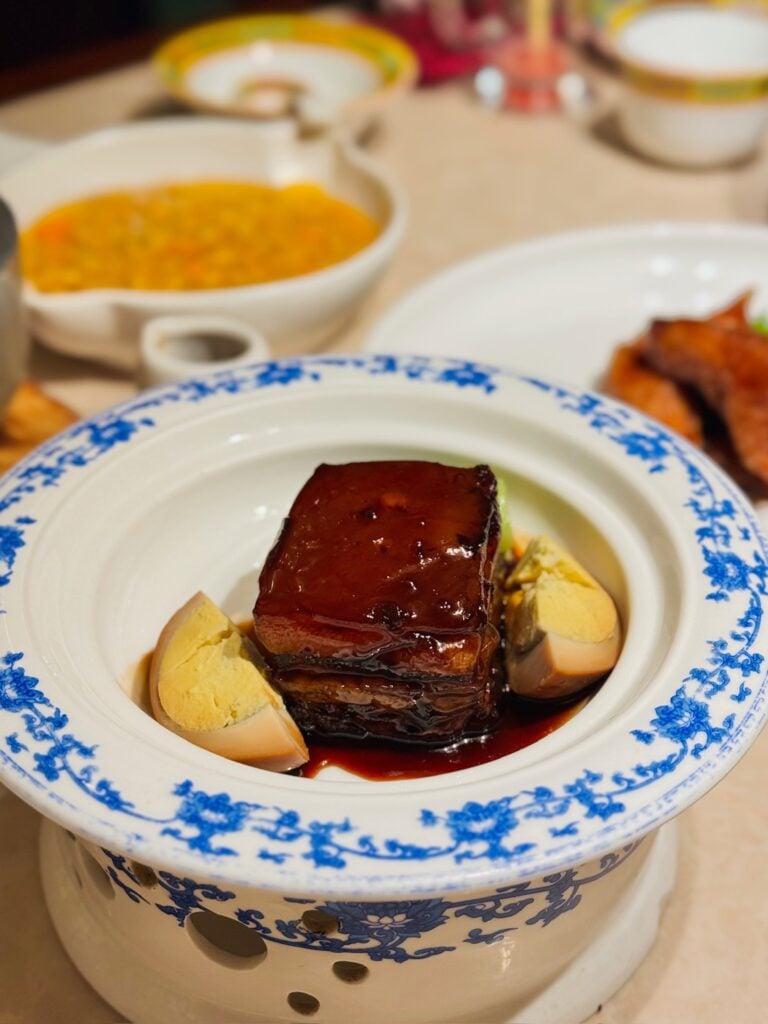
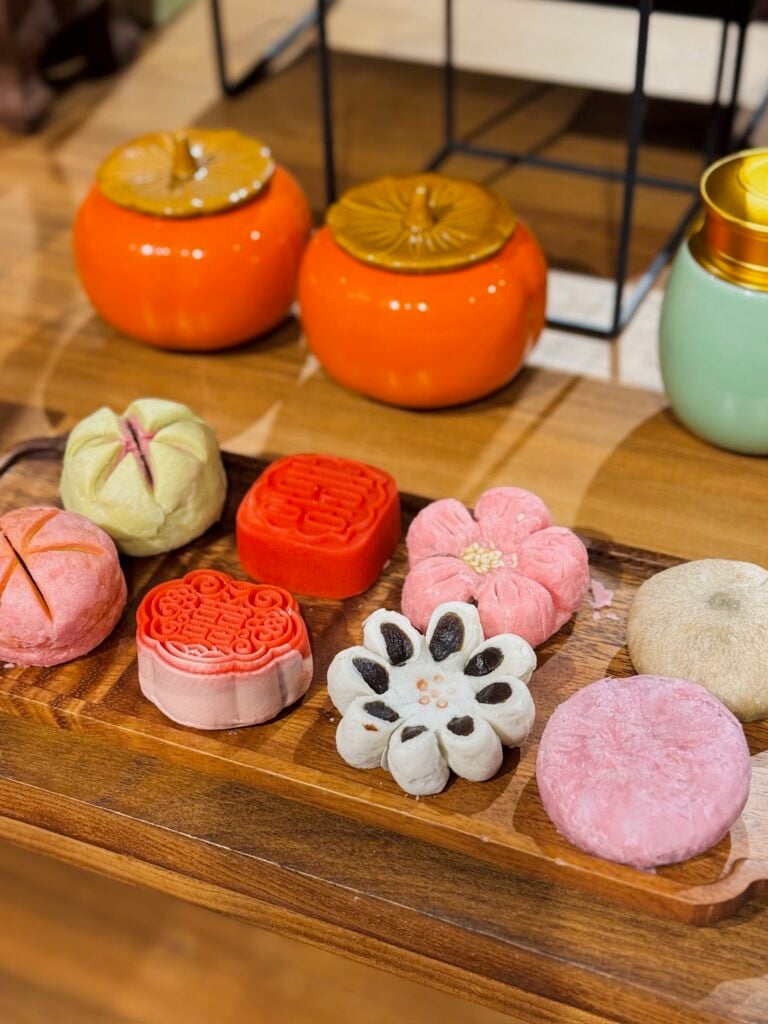
In Hangzhou, you’ll find Zhejiang cuisine, one of China’s eight great culinary traditions, and it’s a good counterpoint to the heavier, spicier dishes you may encounter elsewhere in the country (i.e. the Sichuan province home to the likes of Chongqing, Chengdu, etc.).
Hangzhou’s local restaurants tend to highlight fresh seafood, tender pork and poultry, seasonal vegetables, and delicate broths that tend to enhance the ingredients rather than cover them up with sauce. Hangzhou flavors are also generally lighter and less sweet than the food you’ll find in nearby Shanghai or Suzhou.
Still, Hangzhou has picked up an unfortunate online reputation as one of China’s so-called “food deserts”. That was disappointing to hear, especially since we had dedicated four full days of our last trip to China to exploring HZ alone.
I came into the city with fairly low expectations, but after eating my way around it, I found the opposite: Hangzhou has plenty of good food. You just need to know what you’re looking for.
One of my favorite ways to figure out how a city eats is to start at a local market. Da Ma Long Market, tucked into a narrow open-air lane downtown, gives you a glimpse into the ingredients behind Hangzhou’s cooking.
Locals zip through on mopeds as vendors sell everything from salt-brined mustard greens and dried fish to fresh eel, frogs, bamboo shoots, amaranth, and seasonal fruit. You’ll also see semi-prepared ingredients such as tofu-sheet rolls and gluten balls stuffed with pork, ready to be steamed, braised, or dropped into soup at home.
For street food, look for cong bao hui, a Hangzhou specialty made by wrapping scallions and a piece of fried dough (youtiao) in a thin pancake and pressing it on a hot griddle. Vendors usually brush it with sauces before folding it and handing it over hot. YUM!
Dingsheng cake is another must-try. These soft, slightly sweet rice cakes are traditionally associated with good fortune and victory, and they’re especially connected with Hangzhou and the Song Dynasty.
You’ll also find egg dumplings, made by cooking beaten egg into little wrappers and filling them with minced pork, as well as lotus-root soup, rice cooked in lotus leaves, spare ribs, and various noodle and soup dishes.
For a more concentrated food crawl, head around Qinghefang Street and Guangfu Lu, where small stalls sell bite-size versions of traditional Hangzhou dishes. Gao Yin Jie, just off the main historic area, is another good street to look for restaurants specializing in local Hangzhou cooking.
Lastly, don’t completely dismiss the hotel restaurants around West Lake. While I normally prefer seeking out independent neighborhood restaurants, Hangzhou’s hotel dining scene has a particularly strong reputation for local cuisine.
28 Hubin Restaurant at the Grand Hyatt Hangzhou, for example, has been voted one of ‘Asia’s 50 Best Restaurants’ by regional industry insiders and is known for its classic Hangzhou dishes that have been appealing to a mix of both local and international diners.
If you’re looking to try some of the city’s signature dishes without translating an entire menu or dealing with how to order everything with QR codes, this is a great, beginner-friendly way to start. The show-stopping signature dishes include Beggar’s Chicken and Dongpo Pork!
Explore Xiaohe Zhijie Historical and Cultural Block
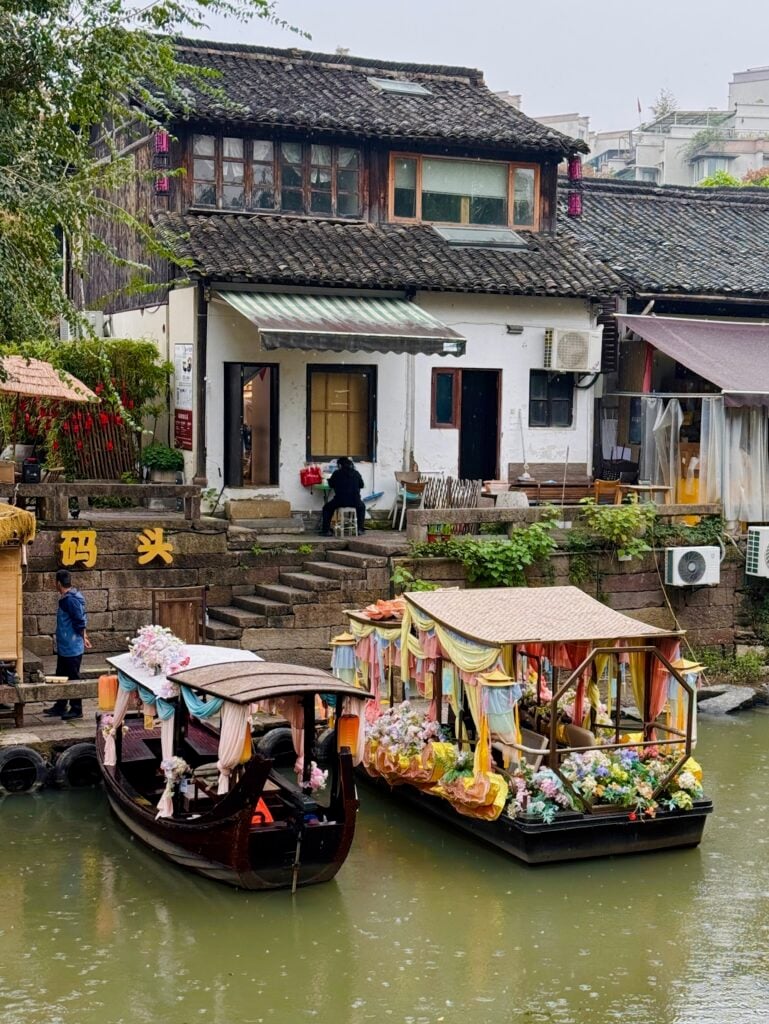
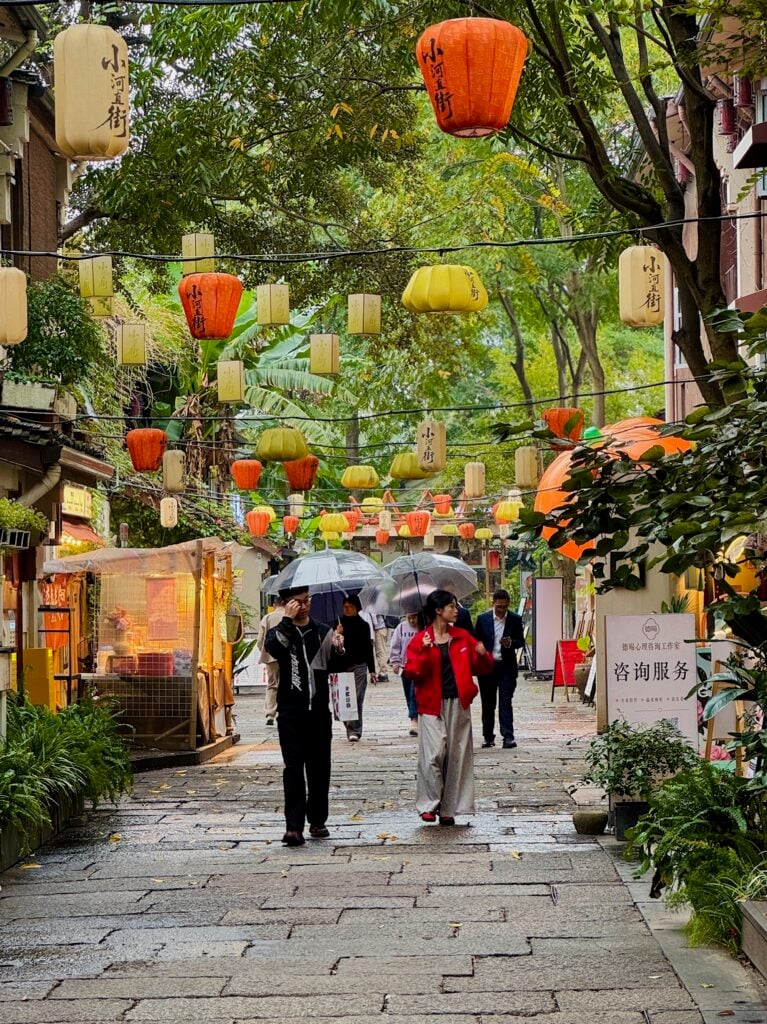
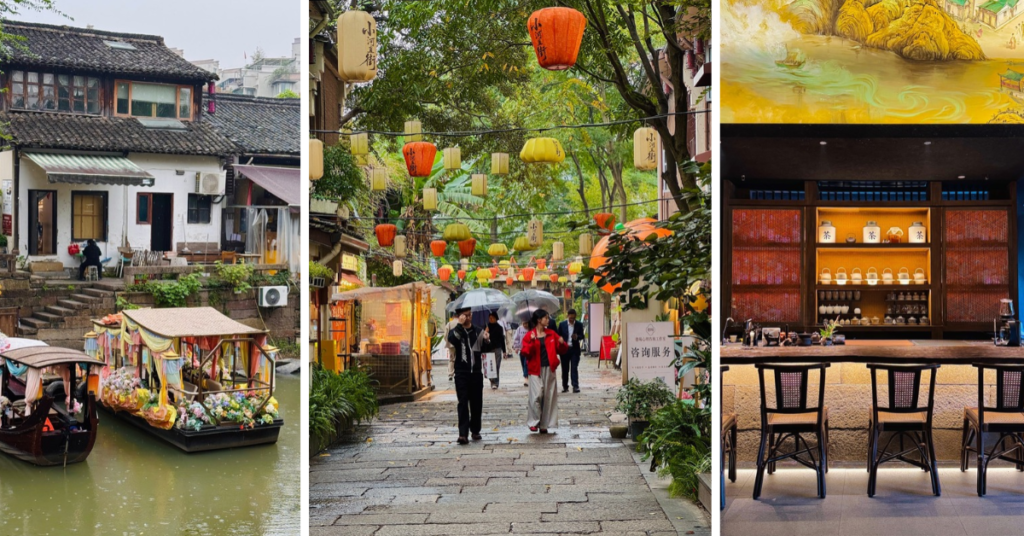
If you’re looking for a neighborhood where you can spend a few hours doing very little beyond wandering, eating, shopping, and stopping for coffee, Xiaohe Historical and Cultural Block is worth adding to your Hangzhou itinerary.
Set at the junction of the Grand Canal, Xiaohe River, and Yuhangtang River, this historic canal neighborhood is lined with small white-walled, black-tiled buildings, narrow lanes, and old storefronts that once served merchants transporting goods through Hangzhou.
The area dates back to the Southern Song Dynasty, when it became an important distribution hub for goods arriving by land and water, and later developed into an independent commercial street during the Qing Dynasty.
Today, many of those former workshops, shops, wharves, and residences remain. More than half of the local residents still live here, alongside independent boutiques, craft shops, restaurants, cocktail and tea bars, and an almost ridiculous number of coffee/tea shops.
We even came across shops with resident cats lazily resting by the front doors, which should tell you something about the pace of the place… it’s the perfect place to lounge and relax!
We had intentionally left the day open to explore just this one neighborhood, and ended up spending four hours here. It’s certainly not a place I’d recommend rushing through between major attractions! The fun is in seeing what catches your eye, ducking into a shop here or there, and lingering over an afternoon tea along the river.
Qiaoxi Historical & Cultural Block
The Qiaoxi district is another super atmospheric place to explore. This historical block sits on the west side of Gongchen Bridge, where the canal once made Qiaoxi an important water- and land-transportation hub.
Today, the neighborhood centers on the theme of “Intangible Cultural Heritage Life of Old Hangzhou”. The area preserves late Qing Dynasty and early Republic-era riverside homes alongside old industrial buildings, giving you a look at how Hangzhou changed from a traditional canal town into a modern industrial city.
This is also one of the best places in Hangzhou to learn about the traditional trades that once supported everyday life here. Several small museums focus on crafts and industries that were once crucial to the city’s livelihood, including the China Fan Museum, China Umbrella Museum, and China Knives, Scissors and Swords Museum.
Between the museums, you’ll find old residential buildings, former factories, workshops, cafés, restaurants, and small shops tucked along the historic streets.
Jingshengli and Qiaolong Street are two of the areas worth wandering, particularly if you like stopping wherever something catches your interest.
If You Want Immersive Chinese Cultural Experiences
Ah, my favorite section! These experiences go WAAAAY beyond simply visiting another historic building.
Watch the Impression West Lake Nighttime Show
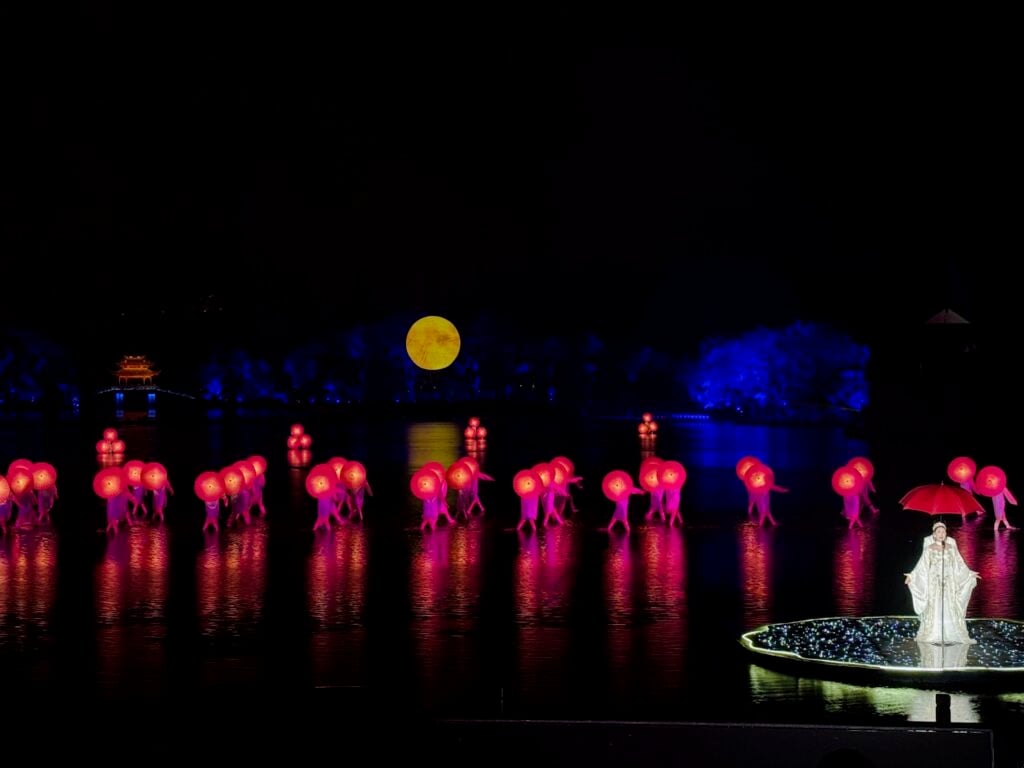
If you like live entertainment, make room for Impression West Lake. Unlike a traditional theater performance, this outdoor production uses West Lake itself as the stage, with a submerged platform just beneath the water’s surface that makes performers appear to glide across the lake.
The show combines music, dance, lighting, and theater with the surrounding mountains, bridges, and water, transforming the landscape you’ve explored all day into something completely different after dark.
Created by Chinese director Zhang Yimou (who also directed the opening and closing ceremonies of the 2008 Beijing Olympics!), the production draws from the myths, legends, and poetry associated with West Lake. It was first staged for the 2016 G20 Summit in Hangzhou and has since become one of the city’s signature nighttime experiences.
We opted for VIP seats ourselves (they were only $10 USD more), which I totally recommend. These seats are front and center and, more importantly, covered from the elements. Since the performance is outdoors, you can enjoy the show even if a little rain decides to roll in.
If you’re already spending the day exploring West Lake, this is an easy one to add to the same itinerary. Tickets can sell out during busy periods, so book well ahead if this is on your must-do list!
Spend an afternoon at Songcheng
For an equally elaborate cultural experience, we recommend first-timers in China spend a day at Songcheng.
Songcheng is essentially a theme park for ancient China. It’s a mashup of history and immersive entertainment, with multiple theaters, performances, attractions, and interactive experiences throughout the complex meant to transport you back to the Song Dynasty.
The centerpiece of the experience is the one-hour Romance of the Song Dynasty performance, which combines a 360-degree stage, water effects, elaborate sets, acrobatics, music, and large-scale choreography.
If you like shows and costumes, this one is an absolute delight, and you’ll actually learn about the history of Hangzhou’s region just by watching!
That said, don’t make the mistake of treating Songcheng as JUST a one-hour show. There’s plenty to do after the performance.
Once you leave the theater, wander through the recreated Song-era streets and alleys, particularly Shijing Street and Fenghua Alley. Depending on the evening, you may encounter costumed NPCs playing historical and literary characters such as Su Dongpo (the person the pork dish is named after) and more.
You can also watch artisans demonstrate old techniques, wander through the shops, and even enjoy some local food. And if you want photos, this is your chance to match the whole historical setting! You can rent Hanfu costumes and take photos all around the park (it’s totally normal, SOOO many people love dressing up in China).
Enjoy an imperial-style banquet
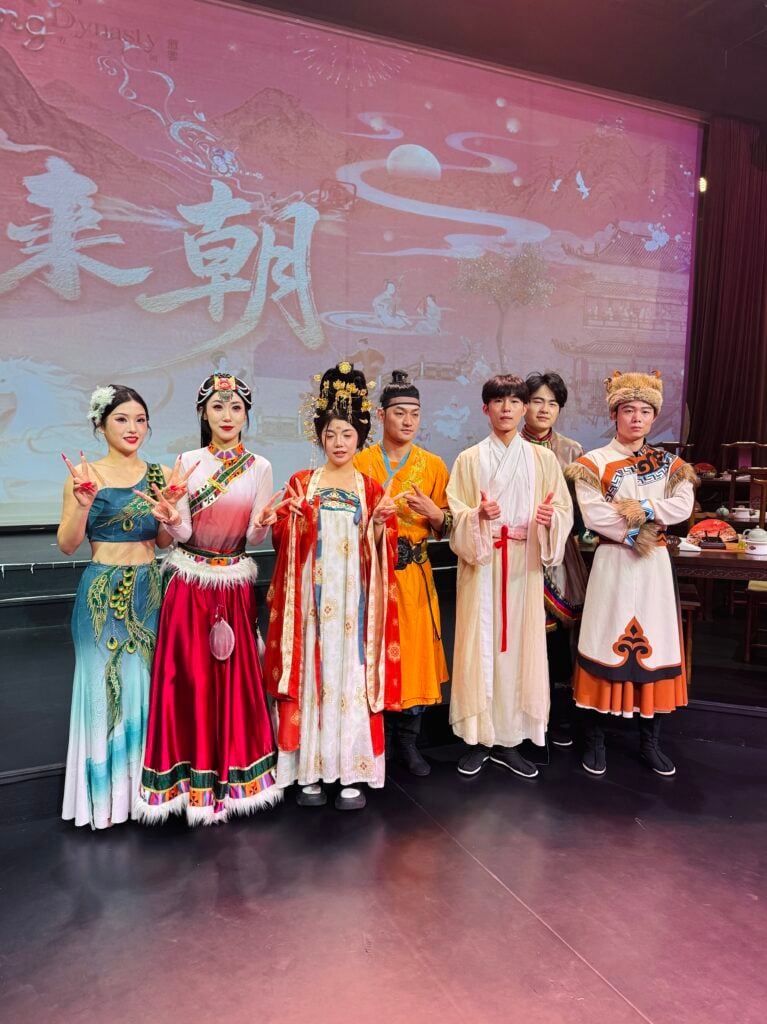
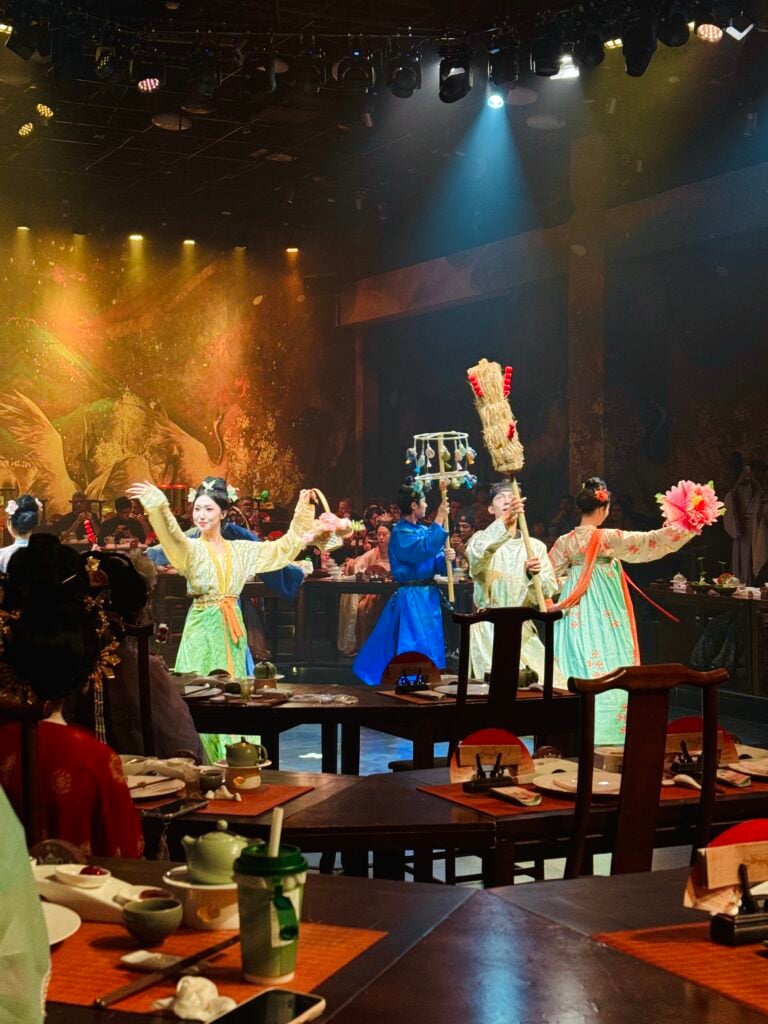
If you’re a first-time visitor to China and love live entertainment, this is another experience that will make you stop dead in your tracks and realize China’s version of entertainment is next level.
Yes, it’s touristy, but such a blast. China has lots of quirky, fun things for travelers!
This Tang dynasty-themed imperial-style banquet show combines elaborate dishes, history, costumes, music, and full-scale theatrical production to recreate an ancient imperial banquet (you can choose between lunch or dinner).
The entire venue is dressed for the occasion, with elaborate architectural details, ornate props, and performers in flowing Hanfu costumes, while costumed “royal” servers deliver each course with remarkably choreographed movements.
And if you didn’t yet know, Chinese productions do NOT mess around when it comes to production value. Throughout the meal, you’ll watch classical dances, sword performances, poetry and music, and larger ensemble numbers incorporating dramatic red ribbons, gold foil, and other theatrical effects.
Even the way the food arrives feels like part of the performance! The menu itself is incorporated into the experience and changes with the seasons, and you can add an ancient costume and makeup session beforehand if you want to go all in.
If you’re considering dressing up… yes, dress up! You won’t look out of place at all. These kinds of immersive historical experiences are popular in China, and getting into costume is half the fun of it all!
I had a very similar experience at the Shuyanfu banquet in Chengdu during my very first trip to China. Video linked below!
My whole family was completely blown away by the entire experience, and we’ve been to plenty of dinner shows in the U.S. (this completely blew all of that out of the water). Even my dad, who never likes anything, admitted a few years later that he actually REALLY enjoyed the show.
It was so freakin’ immersive! The whole experience felt less like watching a show over dinner and more like being dropped into an elaborate royal celebration for the evening. Our only regret was not springing for the costume and makeup upgrades… ugh.
If You Like Nature & The Outdoors
Visit West Lake
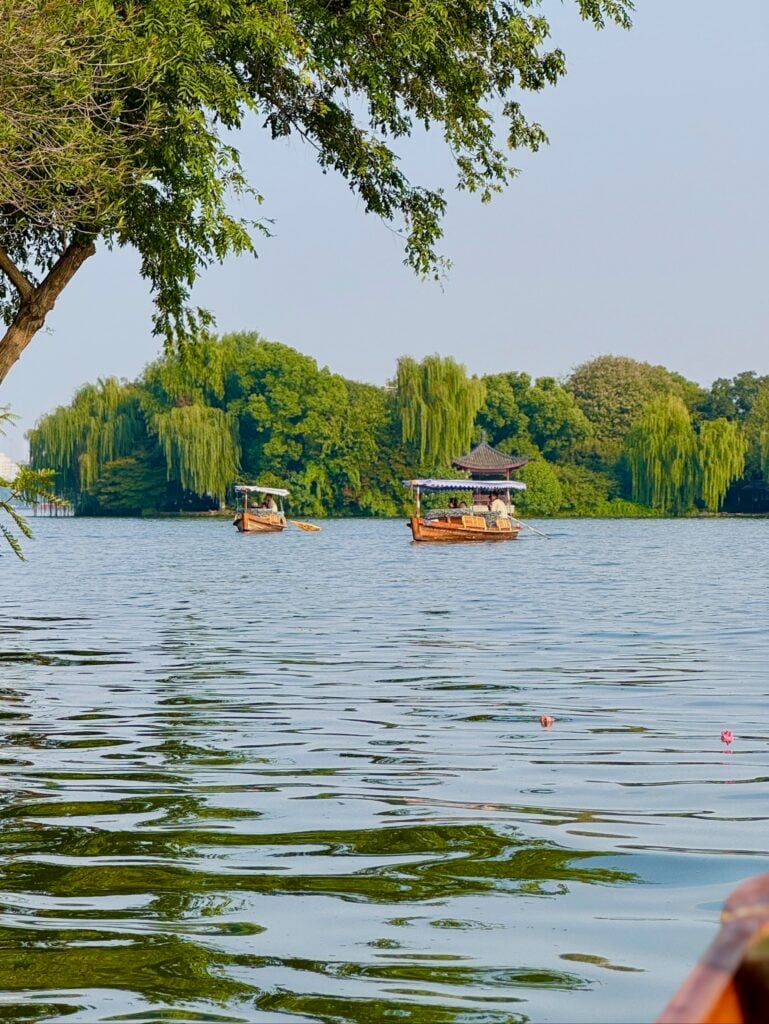
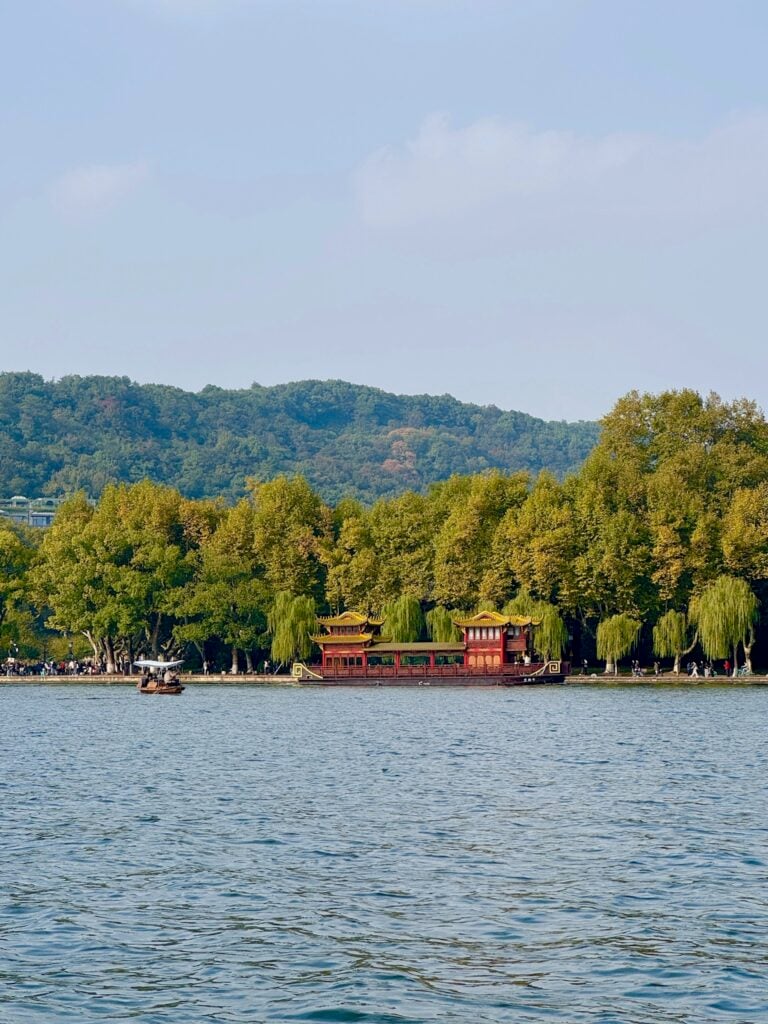
West Lake is the destination that goes hand in hand with Hangzhou. Some might even think… did you go to HZ if you didn’t visit the West Lake area???
After basing ourselves in West Lake for our 5-day trip to HZ, we were astounded by the sheer number of things to do and all the gorgeously serene scenery it contained! It really deserves its own day and itinerary.
When you visit West Lake, you’ll find that it’s got a little bit of everything surrounding its perimeter: willow-lined paths, elegant bridges, lush gardens, historic sites, and endless mountain views.
Even with no plan at all, finding things to do is not hard to do. You can walk along the waterfront, stop at the viewpoints other travelers are flocking to, take a boat ride, explore the smaller scenic areas, or simply find a bench and enjoy the scenery.
And because the area is so freakin’ big, no two travelers will have the same West Lake experience. Depending Your overall experience will depend on where you walk and how much time you spend there.
I have a full guide to spending a day at West Lake, including how to divide your time, which areas to visit, and how to plan your route efficiently.
Go tea picking in the countryside
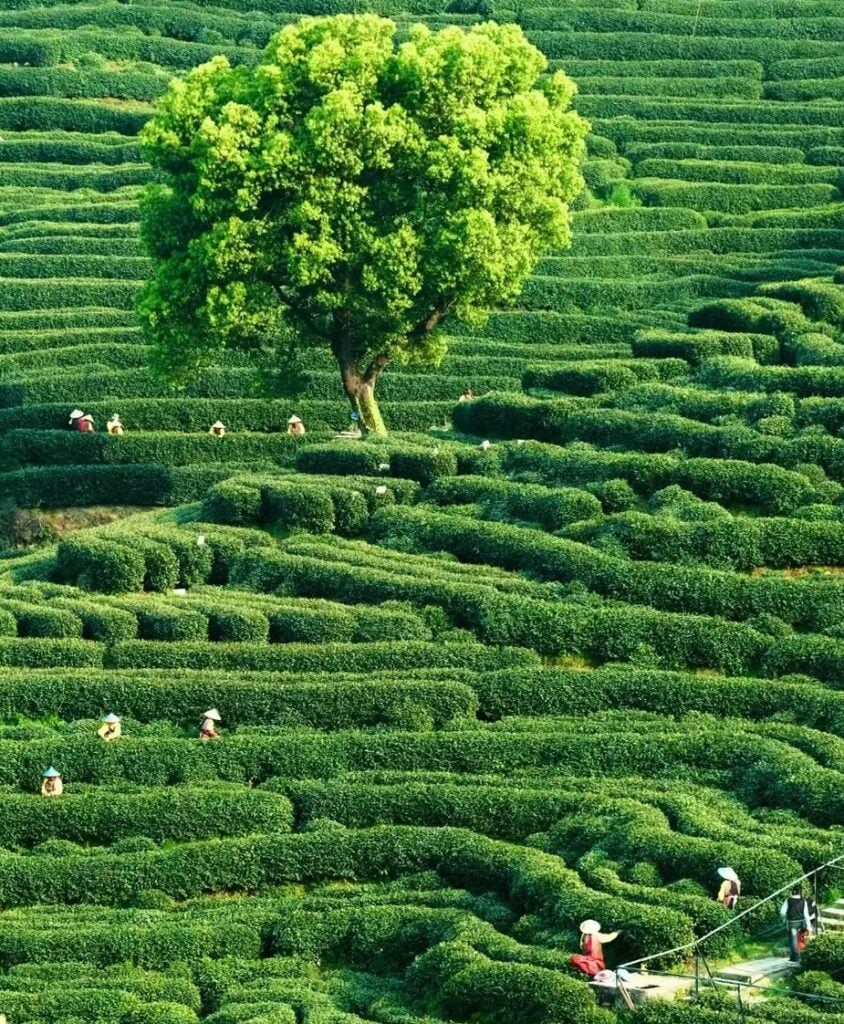
Hangzhou is synonymous with Longjing tea (Dragon Well tea), one of China’s most famous green teas.
Just like how oolong is closely associated with Fujian and Taiwan and pu-er comes from Yunnan, Longjing is Hangzhou’s signature tea. Unlike darker, more fermented teas like pu-er or oolong, Longjing is a green tea, so it’s lighter and fresher, with a nutty, ever-so-slightly sweet flavor.
And in Hangzhou, there are plenty of chances to see exactly where it comes from! Head into the countryside around Longjing Village to walk through the plantations, visit tea farms, learn how the leaves are harvested and processed, and–depending on the season–even try your hand at picking them yourself!
Pro Tip: Book a tea-picking experience if you’re visiting during the prime time harvest season (March to May). This is when Longjing country comes alive! On a tour of the plantations, you’ll get to walk through the tea fields with local pickers and actually get to pluck the fresh leaves yourself before seeing how they’re traditionally roasted and transformed from soft green leaves into the dry tea you’re used to seeing in a cup.
Visiting HZ outside of the March-May window? You can still explore tea country! While tea harvesting won’t be in-season, you’re still able to walk through the plantations, visit tea farms and roasting centers, and enjoy tea tastings!
Summer brings lush green fields; fall offers pretty foliage and great photo ops; and winter, while the most dormant, offers a much quieter countryside experience.
Explore Xixi National Wetland Park
If you want a break from Hangzhou’s temples, streets, and city views, spend one of your mornings in HZ at Xixi National Wetland Park, a huge wetland area of waterways, ponds, vegetation, and traditional villages on the western side of the city.
The best way to experience it is from the water, where quiet canals and pockets of greenery take center stage.
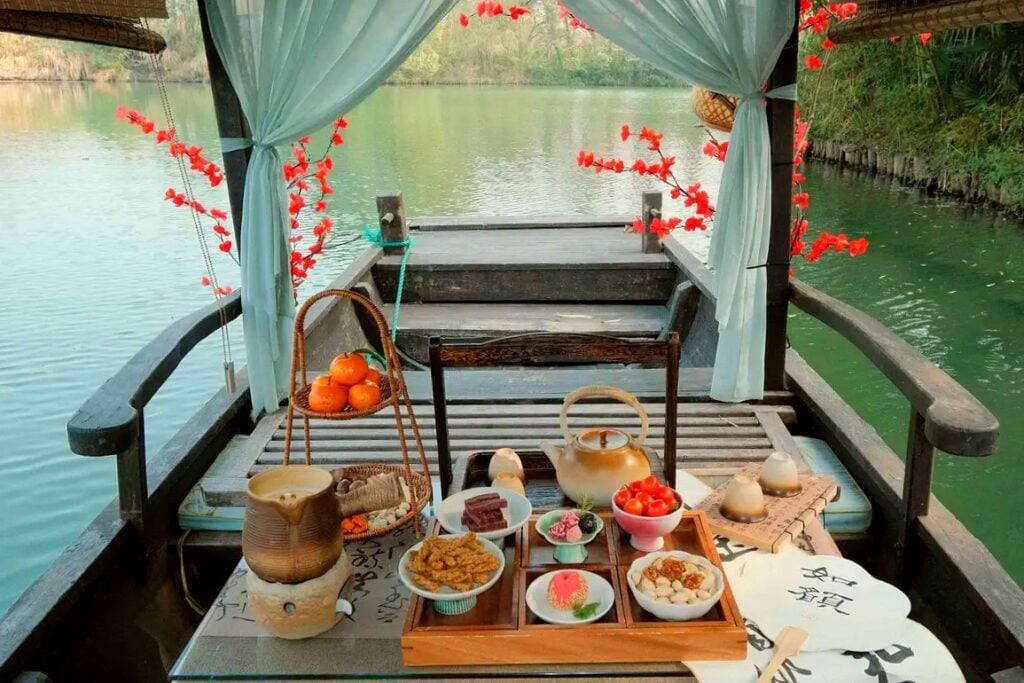
For something more memorable than the park’s larger motorboats, look for a private “Yao Lu” hand-oared boat. These traditional wooden boats are powered by a single oar at the back, and as you drift through the narrow, reed-lined waterways, the only sounds may be birdsong and the rhythmic splash of the oar.
Even better, you can turn the ride into a leisurely afternoon tea on the water, with a 1.5-hour private boat ride accompanied by a seasonal tea set: a pot of premium Longjing or local floral tea alongside 4-6 plates of traditional Chinese snacks and sweets.
You can also book regular boat cruises if you’d rather keep things simple, but because the park’s different boats and departure points can confuse first-timers, I’d opt for a done-for-you tour rather than trying to decipher the logistics yourself.
And while seeing the park by boat certainly is the main draw, it is by far the only reason to visit. Xixi covers more than 11 square kilometers, so there’s plenty to explore once you step back onto dry land.
Wander through Yanshui Village (aka Fisherman’s Village), to get a glimpse into the area’s traditional “Wetland Wedding” customs. Hezhu Street offers riverside food stalls, crafts, and shops dedicated to local intangible cultural heritage.
Depending on when you visit, the scenery changes dramatically: early spring brings plum blossoms, while autumn brings trees loaded with bright orange persimmons.
Hangzhou Botanical Garden
If you need a break from West Lake’s busy waterfront, the Hangzhou Botanical Garden is a lovely place to spend a few hours surrounded by greenery. Spanning more than 245 hectares, these expansive gardens are filled with towering bamboo groves, flowering magnolias, rose gardens, water lilies, and all sorts of other pretty trees and plants.
It’s a great spot for a leisurely morning walk, with plenty of winding paths and quiet corners to explore. You’ll also come across some quirky photo stops, including the popular oversized Buddha head sculpture and other artistic installations scattered throughout the grounds.
One more reason to add this to your itinerary? No Sweet, the forest café tucked inside the botanical garden. It’s become incredibly popular on Chinese social media, and it’s easy to see why.
Surrounded by greenery, it has a swoonworthy green-fairyland atmosphere that makes you want to settle in with a coffee and stay awhile. If that’s your idea of a good café experience, it’s 100% worth visiting (but expect crowds, as it’s no longer much of a hidden gem!).
If You Like Temples, Museums, & Ancient China
Lingyin Temple
Lingyin Temple should be near the top of your list if you’re interested in Chinese Buddhist history and architecture. It’s one of China’s most famous Buddhist temples, tucked into a forested mountain setting just outside central Hangzhou.
The temple complex is filled with ancient halls, Buddhist statues, traditional architecture, and stone carvings. One of the most interesting parts is exploring the rock carvings and grottoes around the temple rather than simply walking through the main halls.
What’s probably most enjoyable about this temple is its setting. You’re surrounded by trees and mountains, with a much stronger sense of being away from the city than you might expect.
Yuewang Temple
Continue your history tour at Yuewang Temple, a historic site dedicated to Yue Fei, a legendary Song Dynasty general remembered for his loyalty and bravery.
The temple combines traditional architecture with exhibits and cultural relics that tell the story of Yue Fei and his place in Chinese history. It’s a much smaller and more focused experience than Lingyin Temple, making it an easy addition to a day around West Lake.
This one is situated just across from the West Lake Impression nighttime show in the northwest corner of the West Lake Scenic Area.
China National Silk Museum
If you’re interested in traditional Chinese textiles, make a stop at the China National Silk Museum. Hangzhou has been a major center of silk production for centuries, so this is a good place to learn the history behind one of the city’s most famous products.
You’ll see historical silk textiles, clothing, weaving techniques, and exhibits explaining how silk went from raw material to the finished fabrics used by Chinese royalty and everyday people.
The museum shop is also worth a look if you want a souvenir that feels more connected to Hangzhou than generic Chinese trinkets/magnets.
Southern Song Dynasty Guan Kiln Museum
For something a little different, head to the Southern Song Dynasty Guan Kiln Museum, dedicated to the ceramics produced during the Southern Song Dynasty when Hangzhou was the capital of China.
This museum explains the history and techniques behind Guan kiln ceramics and has plenty of beautiful examples of the simple, refined pottery associated with the period.
The Kiln Museum and Silk Museum are relatively close, so you can easily knock them both out in the same day. Both are free to enter with your passport and do not require an advance reservation.
Other Posts You’ll Love:
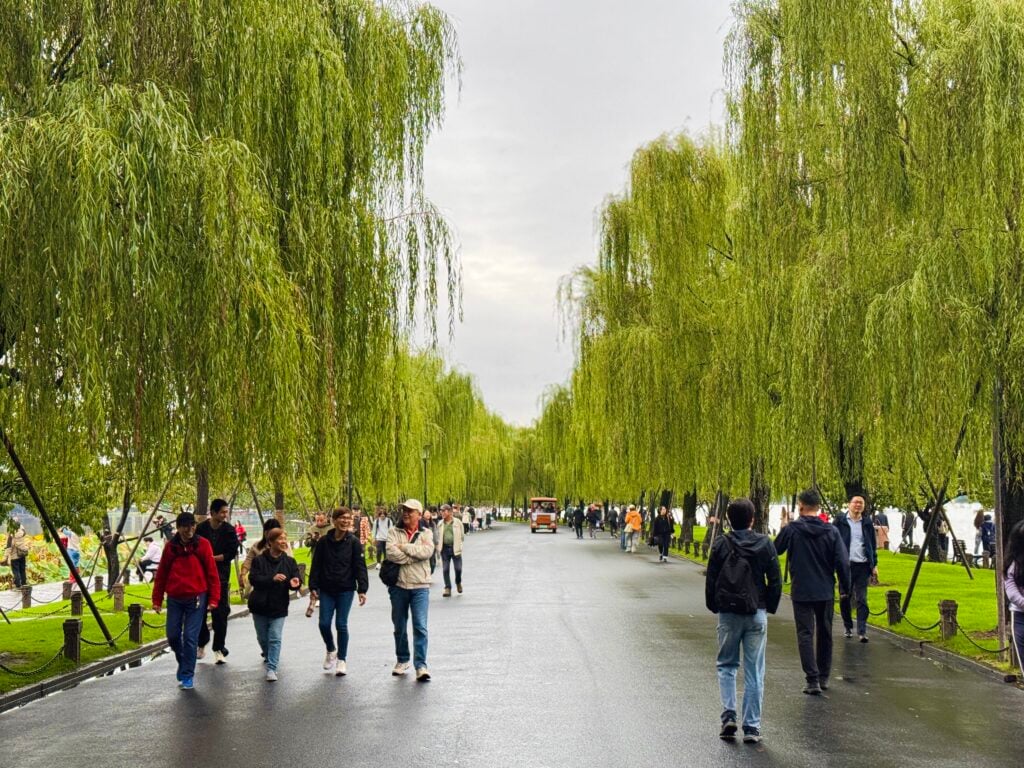
How To Spend A Perfect Day At Hangzhou’s Iconic West Lake
When I was researching how to best spend our five days in Hangzhou, I knew one…
Xiaohe Historical Block: Hangzhou’s Most Charming Canal Neighborhood
One of my favorite things about Xiaohe Historical and Cultural Block was just how much…
