
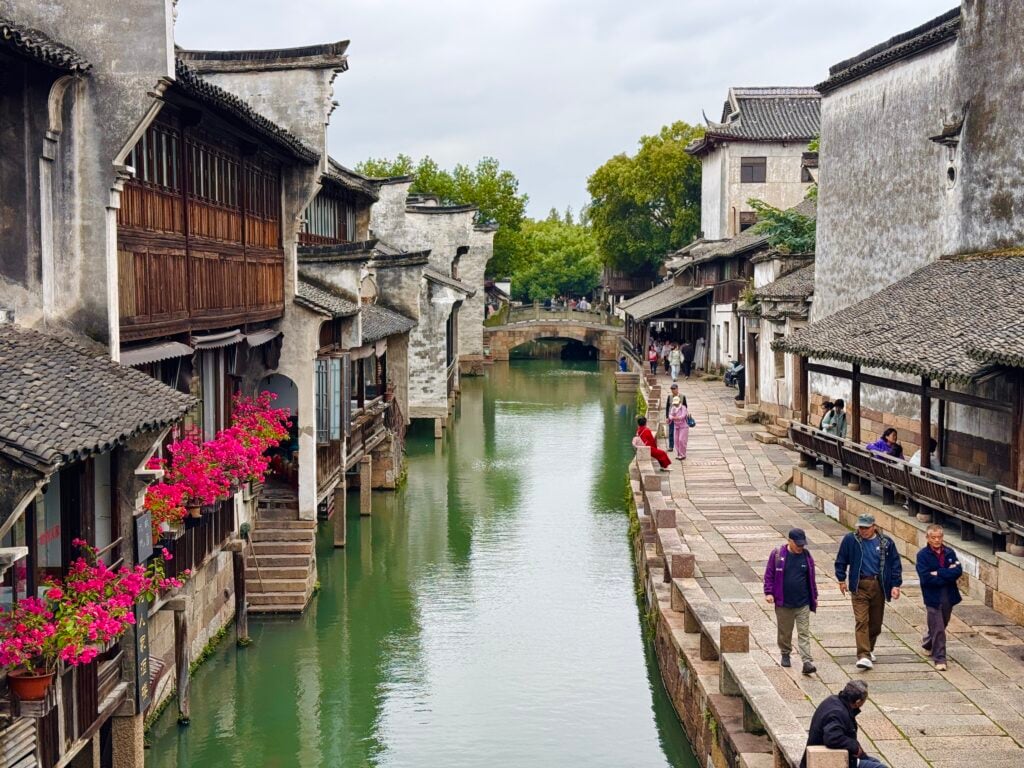
Wuzhen is one of my favorite ancient towns in China. Often dubbed as the “Venice of the East”, it’s hailed as one of the grandest and best-preserved water towns in the Jiangnan region.
After finally seeing it for myself, I can see why the water town deserves its name and prestige.
One thing I didn’t fully grasp until our visit was just how much there is to explore. Wuzhen isn’t simply one old town you can wander through; it’s divided into two distinct scenic areas: Dongzha (East Gate) and Xizha (West Gate), connected by the town’s free shuttle bus. Each offers a very different experience.
While Xizha (West Gate Scenic Area) tends to steal the spotlight for its canal-side restaurants, shops, and nighttime atmosphere, Dongzha (East Gate) is where you’d go to know Wuzhen’s older, more traditional side.
Smaller than its western counterpart, Dongzha has wooden homes lining the canals, narrow stone lanes, and a collection of museums and workshops dedicated to the town’s history, traditional crafts, and everyday customs.
Some residents still live here too, giving the area a more lived-in, local feel.
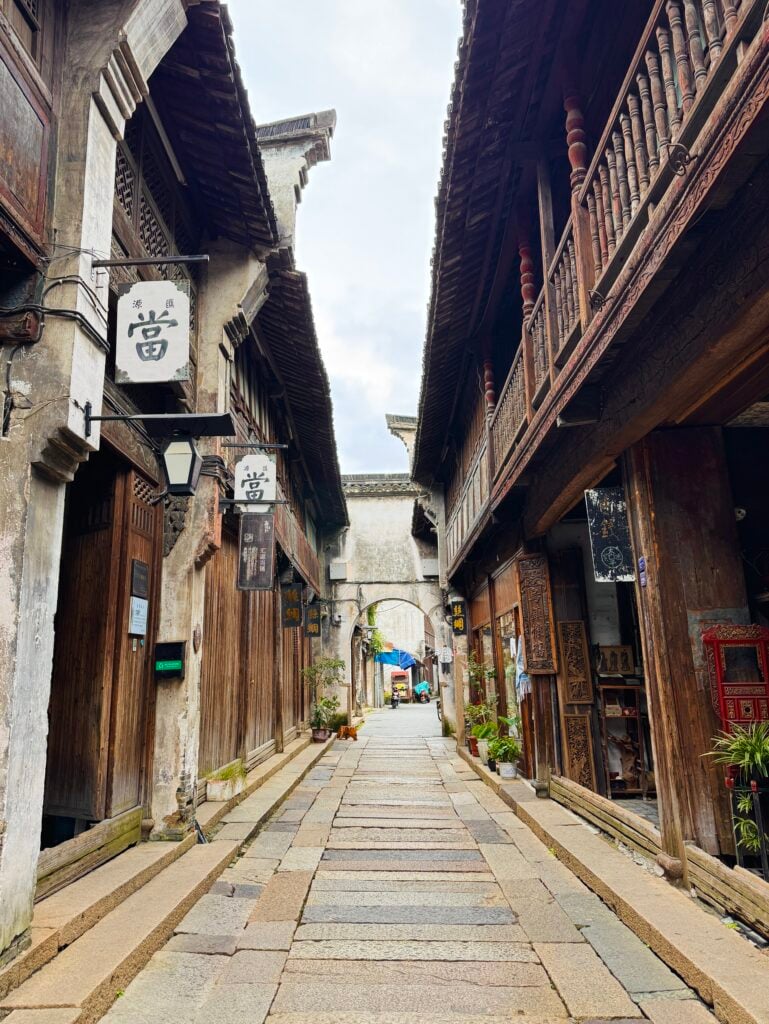
In Dongzha, I really enjoyed getting to see some of the traditions up close. For example, you can visit an indigo dye workshop to learn about one of the region’s longtime crafts, try your hand at fan making and decorate your own fan with dried flowers, and browse the Folk Customs Museum to see the many styles of clothing people wore in earlier generations.
These were some of my favorite stops and a big part of what makes Dongzha worth exploring. If you plan to visit both sides of Wuzhen, I’d start here in the morning before heading to Xizha for the afternoon and evening. Here are the main stops I’d look out for.
This post may contain affiliate links. You won’t be paying a cent more, but in the event of a sale, the small affiliate commission I receive will help keep this blog running/pumping out useful and free content. Thanks a lot!
Table of Contents
Wuzhen East Gate: An Overview of the Area
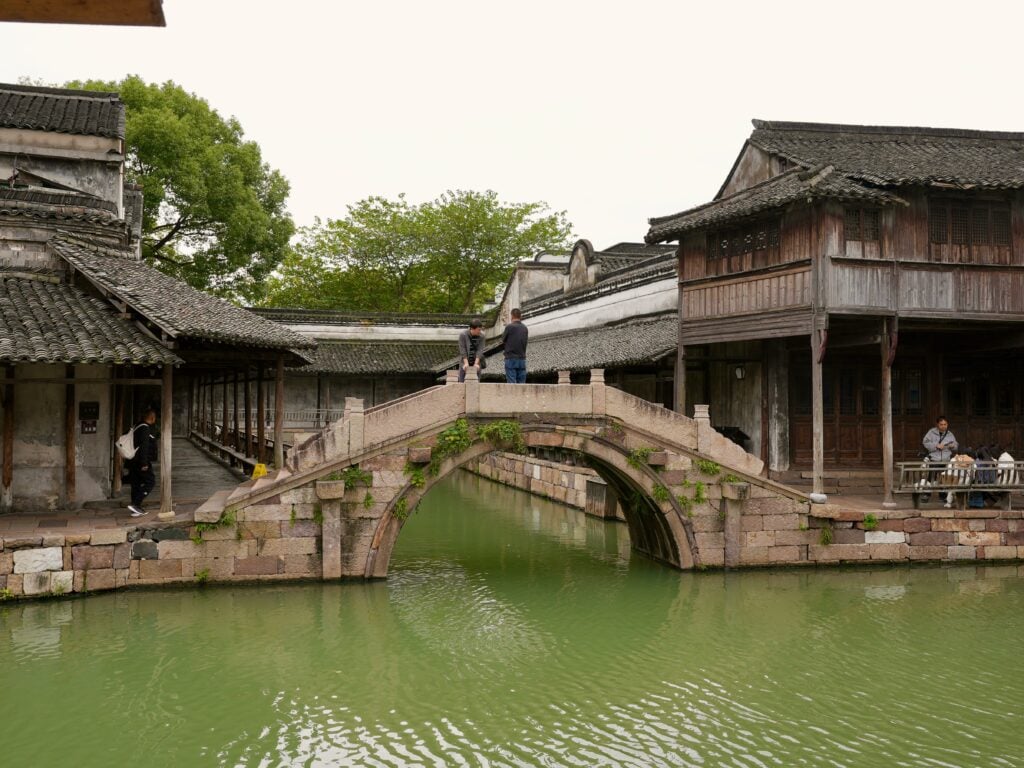
Dongzha officially opened to visitors in 2001 and was developed as a dedicated scenic area showcasing Wuzhen’s traditional culture and local heritage.
Along its narrow streets and canals, you’ll find a collection of historic buildings, folk-custom exhibits, traditional workshops, and former residences connected to notable local figures.
Between the West Gate and East Gate areas, the East Gate (Dongzha) is the cultural side of Wuzhen, where you can step into old homes, learn about traditional crafts, and better understand the customs and everyday life that shaped this water town.
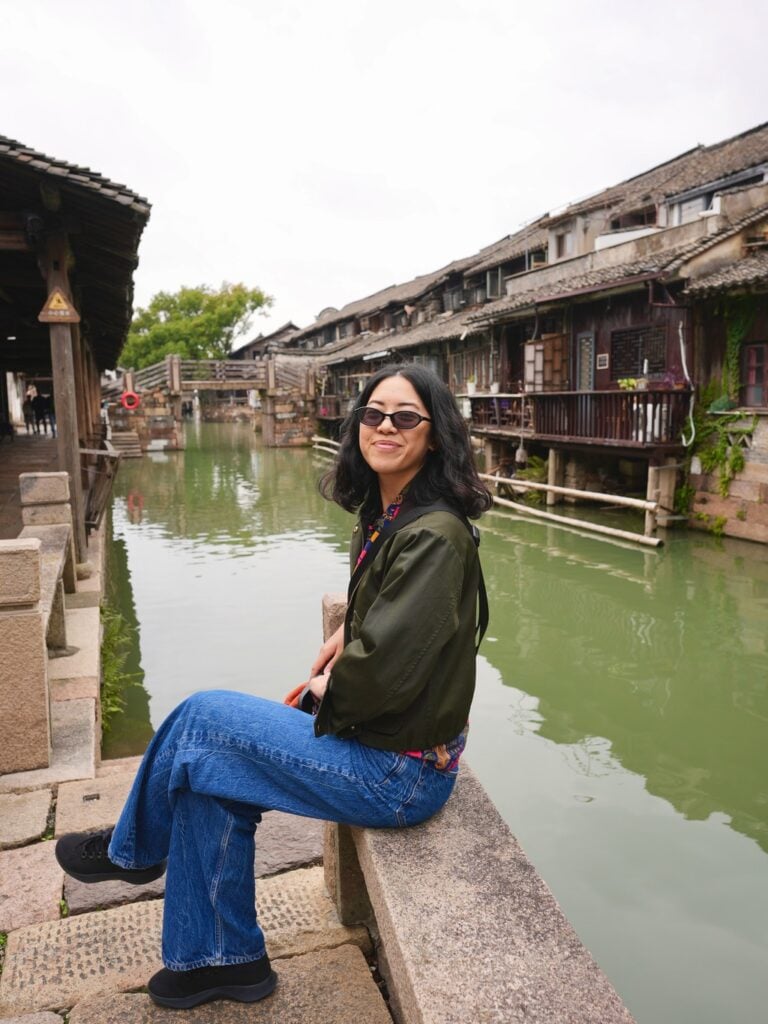
Getting into Dongzha is straightforward: you’ll purchase or show your admission ticket at the entrance, then scan it again whenever you enter the individual museums and workshops throughout the area.
One thing worth knowing is that your ticket also controls re-entry. If you wander far enough that you accidentally leave the East Scenic Area, you’ll need to scan your ticket again to get back in.
We learned this firsthand when we ventured outside the gates in search of coffee and stumbled across a super cute spot called Xiangli Coffee SOE Danping Shouchong. Side note: DO check out this super cute coffee shop if you need a little caffeine break!
STILL NEED AN E-SIM FOR YOUR TRIP? Our go-to eSIM provider is Airalo! For a limited-time, you can use promo code AIRALOESIM10 for 10% off your booking. Explore all their affordable plans here.
As for navigating Dongzha, the area is quite easy to explore, with many of the main attractions lined up one after another along the main street. The map below should give you a good sense of how everything is laid out and help you plan your stops.
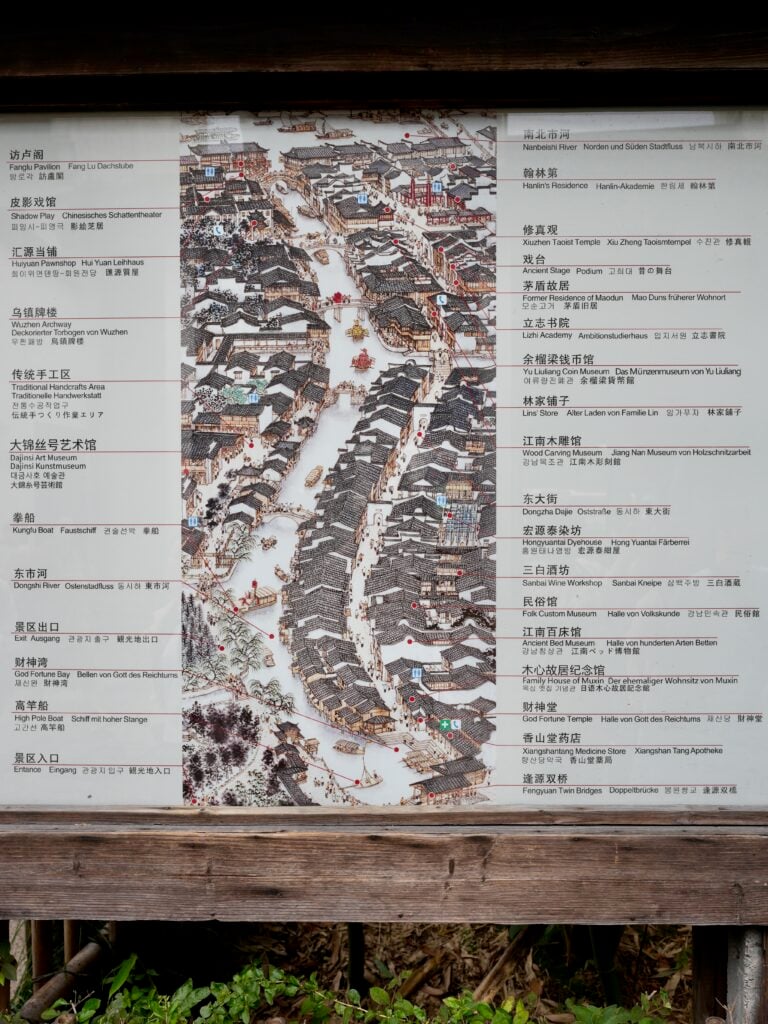
Upon entering (bottom left of the map), most people start on the right side of the canal, heading north. Start at the visitor center and pass attractions like the Ancient Bed Museum, Wine Distillery Workshop, Indigo Fabric Workshop, Woodcarving Museum, Mao Dun’s Former Residence, Xiuzhen Taoist Temple, and the shadow puppetry venue.
You don’t necessarily need to visit every stop, but having a rough route in mind helps you make the most of your time without doubling back. I’ll highlight the places I found most interesting below.
Enjoy a boat ride on the canals
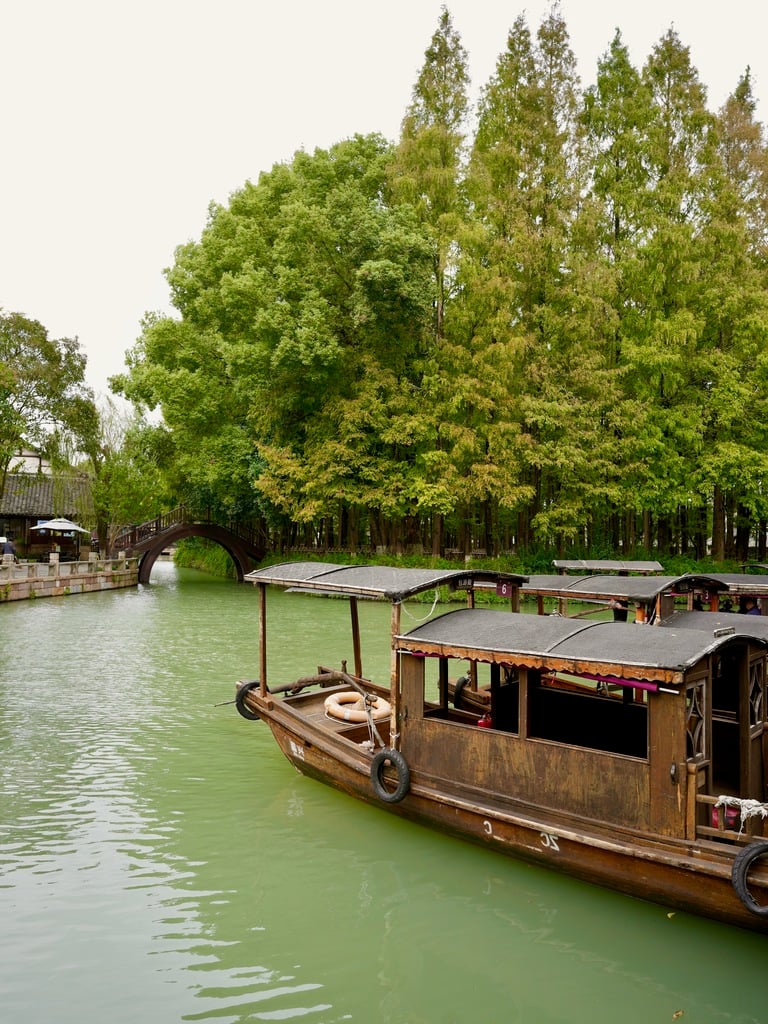
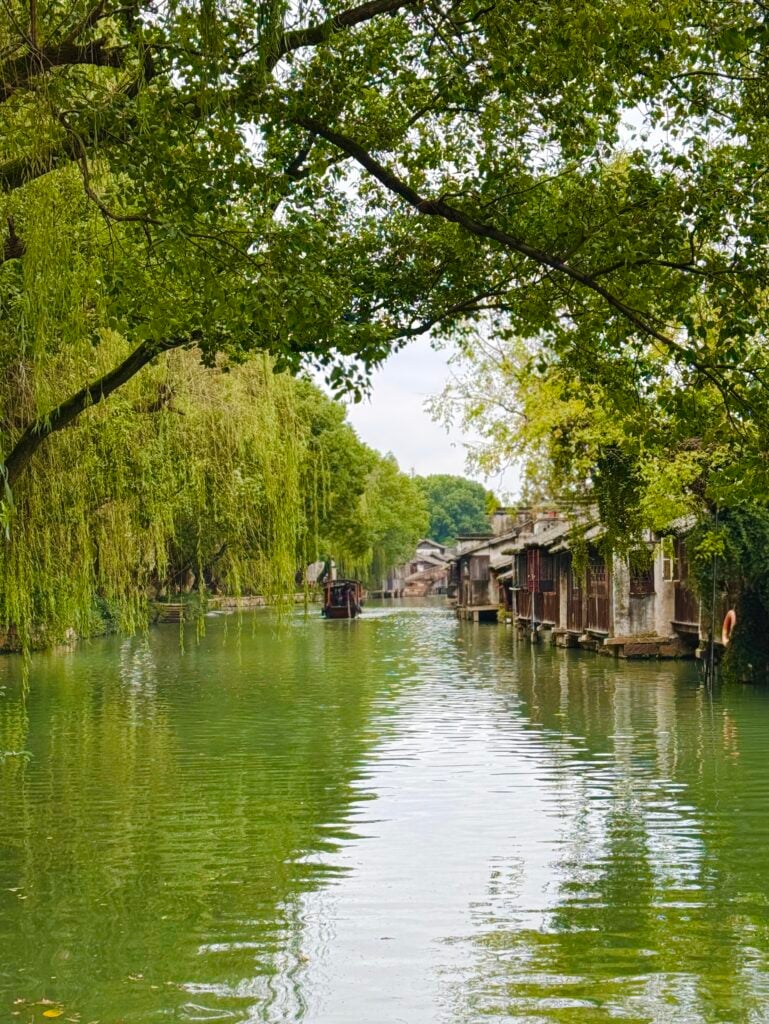
You can’t visit a water town like Wuzhen without getting out on the water! A boat ride gives you a completely different perspective of the town, gliding past traditional wooden homes, stone bridges, and waterfront shops.
Both Dongzha and Xizha offer traditional wooden boat rides, with shared and private options available. Boat rides are a lot cheaper in the East Gate area compared to the West Gate Scenic Area.
At the time of writing, shared rides cost approximately CNY 30 per person in Dongzha and CNY 60 per person in Xizha, with boats accommodating up to eight passengers.
If you’d rather have the boat to yourselves, private rides are available too. In Xizha, a private boat costs around CNY 480. Dongzha charges by boat and passenger capacity:
- 4 passengers or fewer: CNY 160 per boat, one way
- 5–8 passengers: CNY 240 per boat, one way
Folk Customs Museum
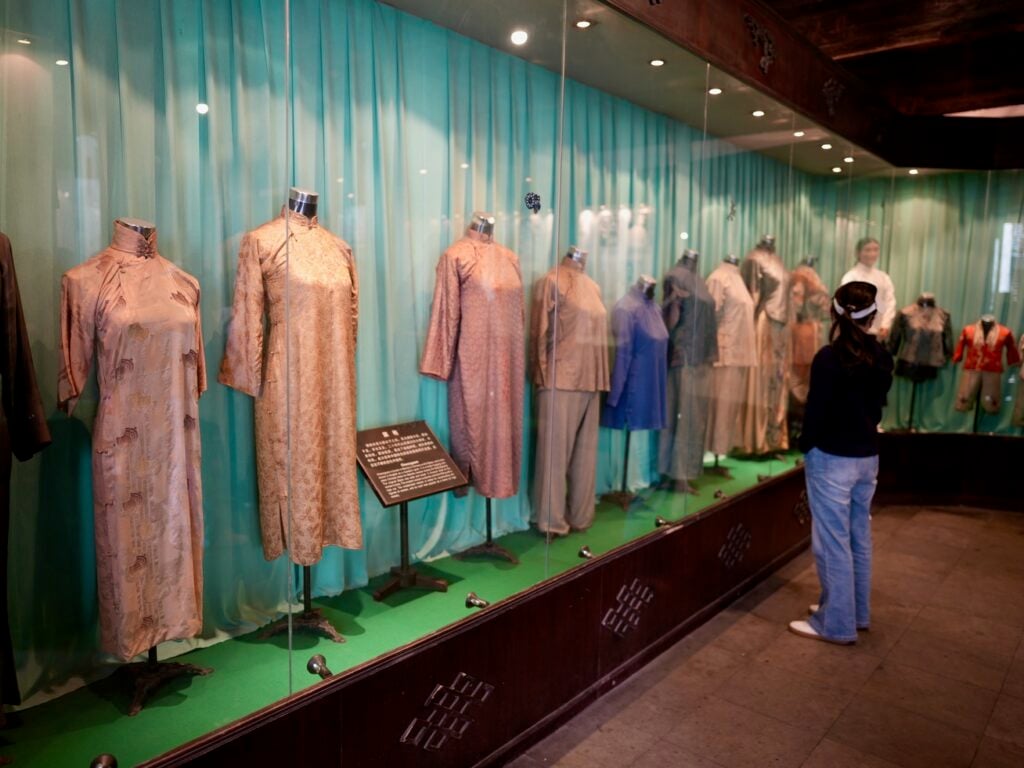
Get a glimpse into everyday life in Wuzhen during the late 19th and early 20th centuries. Exhibits cover traditional wedding customs, birthdays, childbirth, and seasonal celebrations.
We really enjoyed our time here, seeing all the different outfits of the time and learning that different classes of people had different “signature outfits”. You’ll find that students/scholars had a type of outfit that differed drastically from regular working people. Women who were not yet wed also wore clothing that signified their marital status.
The museum is set in the former mansion of the Zhao family, with each room leading to a different topic of local customs. You’ll go through living areas and kitchens, all while learning about Jiangnan customs. Near the end, you’ll find displays showcasing what traditional weddings were like.
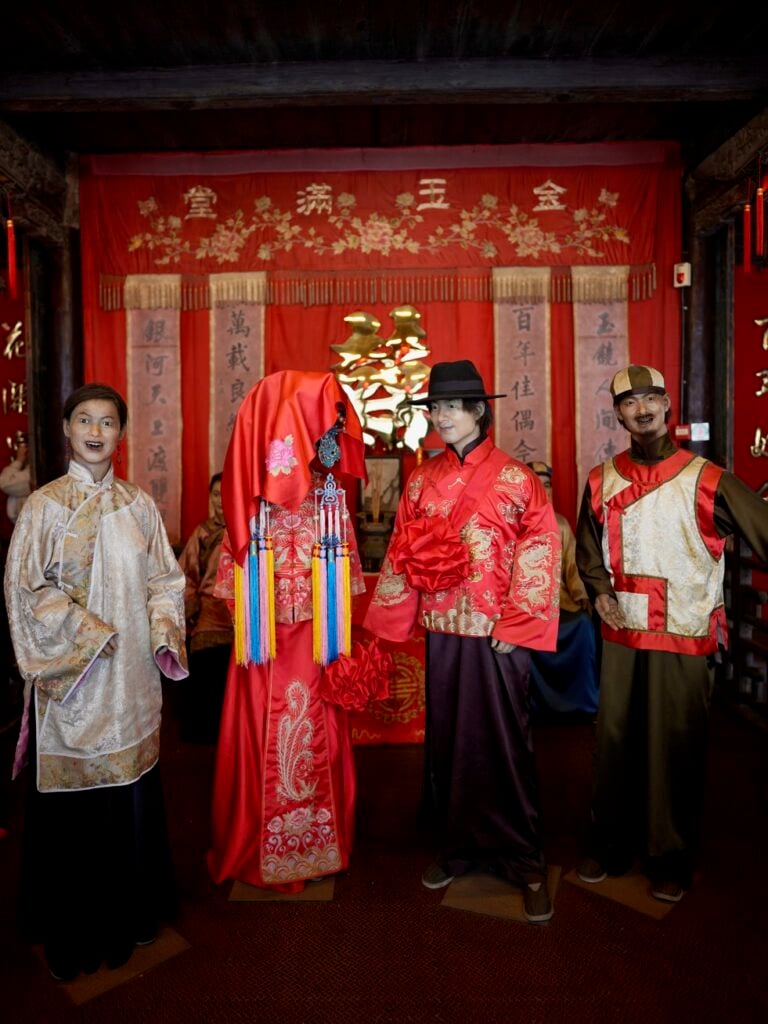
This one is a good stop to work into your itinerary if you want more context on the customs and traditions behind the town’s historic homes. Placards in English will help you understand what’s on display.
Jiangnan Hundred Beds Museum (Ancient Bed Museum)
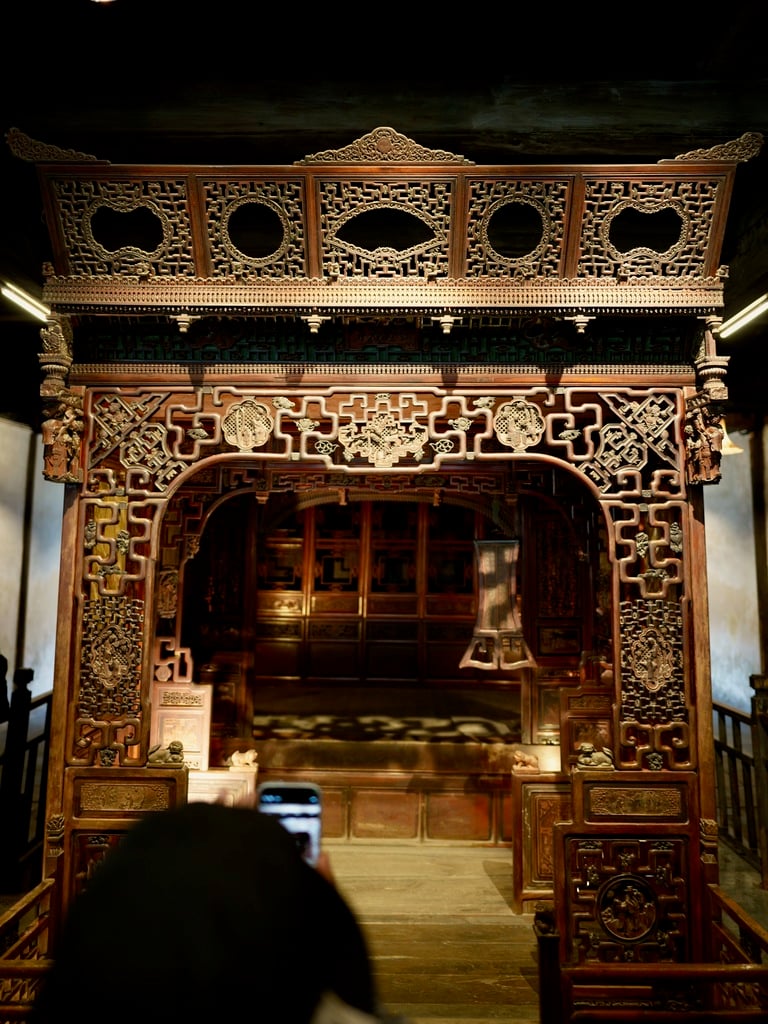
This museum houses a collection of traditional Chinese beds, some dating back to the Ming Dynasty. And these aren’t exactly the simple wooden frames you might be imagining!
You’ll see elaborate carved designs and intricate craftsmanship that turn the beds into works of art in their own right.
Like the Folk Customs Museum, you’ll move from room to room through a massive home as you view different bed styles and learn about how they were used.
East Gate Hongyuantai Dyeing House
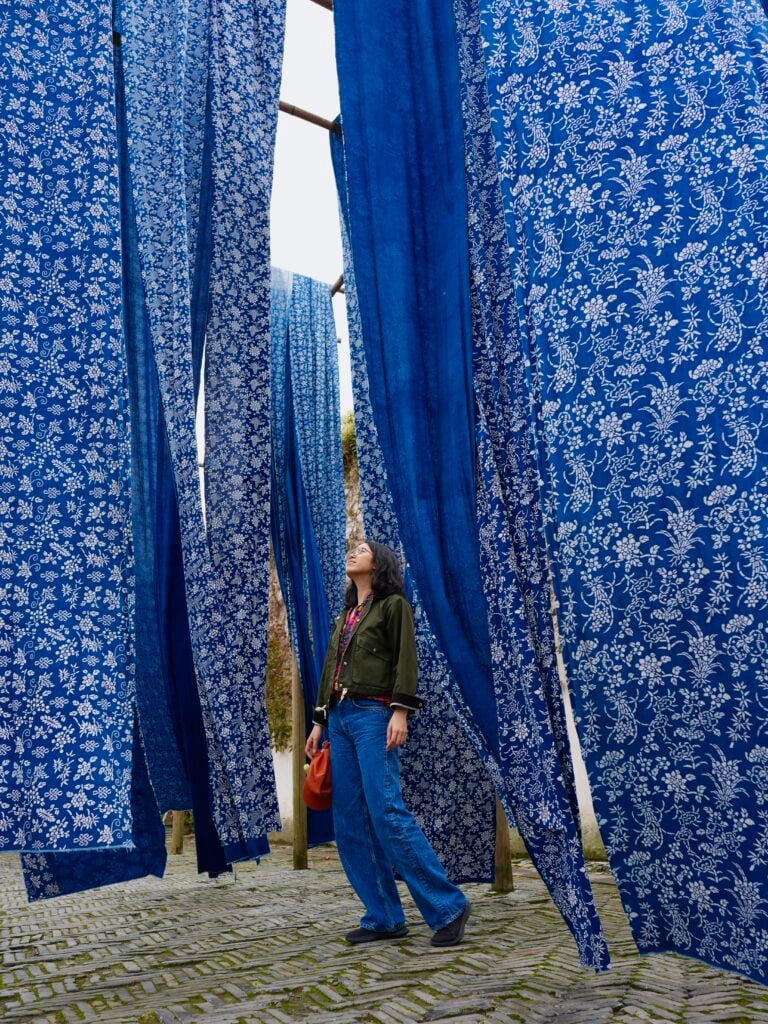
One of the coolest cultural stops in Dongzha is the indigo dye workshop, where you can learn about Wuzhen’s long-standing relationship with blue calico, a traditional cotton fabric printed with intricate white patterns against a deep indigo background.
Wuzhen was historically one of the important centers of blue calico production, with dozens of dyehouses once operating in town. The craft itself dates back centuries, developing through the Song and Yuan dynasties before reaching its heyday during the Ming and Qing dynasties.
The rich blue color comes from natural plant dyes, traditionally made from bluegrass and indigo leaves. The cotton fabric is printed using a resist-paste technique: patterns are first designed and transferred onto a printing plate, then a mixture of lime and soybean powder is applied to keep certain areas from absorbing the dye. The cloth is then dipped into the indigo vat, washed, and dried, leaving behind those distinctive blue-and-white designs.
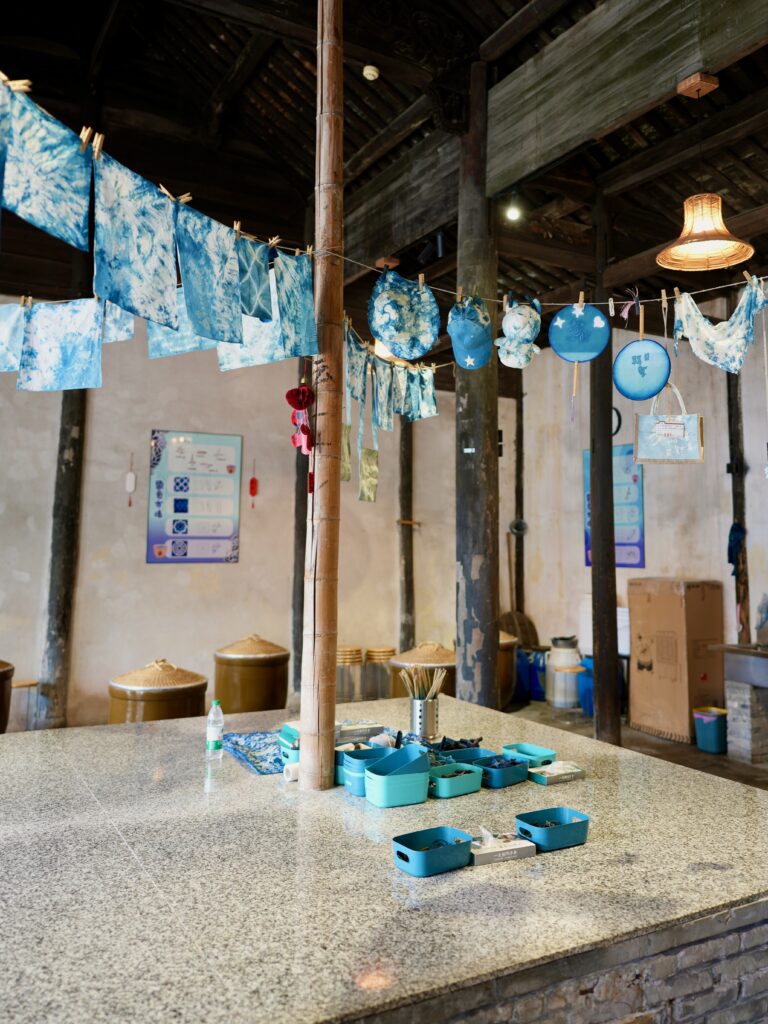
At the workshop, you can see examples of finished textiles and learn more about the traditional dyeing process, from curtains and tablecloths to scarves, bags, and clothing made using the technique.
They also offer DIY indigo-dyeing experiences if you’d like to try it out for yourself. The gift shop is worth a browse, too, especially if you’re looking for a souvenir with a genuine connection to the town. Papu ended up picking out an indigo-dyed headband for his sister, and it was actually really cute!
Rice Wine Distillery Workshop
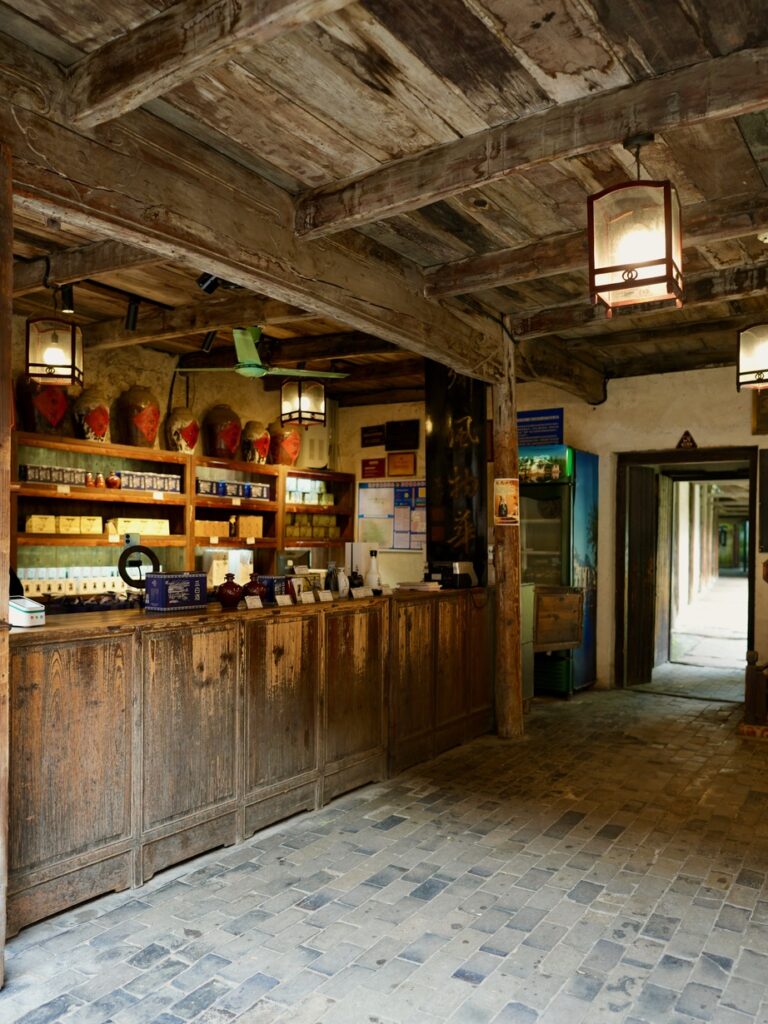
Wuzhen has a long history of rice-wine production, and this workshop offers a glimpse into what was once a thriving local industry.
During the Ming Dynasty, the town had more than 20 brewing workshops, with Gao Gongsheng, Shunxing, and Yongsheng among the most well-known. Today, Gaogongsheng is the only one of those historic distilleries still standing.
Originally established in the early Ming Dynasty as Gao Gongsheng Sauce Garden, it has preserved a piece of Wuzhen’s traditional brewing heritage.
The specialty to know here is Sanbai Rice Wine (三白酒), enjoyed throughout the Jiangnan region for hundreds of years. It’s made using three simple natural ingredients: glutinous rice, wheat flour, and water. Brewed using techniques passed down through generations, it’s known for its rich aroma, mellow sweetness, and smooth finish.
Don’t let the sweet description fool you, though: this is quite a potent drink. It’s traditionally bottled at around 55% alcohol.
Shadow Puppet Theater
If you haven’t seen Chinese shadow puppetry before, this is a fun opportunity to catch a short performance and experience a traditional art form that has been part of Wuzhen’s cultural heritage for centuries.
Shadow puppetry originated in northern China during the Northern Song Dynasty before making its way south during the Southern Song Dynasty. It has been practiced in the Jiangnan region for more than 800 years, and Wuzhen’s performances showcase the southern style.
The setup is wonderfully old-school: artists stand behind an illuminated screen, manipulating intricately crafted puppets to bring traditional stories to life through silhouettes, movement, and music. There’s something super special about catching this time-honored tradition, especially in a town that has worked hard to preserve its traditional crafts and customs.
Performances last about 30 minutes and run several times a day. If you want to prioritize this experience, I’d recommend checking the day’s schedule right when you arrive so you can plan your visit around it. Showtimes are posted right outside the venue.
Dongzha Ancient Stage
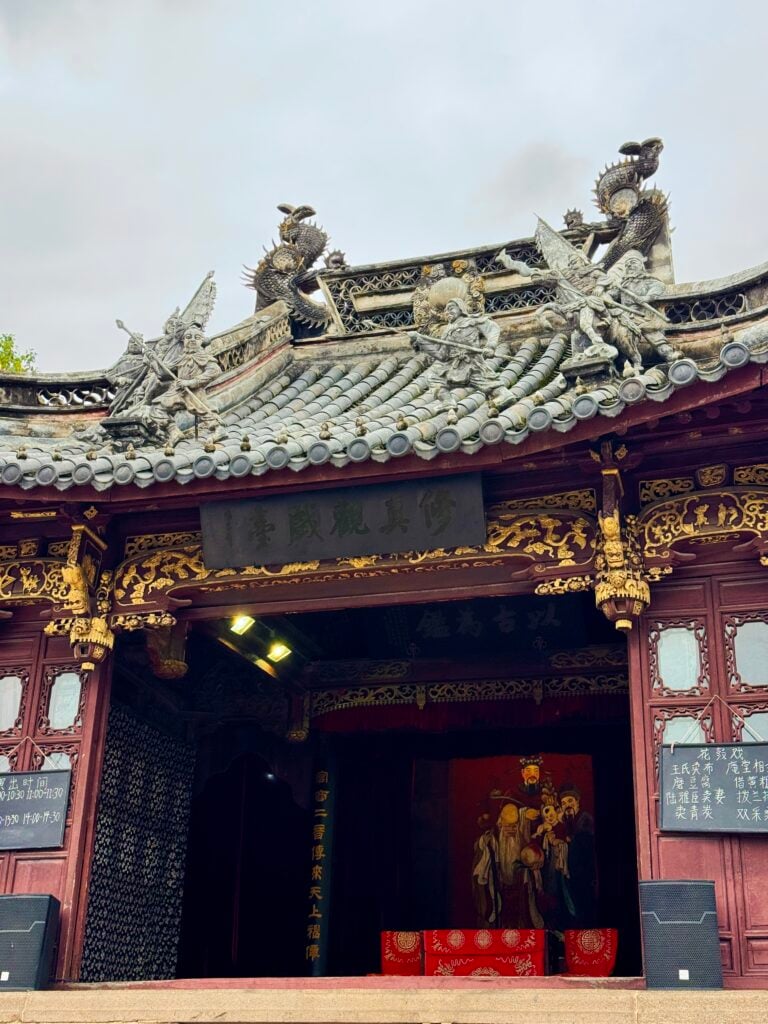
Located in Xiuzhen Temple Square, this traditional opera stage dates back to 1749, during the Qing Dynasty. It was originally built as an auxiliary building to Xiuzhen Temple, where performances were held during important temple fairs and religious celebrations.
The two-story wooden structure has an elaborate gable-and-hip roof, beautifully carved details between its beams and columns, and a traditional stage facing the square.
Historically, performances here were also used to settle community disputes. Known as “punishment plays,” they required people who had caused public grievances to pay for a troupe to perform before the gods as a way of showing their repentance.
Today, it’s returned to its original purpose, with traditional local performances taking place throughout the day, including Huagu (flower drum) opera, a centuries-old regional style performance from Tongxiang. You probably won’t understand the words or the meaning (we ourselves didn’t), but the performance was still pretty and very pleasant to watch.
Kungfu Boat Performances
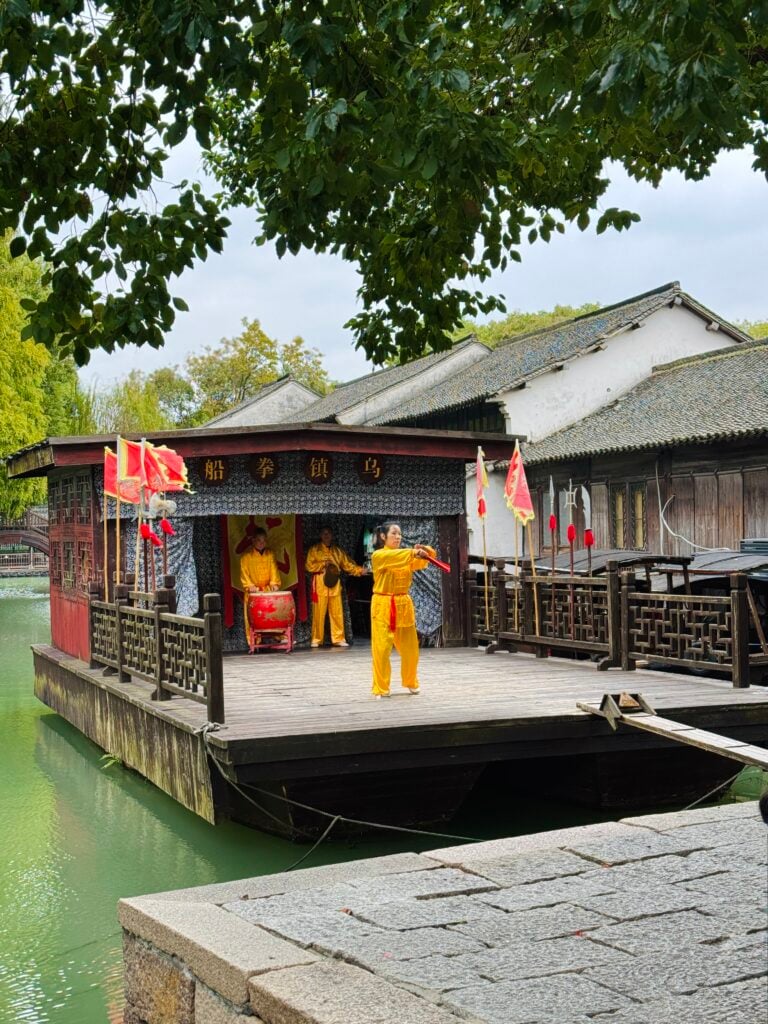
One of Dongzha’s more unusual traditional demonstrations, this performance takes place on a boat and traces its roots to the Southern Song Dynasty.
Local performers demonstrate martial arts movements on the water, a practice that historically served as both exercise and a way to help defend the town.
Enjoy the local atmosphere
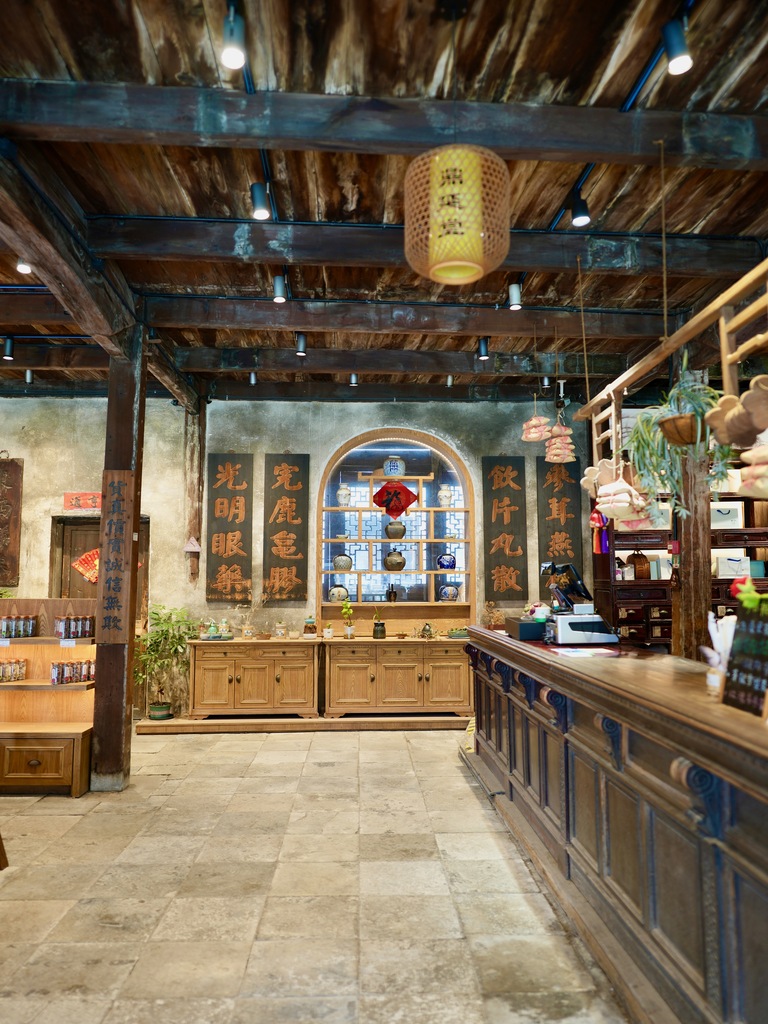
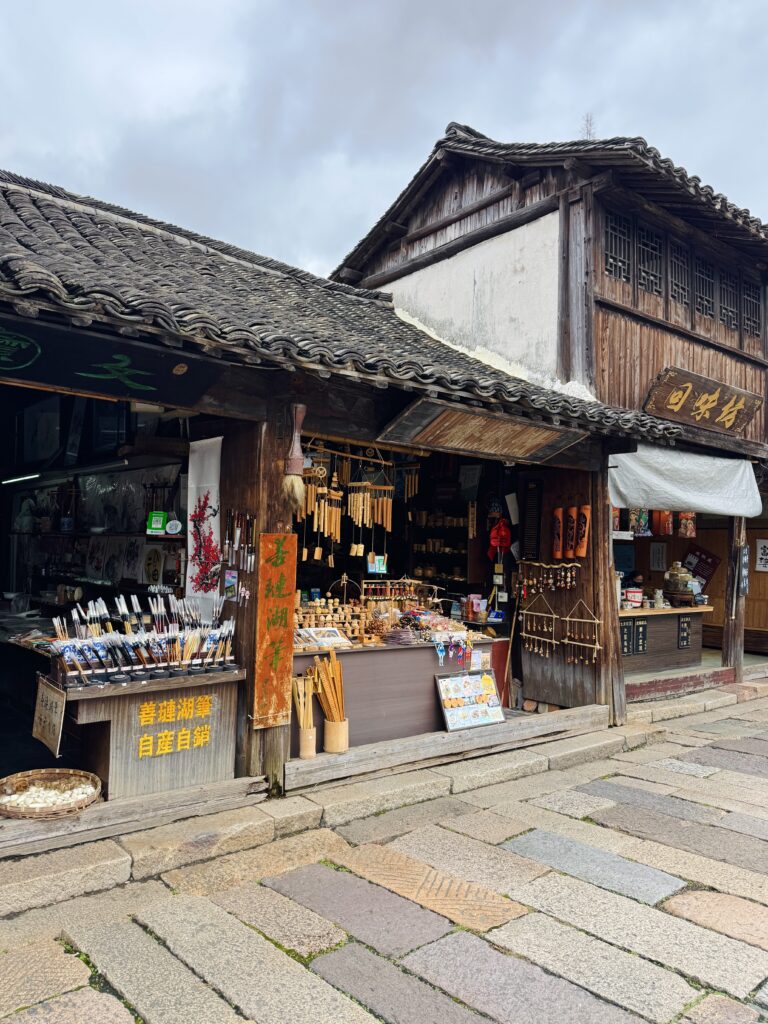
When researching Dongzha, you’ll often find the museums and traditional workshops getting most of the attention, but don’t make the mistake of thinking those as the only things to do in the area.
There’s an entire side (left of the canal) to explore after seeing all the museums. This area is great for browsing, eating, and simply soaking up the atmosphere, with little gift shops, local handicraft vendors, souvenir stalls, and restaurants tucked along the streets.
And don’t forget to walk across some of the pretty bridges! Some of the best views of Dongzha are from above the canals, where you can look down at the wooden buildings, passing boats, and reflections dancing across the water.
Where To Stay In Wuzhen
If you’re lucky enough to find an available room inside the Xizha West Scenic Area, I’d go with this location. It’s an easy decision!
For a historic water town, it’s kinda absurd how you could find such luxury, am I right? These rooms tend to go quickly, so if you see availability, I’d book sooner rather than later!
Here’s why… staying within the scenic area comes with some worthwhile perks that you won’t get at an ordinary hotel outside the gates.
For starters, guests staying inside Xizha West Scenic Area receive complimentary admission to the West Scenic Area. You also get access to the scenic area after regular day visitors have been ushered out, which means you can enjoy the canals during quieter hours without the same crowds.
Another perk is access to the waterfront breakfast experience, which is reserved for hotel guests staying inside the scenic area. Imagine starting your morning with breakfast along the canals before the waves of visitors arrive… amazing.
Yes, staying inside the scenic area may cost a little more than booking a hotel outside the gates, but I’d argue the added access and experience make it worthwhile. You’re not simply paying for a room; you’re paying for the opportunity to experience Wuzhen at times when most visitors can’t.
These are the hotels inside the West Scenic Area I recommend:
- Dishang Resort ($$)
- Silk Commerce Clubhouse ($$$)
Couldn’t snag a room inside Xizha? Don’t worry. There are still good alternatives nearby. When I was planning my original overnight stay, these were two properties I had shortlisted:
- Eryou Homestay ($): A cute, apartment-style homestay with free breakfast that’s also surprisingly affordable. You’ll be steps from the Wuzhen West Scenic Area.
- Wuzhen Baifuyuan Hotel ($$): An absolute pinnacle of boutique guesthouses; rooms are big, bright, and airy, and the hotel offers tea rooms, private bars, and photo shoot services.
Dongzha doesn’t take as long as Xizha, but I’d still allocate about 3 hours if you want to visit a few museums and catch a performance or two.
Pro Tip: If seeing a performance is high on your list, you’ll want to check the performance schedules before you start wandering through the town. Most of the shows run at fixed times during the day, so it’s worth planning your morning around anything you’re particularly interested in seeing.
Other Posts You’ll Love:
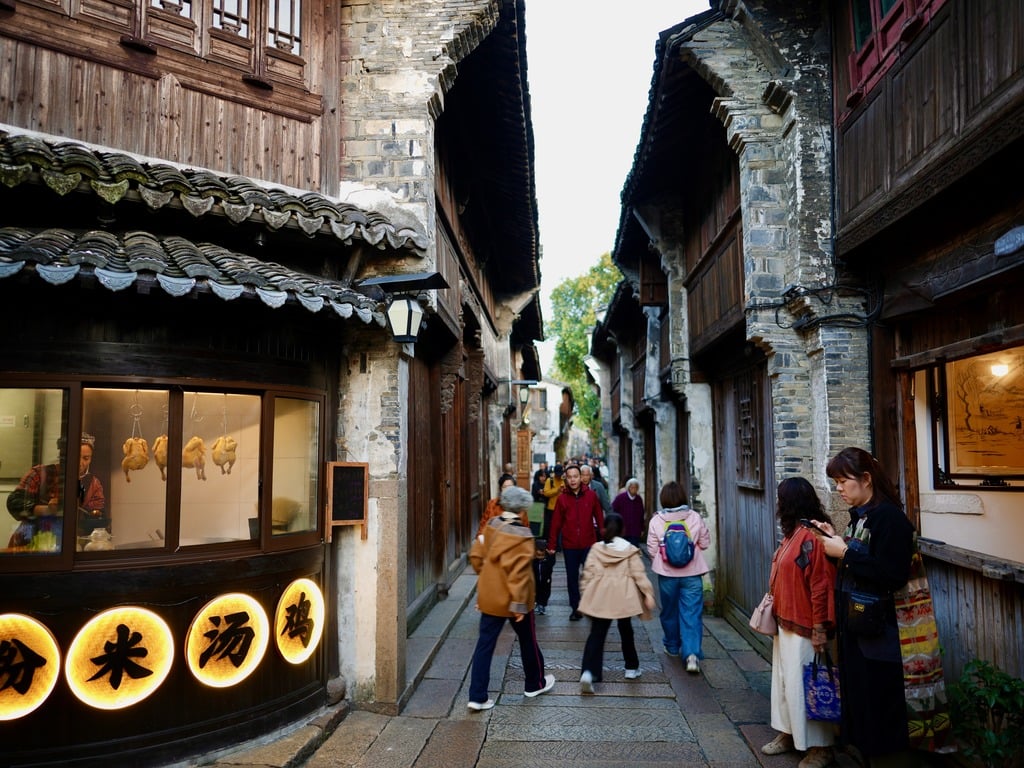
Wuzhen Water Town: 10 Unmissable Foods To Try In Xizha
One of the things that absolutely enchanted me about wandering around Wuzhen was seeing how…
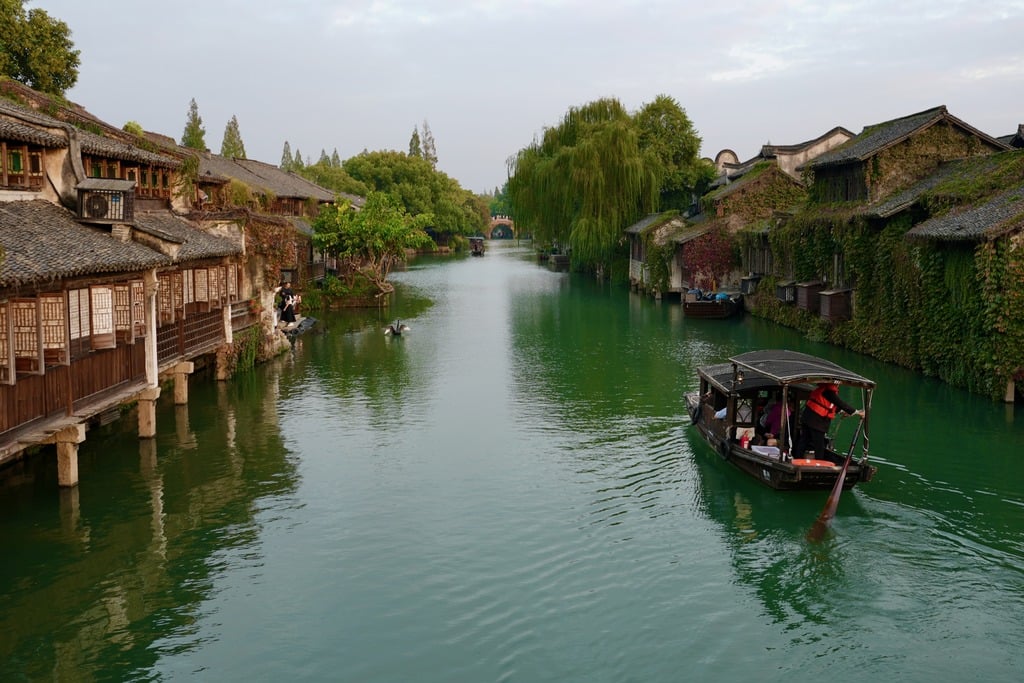
Wuzhen: How To Spend A Day In Zhejiang’s Grandest Water Town
On my most recent trip to China (this time, we did Shanghai, Hangzhou, and Wuzhen),…
Hangzhou: What to Do, See & Experience (Beyond West Lake)
When Papu suggested that we lead a trip to China with some of his college…
Where To Stay In Shanghai: A First-Timer’s Guide
Shanghai is absolutely massive, and given that Western mapping products like Apple Maps and Google…
