
I used to be all about unique stays in less touristy areas. But as I’ve gotten older, I just don’t have the patience to be based far away from a train station.
In Chongqing, we based ourselves in one of the most convenient districts possible: Jiafangbei.
We’d chosen this area for its electric energy: a maze of streets where hotpot fumes tangled with the scent of fried chicken cartilage, where every block seemed to hide a new food court or local specialty, and where the city’s pulse felt loudest.
For three days, we walked just a few dozen steps and found ourselves effortlessly stumbling into noodle joints, marveling at skyscrapers, and enjoying the city’s nightlife—all without ever needing a metro card.
But Jiafangbei has a vice: traffic chaos during the city’s rush hours. We took Didi’s a lot, and it did take a few minutes to get out of the heavily trafficked area by our hotel, but this small inconvenience didn’t outweigh the benefit of rolling out of bed and finding ourselves in the middle of all the action.
Would I stay here again? In a heartbeat. In fact, this area is a first-timer favorite! But if you’re craving a slightly slower tempo (or just want to escape the metropolitan atmosphere), this guide will unpack three alternative neighborhoods where you can base yourself in Chongqing.
This post may contain affiliate links. You won’t be paying a cent more, but in the event of a sale, the small affiliate commission I receive will help keep this blog running/pumping out useful and free content. Thanks a lot!
Where To Stay In Chongqing, China
First thing you should know? Accommodations in Chongqing are shockingly affordable compared to larger first-tier cities like Shanghai. You’ll find 5-star luxury hotels for a fraction of what they should cost (yes, really!) and dirt-cheap apartment-style hotels that are both spacious and modern.
Unlike pricey Western cities, you can actually base yourself in the heart of the action without going broke.
We stayed at the Hyatt Regency Metropolitan Chongqing in Jiefangbei CBD for less than $100 USD per night, which is unheard of in other major cities! And unlike in places like Japan, the hotel rooms in Chongqing are actually quite big!
Here are three key districts to help you choose your ideal base:
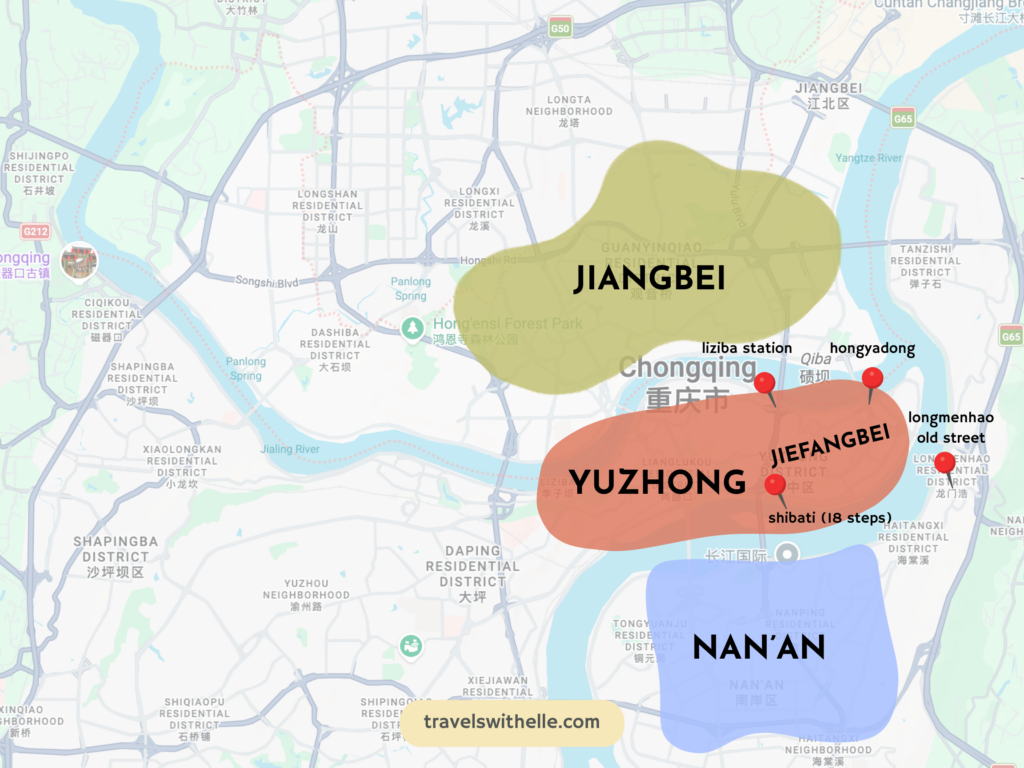
Table of Contents
Jiafangbei CBD
TWE RECOMMENDED CHOICE
Highlights: Busy, modern, and highly walkable, close to many main attractions + a top choice for first-timers

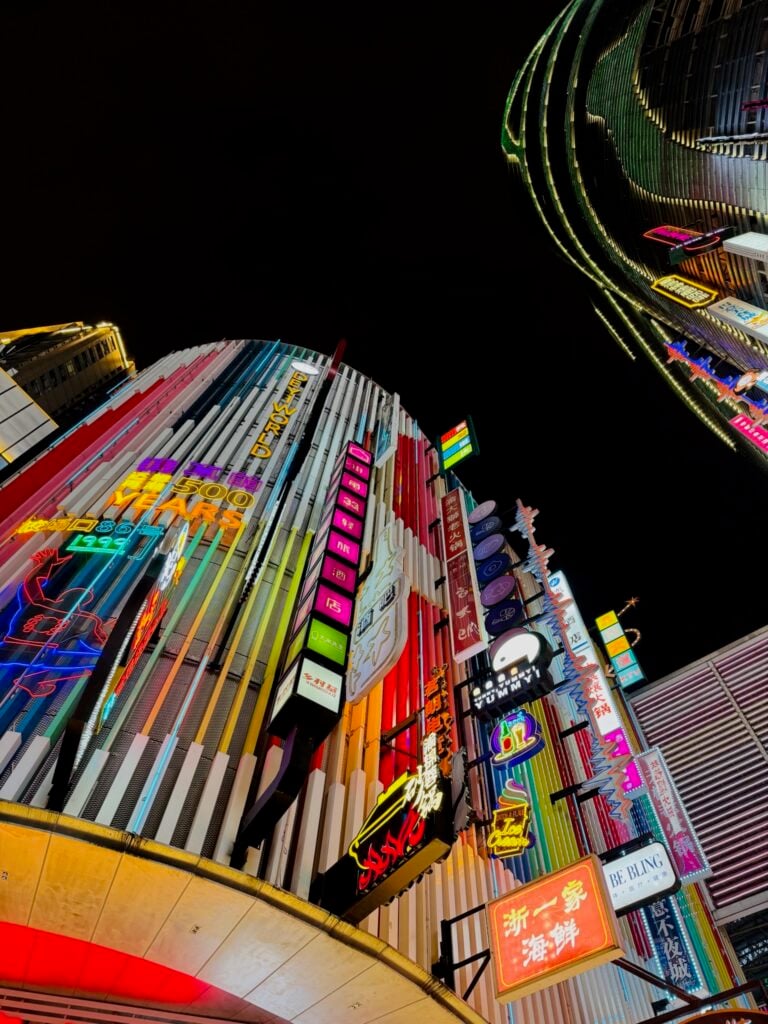
Jiefangbei CBD is Chongqing’s central hub, where skyscrapers meet street food stalls and Hongya Cave is but a short walk away. You’ll be in the middle of all the action, with pedestrian-friendly shopping, metro hubs (Lines 1, 2, 6), and 24/7 energy.
Imagine streets lit up with tons of neon lights and retro bulbs, buzzing with hawkers selling grilled skewers, fried dough snacks, Chongqing noodles, and chewy tongyuan (rice balls) desserts. Meanwhile, just across the street, you’ll find luxury malls towering above ancient hutongs.
It’s sensory overload, but you’ll never run out of things to eat, see, or photograph.
STILL NEED AN E-SIM FOR YOUR TRIP? Our go-to eSIM provider is Airalo! For a limited-time, you can use promo code AIRALOESIM10 for 10% off your booking. Explore all their affordable plans here.


Nearby sights:
- Hongya Cave: The famed multi-level complex of Chongqing-style stilted architecture overlooking the river, particularly atmospheric after dark.
- Ba Yi Snack Street: Only a 6-minute stroll for street snacks, fiery hotpot, and Chongqing xiaomian noodles.
- Shibati (Eighteen Steps): A restored historic stairway neighborhood connecting the upper and lower portions of Yuzhong.
- Mountain City Alley: Another historic hillside walking route near Shibati, worth combining with it if you want to see the old pedestrian pathways that give Chongqing its nickname as a mountain city.
Drawbacks: Crowds and traffic—as I mentioned above, this area does have a tendency to get pretty trafficky during peak travel times.
Hotels in Jiafangbei
Hyatt Regency Metropolitan Chongqing ($) ⭐⭐⭐⭐ – this was where we stayed; all the food courts/food streets were within walking distance. View on Booking.com | View on Trip.com
Maiyue Hotel-Chongqing Jiefangbei Chaotianmen ($$) ⭐⭐⭐⭐ – such unique architecture at this design hotel! View on Booking.com | Check Price on Trip.com
Yuzhong District
Highlights: Best overall location, historic stairways, major attractions, quirky neighborhoods, and the classic Chongqing skyline. This is where I’d send most first-time visitors.
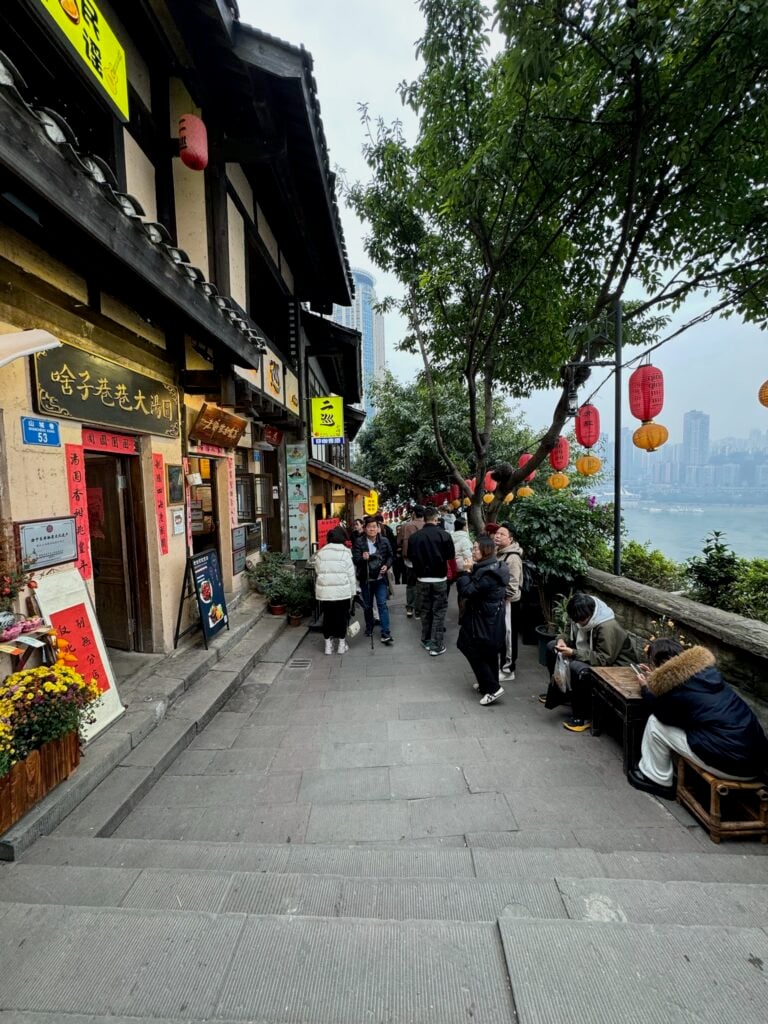
Yuzhong is the broader district that includes Jiefangbei (covered above) but also covers other popular areas like Shibati, Eling Park, and Hualongqiao.
Similar to Jiefangbei, Yuzhong is one of the easiest home bases to recommend.
The district occupies the peninsula between the Yangtze and Jialing rivers and contains the city’s most recognizable sights, including Jiefangbei, Hongyadong, Shibati, the Yangtze River Cableway, and the Raffles/Chaotianmen area.
The catch? This is also one of the busiest and most touristy. Jiefangbei and Hongyadong can get really crowded, especially at night. If you want to be in the middle of the action, that’s exactly why you stay here.
What makes Yuzhong so fun is that Chongqing’s whole old-meets-futuristic personality is concentrated here. You can walk through centuries-old stairways and lanes, then turn a corner and find yourself surrounded by skyscrapers, elevated roads, and monorails.
Nearby sights:
- Hongya Cave: The famed multi-level complex of Chongqing-style stilted architecture overlooking the river, particularly atmospheric after dark.
- Shibati (Eighteen Steps): A restored historic stairway neighborhood connecting the upper and lower portions of Yuzhong.
- Liziba Station: Take Line 2 to see the famous monorail seemingly disappear straight through a residential-commercial building. There’s a dedicated viewing platform below the station.
- Eling Park: One of the city’s classic elevated viewpoints. It’s a good daytime stop for panoramic views and pairs naturally with nearby Eling No. 2 Factory.
- Eling No. 2 Factory / TESTBED 2: A former industrial printing complex turned creative district with cafes, shops, restaurants, and photo spots.
- Three Gorges Museum + People’s Square: The museum is one of the best places to understand Chongqing’s history, the Three Gorges, Bayu culture, and the city’s wartime history. The Great Hall of the People is directly adjacent.
Hotel Recommendations in Yuzhong:
JW Marriott Hotel Chongqing ($$) – ⭐⭐⭐⭐⭐ View on Booking.com | Check Price on Trip.com
Jiangbei District
Highlights: Further away from the major traffic jam area; being close to the airport + train station means it’s great for time-crunched travelers with early or late flights/trains.

Jiangbei is the newer, more modern-feeling alternative to Yuzhong. Instead of old stairways and historic lanes, you’ll find shopping complexes, skyscrapers, giant pedestrian areas, restaurants, nightlife, and plenty of everyday Chongqing life.
The big draw here is Guanyinqiao, one of Chongqing’s major shopping and entertainment districts. It isn’t exactly a hidden gem or local secret—the area is hugely popular—but compared with Jiefangbei, it can feel less like you’re staying directly inside Chongqing’s main tourist zone.
Jiangbei also makes practical sense for travelers using Chongqing North Railway Station, which is in the district. The international airport is not technically in Jiangbei (it’s located in neighboring Yubei District), but Jiangbei is still well positioned for getting to and from the airport by metro.
Nearby Sights:
- Ciqikou Ancient Town: In Shapingba just a 15-minute drive (or 30-minute metro) away.
- Guanyinqiao Pedestrian/Entertainment Area: The neighborhood’s main attraction, packed with restaurants, shopping, nightlife, food streets, and giant illuminated signs. The surrounding Guanyinqiao area also includes Beicang Cultural & Creative Park.
- Guanyinqiao Food Street: If eating your way through Chongqing is part of the plan, this is one of the city’s major food areas.
- Beicang Cultural & Creative Park: A former industrial area turned creative district with cafes, shops, studios, and restaurants. It’s a nice antidote to Chongqing’s endless shopping malls.
- Chongqing North Railway Station: Particularly convenient if you’re arriving or leaving by high-speed train.
- Chongqing Jiangbei International Airport: Not technically in the district, but easily accessible by metro.
Hotels in Jiangbei District:
Hyatt Regency Chongqing Hotel ($) ⭐⭐⭐⭐⭐ – Does the Hyatt Regency even need an introduction? Check Price on Booking.com | Check Price on Trip.com
Atour Hotel Guanyin Bridge Chongqing ($) – ⭐⭐⭐⭐ Check Price on Booking.com | Check Price on Trip.com
Alternative: A Peaceful Stay Near Ciqikou

If the thought of waking up in the middle of Chongqing’s mayhem makes you want to run for the hills, consider staying near Ciqikou Ancient Town instead.
Yes, it’s a little farther from the action, but that’s exactly the point: you’ll trade the skyscraper frenzy for quieter streets, leafy pockets, and a more residential feel, surrounded by locals rather than tour groups (well, in the evenings at least!).
Come evening, when the day-trippers have cleared out, Ciqikou takes on a much slower rhythm and can feel almost like a little escape from the city.
CIQIKOU: HOTEL SPOTLIGHT
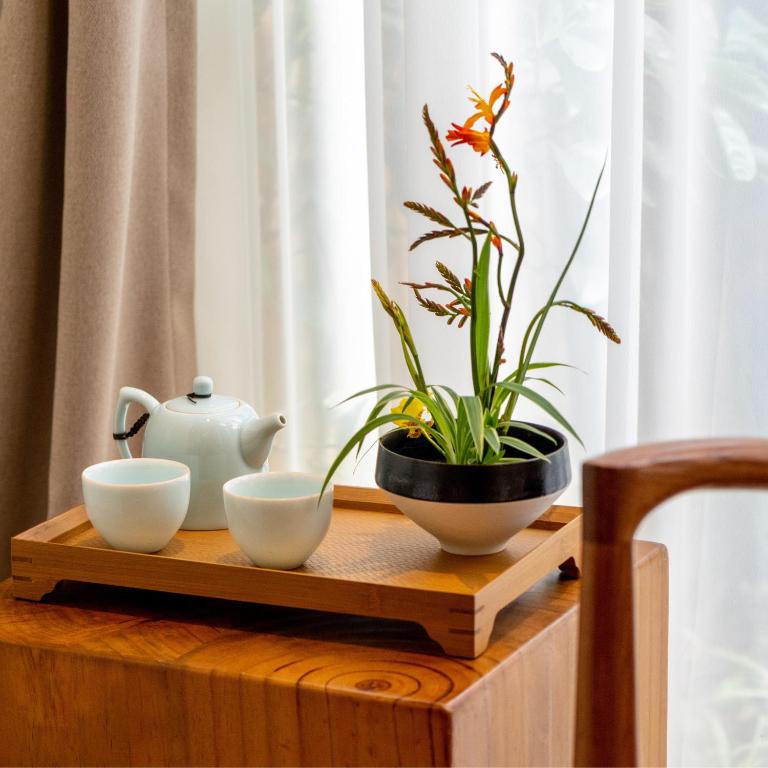
Wuyu Hotel
Tucked away from the frenetic pulse of central Chongqing, Wuyu Hotel is the kind of boutique stay you stumble upon and immediately want to keep to yourself.
Its beautifully considered interiors and leafy garden create a welcome sense of calm, while the generous breakfast—think hand-dripped coffee, soy milk, wontons, dumplings, and expertly cooked noodles—makes mornings feel wonderfully unhurried.
For travelers who like their Chongqing with a side of serenity, this one is a gem.
Chongqing: Getting There + Getting Around
From Chengdu (By Train)
If you’re headed to Chongqing from Chengdu, you’re going to be taking the high-speed train.
Train tickets are only released exactly two weeks before your travel date. To get around this constraint, we bought all of our train tickets through Trip.com.
Trip.com lets you reserve train tickets in advance (anytime before your trip) for a small booking fee. While you pay upfront, the platform only secures your ticket once trains become available to book—exactly two weeks before your departure date. You’ll receive a final confirmation email once your booking is locked in.
We did this for multiple legs of train travel during our 2-week trip to China and had no issues whatsoever. I was nervous that they weren’t going to get us the train of our choice, but everything worked out seamlessly.
The 1.5-hour ride between Chengdu and Chongqing is smooth and straightforward, but you’ll want to arrive at the train station at least 45 minutes early.
Train stations in China are massive, and you’ll need time for security, passport checks (use the far-left “foreigner gates”), grabbing a quick snack, and finding your platform.
From Farther Away (By Plane)
For travelers flying in, Chongqing Jiangbei International Airport (CKG) is the city’s main hub, with direct domestic and international flights.
If you’re coming from outside Sichuan (e.g., Beijing, Shanghai, or overseas), flying is efficient—though from Chengdu, the 1.5-hour high-speed train is often quicker than the logistics of taking a flight.
Getting Around Chongqing
There are two main ways to get around Chongqing: taking the metro or calling a Didi.
With elderly parents in tow, we relied 100% on Didi (China’s version of Uber). This eliminated the hassle of needing to go up/down a ton of stairs to get to the trains or flagging down taxis (notorious for reckless speeds and smoky cabs).
Didi’s door-to-door ease beats finding our way around Chongqing’s hills and maze-like streets—for us, it was worth every yuan for comfort and convenience!
With that said, if your hotel is located near a metro station and traffic happens to be bad at the time you wanna go somewhere, by all means, use the train! You’ll wanna set up your transport pass on Alipay beforehand—switch your QR code to Chongqing’s system, scan at turnstiles, and avoid ticket machines!
Just keep in mind that there are security checks (your bags will be scanned) at train/metro stations. It’s a bit annoying, but there’s usually never any hold-up/delay.
Essential Travel Tips For Chongqing, China
- Food in Chongqing is hot. We are not a spicy-loving family, so it was kind of a struggle to find food we enjoyed in Chongqing. If you eat spicy, you’ll love the local cuisine. If you can’t handle spice, you’ll wanna learn how to say the local words for “little spicy” (wei la), “very little spicy” (wei wei la) or “no spice” (bu la).
- The city is hilly. Bring comfortable walking shoes.
- If you’re visiting with elderly parents or children who can’t handle all the hills and stairs, you might need to seek out elevators instead of tackling stairs (like at Hongyadong). Be prepared to wait for these elevators because Chongqing has seen an influx of tourists from Mainland and beyond, and many of them happen to be old.
- The city is impressive, especially during sunset and in the evening. Be sure to visit at least one of the picturesque areas during sunset to experience the best of both worlds. (Hongyadong, Ciqikou, Shibati, etc.)
- Chongqing is not a very international-friendly city (like Beijing or Shanghai). Not many people speak English. Most locals prefer to speak in the local dialect, which sounds a bit different from Mandarin.
- If you plan on staying just within the city limits, 3 days is enough. If you plan on doing a day trip our of the city, you’ll need at least 4 days.
- As with many major cities, Chongqing has air pollution. You can check pollution levels for Chongqing here.
- Always carry an umbrella—rain can come at any time, anywhere.
- Don’t take photos with costumed characters without asking first. Some charge a fee after the picture (if you’re okay with that, then go ahead).
- Skip the viral cable car (but do explore the Nan’an area). You will be in line for hours and then once you’re in, be squished into a tiny box with your face pushed up against scratched plastic windows. Is that really how you wanna spend your time?
- A lot of Didi drivers (and Chinese people in general) smoke cigarettes. Therefore, their cars smell like smoke. If the smell of smoke bothers you, order a premium car. Those are so much nicer and don’t smell of stale smoke!
- Get used to squat toilets in China. Unless you’re at a very high end mall, they are everywhere.
Planning Your Trip To China?
Here are some of our other China travel guides to help you plan an incredible trip:
Chongqing
- 15 Quintessential Things To Do In Chongqing, China
- An Afternoon In Ciqikou Ancient Town (Chongqing, China)
- Shibati (18 Steps): A Walk Through Chongqing’s Past
Chengdu
- 3 Days In Chengdu, China: Pandas, Ancient Streets, and Royal Banquets
- 4 Days In Chengdu, China: An Even Better Itinerary!
- 15 Actually Fun Things To Do In Chengdu: Beyond Pandas And Temples
- Shuyanfu Dinner Show: A Must-Do In Chengdu, China
China In General
- Preparing For China: 30 Essential Things To Know Before Your Trip
- 7 Must-Have Apps To Help You Survive In China (+ What eSIM To Get)
- 7 Huge Mistakes I Made in China (And How You Can Avoid Them)
